Google Vids Expands with Free AI Video Generation Using Veo 3.1
Google just made AI video creation far more accessible. With Google Vids now offering free AI video generation powered by Veo 3.1, the barrier to creating polished video content has dropped in a big way.
For years, video has been one of the strongest formats in digital marketing, but also one of the hardest to produce consistently. It usually demanded editing skills, production resources, or expensive software. That’s why this update matters. Google is taking advanced video generation and placing it inside a workflow that feels much closer to Google Docs than a traditional editing suite.
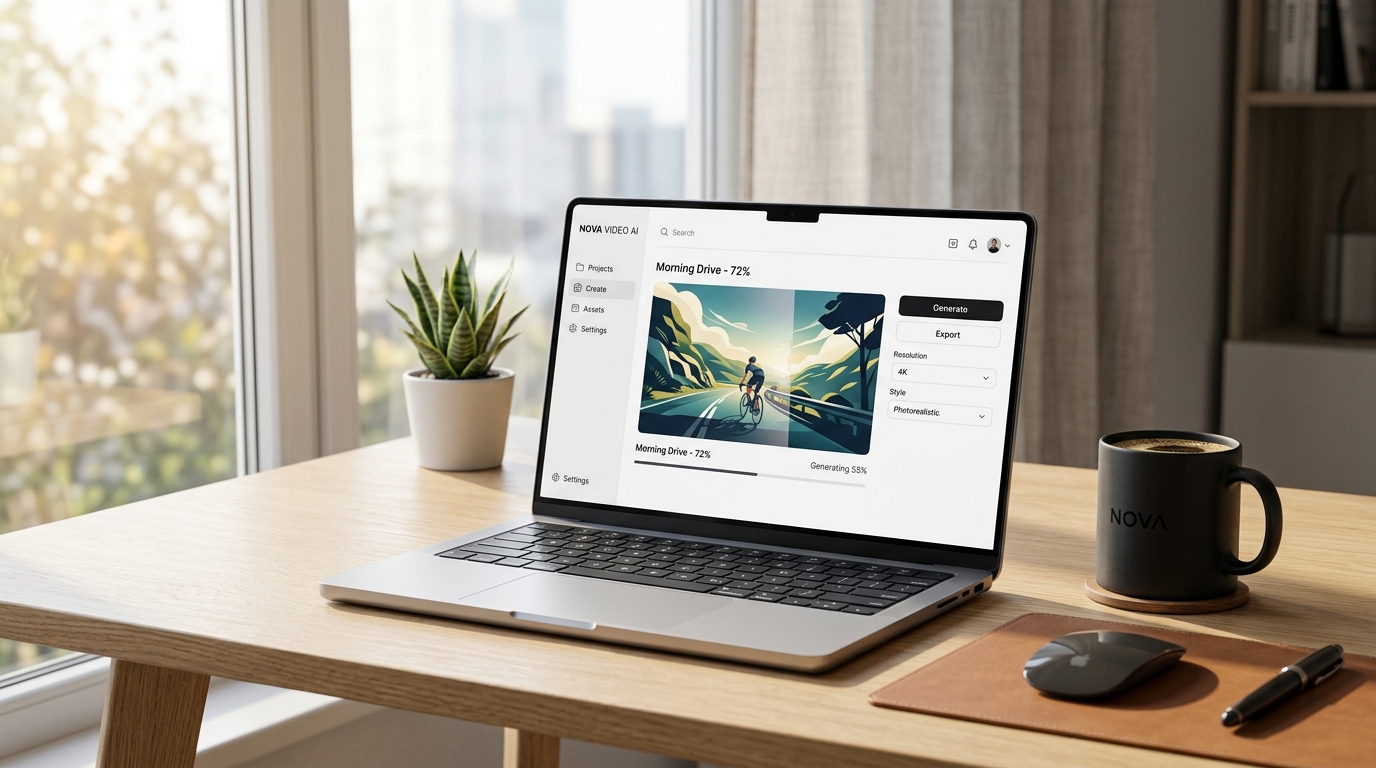 From Workspace Experiment to Full AI Video Studio
Google Vids has been moving in this direction for a while. It started as an experimental AI-powered video app inside Google Workspace Labs, giving teams a way to build videos from prompts, templates, and Docs. By late 2024, it reached general availability for select Workspace users, adding collaboration tools, AI storyboards, stock media, teleprompters, and voiceover features.
Now, with its April 2026 expansion, Google is taking the product much further. The biggest update is that Veo 3.1 video generation is now free for anyone with a Google account, with up to 10 clips per month. Higher-tier users, including AI Ultra and Workspace AI Ultra customers, can generate up to 1,000 clips monthly.
That’s a significant change. Instead of keeping advanced AI video in the hands of specialists or premium creative teams, Google is putting it in front of billions of users.
What Veo 3.1 Brings to Google Vids
Veo 3.1 is more than another text-to-video model. It marks a more mature stage of AI video generation, with improvements in realism, motion, audio synchronization, and narrative control. It can generate clips up to 8 seconds long, support high-resolution output including 1080p and 4K, and create scenes with more believable physics and movement than earlier AI video tools.
What makes this especially useful is that it’s not a standalone generator. Google has built Veo 3.1 directly into a browser-based creation environment that already includes editing, collaboration, and publishing tools. That changes the value completely. Rather than generating a clip in one app, exporting it, and finishing the work somewhere else, users can move through a more connected workflow.
Google also introduced several related upgrades:
- customizable AI avatars with more directorial controls
- new language support including French, German, Italian, Japanese, Korean, Portuguese, and Spanish
- a Chrome screen recording extension
- direct YouTube publishing
- Lyria 3 custom music generation for premium users
Taken together, these features make Google Vids feel less like an AI add-on and more like a practical end-to-end studio for business communication and marketing content.
Why This Matters for Marketers
The biggest implication here is not novelty. It’s usefulness.
There have been plenty of AI video demos that looked impressive on their own. Google is doing something different by weaving AI video into everyday workflows. That makes it easier for teams to create product explainers, internal training videos, ad concepts, social clips, sales presentations, and onboarding content without leaving the Google ecosystem.
For marketers, that means faster creative testing. A team can move from an idea in a document to a storyboard, then to a generated scene, and finally to a finished video much faster than before. That speed could reshape campaign development, especially when multiple video variations are needed at scale.
It also raises the competitive standard. When more businesses can make professional-looking AI-generated video, simply producing video is no longer the advantage. The edge shifts to teams that combine speed with clear messaging, strong offers, and smart creative strategy.
 The Competitive Pressure on AI Video Tools
This rollout also puts pressure on the wider AI video market. Paid tools like Runway, Pika, Luma, and others have spent months competing on generation quality, clip length, and creative control. Google’s decision to offer Veo 3.1 generation for free—even with monthly limits—changes the conversation.
Free access is often what drives mainstream adoption. Once creators and businesses can try advanced AI video inside a familiar Google interface, many will question whether they still need separate tools for every stage of production. That doesn’t mean competing platforms disappear, but it does mean Google is setting a new baseline for accessibility.
And because this ties into Workspace, Gemini, YouTube, and Google’s wider ecosystem, the strategic advantage goes well beyond a single product update. It positions Google Vids as a central part of how businesses may create and distribute visual content going forward.
The Opportunity and the Caution
This update signals something bigger: AI video is becoming a utility, not a spectacle. That’s a major milestone. It also creates a new challenge. When everyone can create polished content quickly, content volume rises and standing out gets harder.
Better tools do not automatically lead to better marketing.
Short-form AI-generated clips can help teams move faster, but the brands that win will still be the ones with a strong point of view, consistent positioning, and content that genuinely connects with an audience. The technology removes friction, but it does not replace strategic thinking.
There are also valid concerns around misuse and content saturation. Google is addressing some of that with safeguards like SynthID watermarking and prompt restrictions, but the broader industry will still need to manage the balance between accessibility and trust.
FAQ
Is Google Vids free to use with Veo 3.1?
Yes. Google now offers free Veo 3.1 AI video generation inside Google Vids for anyone with a Google account, with a limit of 10 clips per month.
How many clips can premium users generate?
Higher-tier users, including AI Ultra and Workspace AI Ultra customers, can generate up to 1,000 clips per month.
What makes Veo 3.1 different from earlier AI video tools?
Veo 3.1 improves realism, motion, audio synchronization, and narrative control. It also supports high-resolution output and more believable scene generation.
Why is this important for marketers?
It shortens the path from idea to finished video, making it easier to test creative concepts, scale variations, and build video content inside existing Google workflows.
Final Thoughts
Google Vids expanding with free Veo 3.1 video generation feels like a real turning point. It brings high-quality AI video creation into everyday business workflows and gives marketers, creators, and teams a faster path from idea to finished asset. This looks less like a flashy feature launch and more like a structural change in how content will be produced.
As AI video gets easier to make, the brands that perform best will be the ones that pair creative speed with measurable marketing discipline. If you want more of that content output to turn into actual performance, it makes sense to build around tools like ROAS Suite to keep creative production aligned with revenue and return on ad spend.