Google Tests Expandable AI Overviews in Search Results
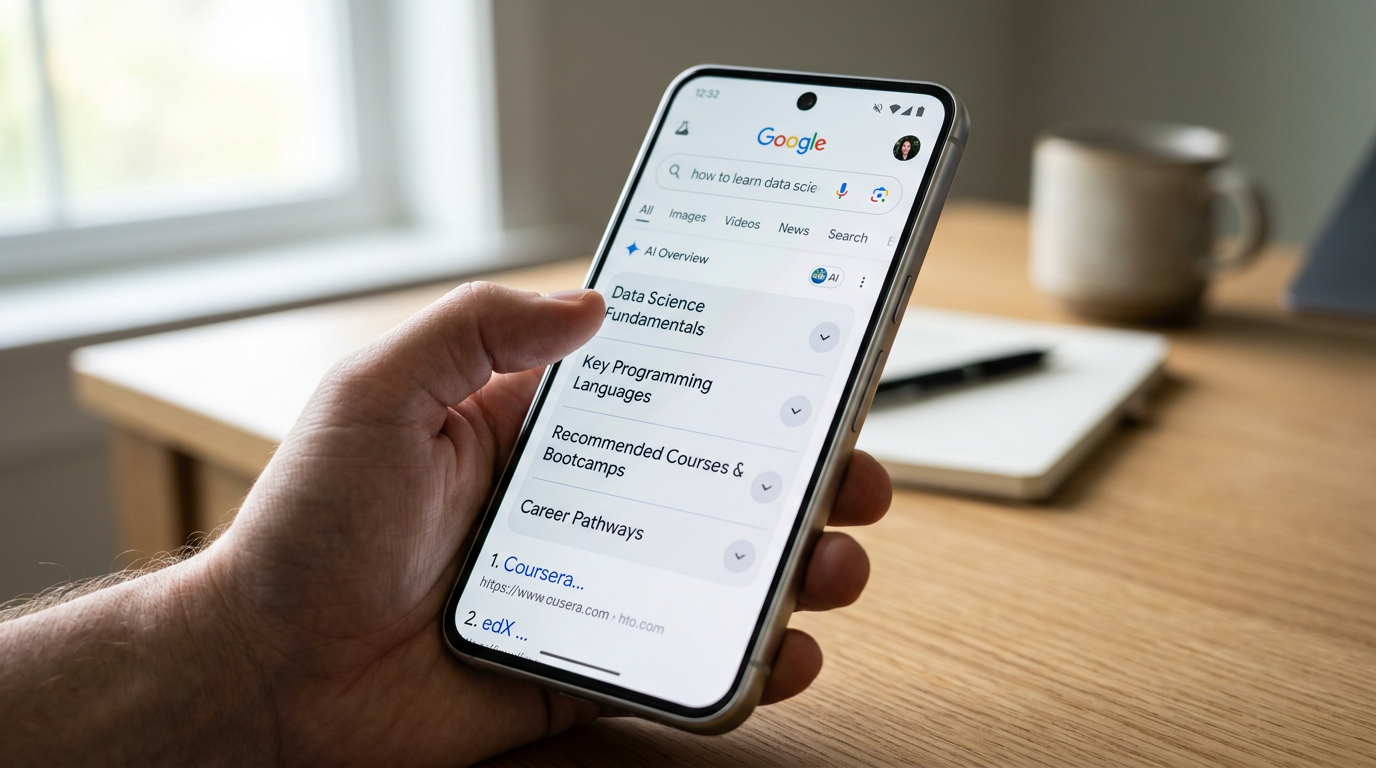
Google is testing another major change to search results, and this one could have real consequences for users, publishers, and anyone who relies on organic visibility. The latest experiment adds expandable AI Overviews to Search—an accordion-style format that lets users open sections of an AI-generated summary instead of reading one long block of text all at once.
This looks like more than a minor interface update. It feels like the next step in Google’s steady move toward an AI-first search experience.
 A quick look at how we got here
Google first launched AI Overviews in the U.S. in May 2024, after rebranding what many knew as Search Generative Experience. The idea was straightforward: reduce the work users have to do by summarizing information directly in search results.
Since then, Google has expanded the feature quickly. AI Overviews moved beyond Search Labs, rolled out internationally, and evolved alongside Gemini-powered search products like AI Mode, which arrived in 2025 with more conversational results and follow-up prompts. By early 2026, Google had upgraded these experiences again with Gemini 3, a clear sign that Search is now tightly connected to the company’s AI roadmap.
This latest test fits that trajectory.
What the expandable AI Overviews look like
The format was first spotted by SEO professional Shameem Adhikarath on March 2, 2026, and later replicated by Barry Schwartz of SERoundtable on March 5. Screenshots show AI Overviews split into collapsible sections with dropdown arrows, allowing searchers to expand only the parts of the answer they want to read.
On paper, that makes sense.
One of the biggest complaints about AI Overviews has been how overwhelming they can feel—dense summaries, too much text, and too many ideas packed into a single space. An expandable format could help by giving users more control. Instead of scanning a large AI-generated block, they can open only the sections they care about.
That said, the current version still looks rough. Reports mention awkward spacing, excess white space, and alignment issues. That points to an early-stage experiment rather than a polished rollout.
Why Google is probably testing this now
Google is likely trying to solve two problems at once.
First, it wants AI answers to feel more usable. A better-organized AI Overview could drive more engagement, especially for complex queries where users want depth without clutter.
Second, Google wants to keep users inside the search experience longer. Expandable sections invite interaction. Instead of clicking through to a publisher’s site right away, users may dig through multiple layers of an answer directly on Google.
That has obvious upside for Google. It could also create more room for ads, especially now that advertising inside AI Overviews is already part of the broader rollout strategy.
 The SEO impact could be significant
For publishers and SEO teams, this test is hard to ignore.
AI Overviews have already reduced clicks for many query types because they answer questions directly in the SERP. If Google starts hiding more detail behind expandable sections, source links could become even less visible. That would make the path from search impression to actual website visit even weaker.
That is the part many brands need to watch closely: even when your content is used, you may not benefit from it the way you did in traditional search. Visibility no longer guarantees traffic.
This shifts the SEO conversation beyond rankings alone to how content appears inside AI experiences. Structured data, topical authority, brand trust, and clear organization may matter even more as Google keeps refining summary-based search.
What this says about the future of Search
Expandable AI Overviews are part of a much bigger shift. Google is not just testing features—it is changing search behavior.
We’ve already seen the progression:
- static search results,
- featured snippets,
- AI summaries,
- AI Mode,
- and now more interactive, layered AI result formats.
The direction is clear. Search is becoming less about lists of links and more about guided, on-page answer experiences. Traditional blue links still matter, but in many cases they are no longer the focal point of the page.
If this test expands, Google will likely refine the design quickly, smooth out the obvious UI flaws, and integrate the format more deeply into AI-driven results. More experimentation around citations, ad placements, and interactive answer modules would not be surprising either.
FAQ
What are expandable AI Overviews?
They are a test format in Google Search that breaks AI-generated summaries into collapsible sections, letting users expand only the parts they want to read.
Why is Google testing this format?
The goal appears to be improving usability while keeping users engaged inside the search results page for longer.
How could this affect SEO?
If source links become less prominent, publishers may see fewer clicks even when their content informs the AI-generated summary.
Is this feature officially rolled out?
Not yet. Current reports suggest it is still an early-stage experiment with visible design issues.
Conclusion
Google’s expandable AI Overviews may still be in testing, but the message is already clear: the company is continuing to reshape search around AI-generated, highly interactive answers. For marketers, publishers, and SEO professionals, the smart move is to track these changes closely and adapt before they become standard. If you want to stay ahead of fast-moving AI search changes and build content strategies for this new landscape, AIuthority is a strong place to start.