Google Releases Official Guide to Optimizing for Generative AI in Search
Google has finally made it official: optimizing for generative AI in Search is still, at its core, SEO.
On May 15, 2026, Google published an official resource called “Optimizing your website for generative AI features on Google Search”, alongside a Search Central blog announcement from John Mueller. For anyone who has spent the last two years watching terms like AEO (Answer Engine Optimization) and GEO (Generative Engine Optimization) spread across the industry, this is a notable moment. More than a brand-new playbook, Google’s guide feels like a needed reality check.
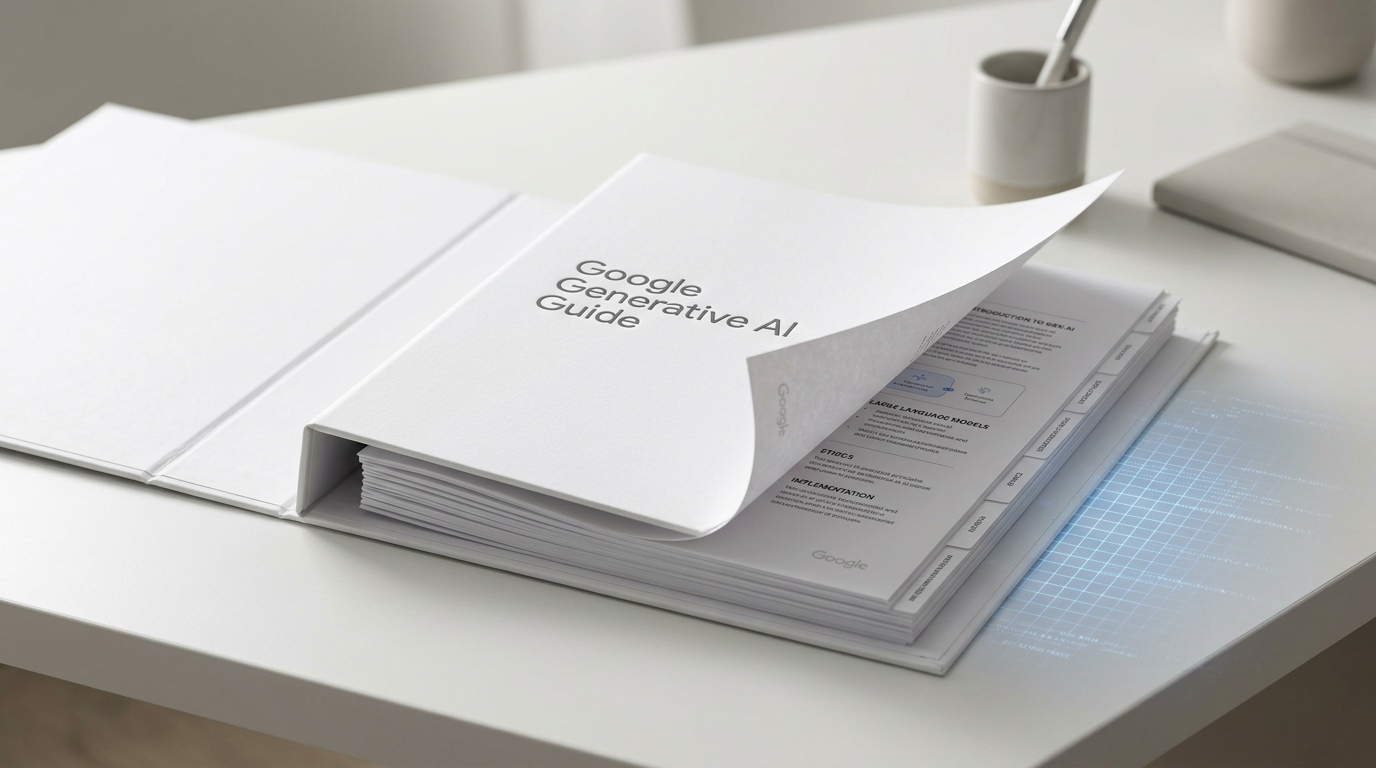 What Google Actually Released
The new documentation is aimed squarely at website owners, SEOs, publishers, and developers who want better visibility in AI-driven search experiences such as AI Overviews, AI Mode, and future agentic interfaces.
The main takeaway is straightforward: if you want to perform well in Google’s generative AI features, the best practices are still the familiar ones. Create useful content. Make your site crawlable. Deliver a strong page experience. Build trust. Offer original value.
That matters because it cuts through much of the noise that has built up since generative AI became a bigger part of how people find information.
Why This Guide Matters
The significance of this release is not just the documentation itself, but what it puts to rest.
For months, the market has been full of claims that brands need entirely new optimization frameworks to “rank in AI.” Google’s guide pushes back on that idea directly. It makes clear there is no secret parallel system that demands special hacks, obscure files, or AI-only formatting tricks.
Instead, Google explains that its generative features rely on the same core ranking and quality systems that power Search more broadly. Under the hood, these experiences use mechanisms like retrieval-augmented generation (RAG), where relevant pages are pulled from Google’s index and used to generate responses, often with linked sources. Google also highlights query fan-out, where the system explores related sub-questions in parallel to build a more complete answer.
So content needs to be genuinely useful across multiple angles of a topic, not just lightly tuned for one keyword phrase.
The Biggest Myth-Busting Takeaways
This is where the guide becomes especially useful.
Google explicitly addresses several tactics that have been heavily promoted as “must-have” for AI visibility. According to the official guidance, website owners do not need:
- llms.txt files
- Special AI markup
- Artificial content chunking
- Rewriting content solely for AI phrasing
- Inauthentic mentions designed to manipulate visibility
Google also notes that while structured data remains useful for rich results and better machine-readable understanding, it is not a requirement for appearing in generative AI features.
That is one of the clearest signals yet that the industry is moving away from speculative optimization theater and back toward practical search fundamentals.
So What Does Google Want Instead?
The answer is not flashy, but it holds up.
Google’s guidance emphasizes:
- People-first, satisfying content
- Original insights and first-hand experience
- Strong technical SEO foundations
- Clear site structure and semantic HTML
- Accessible pages and good user experience
- Useful images and video
- Reliable local and ecommerce data where relevant
This lines up with the direction Google has been signaling for years, but generative AI raises the stakes. If Google is synthesizing answers from across the web, it has even more reason to pull from sources that are trustworthy, distinctive, and genuinely helpful.
Commodity content becomes easier to overlook in that environment. Unique expertise becomes more valuable.
 The End of “AI Search Shortcuts”
One reason the SEO community reacted so strongly to this release is that it confirms what many experienced practitioners have already been saying: there are no magic shortcuts to force inclusion in AI answers.
The guide effectively closes the door on a cottage industry of “GEO hacks” and “AEO frameworks” that often repackaged basic SEO under new labels. Discussions across Reddit, LinkedIn, and industry publications quickly framed the release as the end of that hype cycle.
That reaction makes sense. Google is telling us that if a tactic sounds like a gimmick designed purely to manipulate AI systems, it is probably unnecessary at best and risky at worst. In fact, content created at scale just to game visibility can run into Google’s spam and scaled content abuse policies.
What This Means for Publishers, Brands, and SEOs
In practical terms, this should simplify strategy.
If I were advising a business after this release, I would tell them to stop chasing novelty for novelty’s sake and focus on three things:
1. Strengthen content quality
Publish content that adds something real: expertise, testing, opinion, reporting, analysis, examples, or experience.
2. Fix the technical basics
Make sure pages can be crawled, rendered, understood, and accessed easily. Clean architecture still matters.
3. Support richer search surfaces
Use strong visuals, keep local and product data current, and make the site usable across devices and assistive technologies.
That last point may become even more important as Google expands into more agentic experiences. The guide points to a future where AI systems may interact with websites through screenshots, the DOM, or the accessibility tree. It even references emerging ideas like the Universal Commerce Protocol (UCP). That suggests the next wave of optimization will reward sites that are not just keyword-relevant, but also structurally understandable and machine-navigable.
My Take on the Bigger Shift
What stands out most is that Google’s message is both conservative and forward-looking.
Conservative, because it reaffirms timeless principles: be useful, be accessible, be trustworthy.
Forward-looking, because it quietly prepares site owners for a search ecosystem where users may not always interact through the traditional ten blue links. AI Overviews, AI Mode, and future agents may change the interface, but not the underlying need for high-quality source material.
Put simply, the delivery mechanism is changing faster than the core strategy.
That may be the most important takeaway from this announcement.
FAQ
Does Google’s guide mean SEO is still the main strategy for AI search visibility?
Yes. Google’s guidance makes clear that visibility in generative AI search features still depends on core SEO principles like helpful content, technical accessibility, trust, and strong site experience.
Do websites need llms.txt or special AI markup to appear in AI Overviews?
No. Google explicitly says websites do not need llms.txt files, special AI markup, or other AI-specific hacks to be included in generative search features.
Is structured data required for generative AI visibility?
No. Structured data can still help Google better understand content and support rich results, but it is not required for appearing in generative AI experiences.
What kind of content is most likely to perform well?
Content with original insights, first-hand experience, clear expertise, and genuine usefulness is more likely to stand out than generic, interchangeable pages.
Conclusion
Google’s official guide does not introduce a new discipline. It clarifies that the path to visibility in generative AI search is the same one that has mattered all along: strong SEO, original content, technical quality, and a real focus on helping people. If you want a practical way to stay aligned with that reality and create content built for the future of search, AIuthority is a smart place to start.