Google Makes Veo 3.1 AI Video Generation Free for All Users
Google just made one of its biggest AI video moves yet. Veo 3.1, the company’s advanced AI video generation model, is now free for anyone with a Google account through Google Vids. That’s a notable shift for a tool that was previously aimed more at developers, paid users, and enterprise workflows.
In practical terms, anyone with a Google account can now generate high-quality AI video clips inside Google’s own video creation platform without paying for a premium subscription. In a market still defined by paywalls, credits, and restricted access, that changes the equation.
 Why this announcement matters
The most significant part of this announcement isn’t just that Google opened access. It’s where the company opened it. Instead of keeping Veo 3.1 inside developer products like Vertex AI or niche AI platforms, Google put it directly into Google Vids, a Workspace tool built for everyday use.
That broadens the audience overnight.
AI video generation is no longer limited to technical users or early adopters willing to pay to experiment. It’s moving into a mainstream workflow where someone can prompt a clip, edit it, add music, use an avatar, record their screen, and export the final result to YouTube from one place.
For creators and marketers, that end-to-end workflow is where the real disruption begins.
What users actually get for free
The free access comes with limits, but they’re meaningful. Google is offering up to 10 Veo 3.1-generated clips per month for each Google account, with each clip running about 8 seconds.
That may not sound like much at first, but it’s enough for plenty of practical use cases: testing concepts, creating social snippets, building ad hooks, producing product intros, or generating B-roll-style content. And because these clips can include sound, they offer much more creative flexibility than earlier silent AI video tools.
Google is also pairing this with other upgrades inside Vids, including:
- Lyria 3 for AI-generated music
- Customizable AI avatars
- Screen recording tools
- One-click YouTube export
- Text-to-video and image-to-video generation with sound
This is what makes the announcement more than a simple free-credits update. Google is building a full content creation stack, not just handing users access to a video model.
A quick look at how Veo got here
Google first introduced Veo in 2024 as its answer to the fast-growing AI video race. Since then, the platform has advanced quickly. Veo 3 added native audio generation, while Veo 3.1 improved prompt accuracy, audiovisual quality, realism, and creative control.
By late 2025 and early 2026, Google had already pushed Veo 3.1 deeper into its ecosystem through AI Studio, Vertex AI, Gemini integrations, and mobile-friendly features like vertical video support and image-based generation tools.
This latest step feels like the logical next phase: broad distribution.
Rather than positioning Veo 3.1 as a specialized premium product, Google is turning it into a feature that strengthens Workspace and makes Google Vids a much more capable everyday tool.
What this means for marketers and businesses
Marketers may be the biggest immediate winners.
AI video has often sounded more useful than it actually was in practice because cost, rendering limits, and platform fragmentation kept getting in the way. You might generate footage in one tool, edit it in another, add audio somewhere else, and still need manual cleanup before publishing.
Google is cutting down that friction.
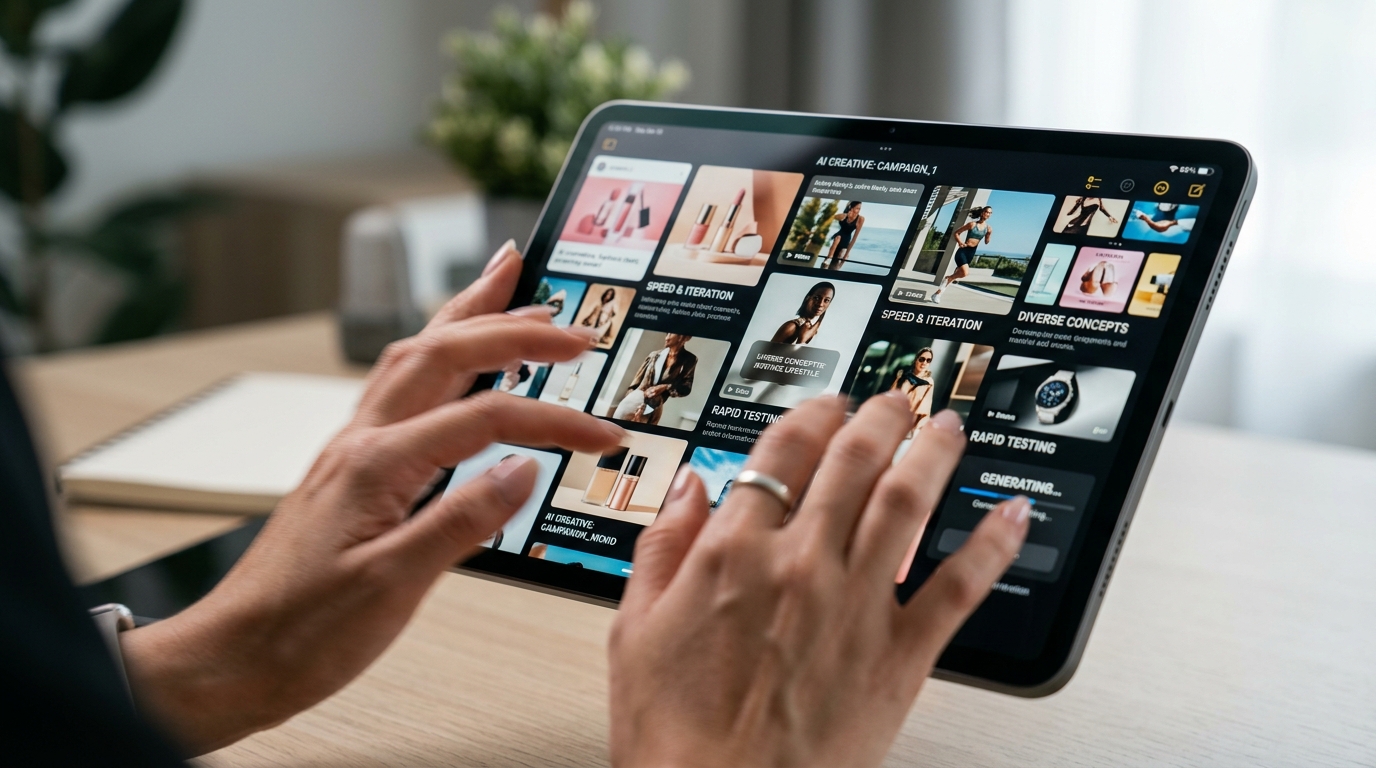
With free Veo 3.1 access in Vids, businesses can prototype ad creatives faster, generate product visuals at low cost, create internal explainers, and test short-form social content without adding another expensive subscription.
That’s especially valuable for teams testing performance-driven assets. If you’re constantly trying new messaging angles, hooks, or product stories, being able to produce short AI-generated scenes quickly can shrink the production cycle in a meaningful way.
And in many cases, speed is the advantage.
 The competitive pressure this creates
This move also arrives at an interesting moment in the broader AI video market. Competitors like Runway, Kling, Pika, and Luma have all been competing for creators with various free tiers and credit systems. At the same time, OpenAI’s Sora API pullback has left room for others to gain ground.
Google appears ready to use that opening.
By offering free access through a familiar Google product, the company lowers the learning curve and removes much of the hesitation around trying AI video in the first place. Users don’t need to register for a niche platform, learn a new interface, or justify another monthly expense. They can open a Google-connected tool and start creating.
That kind of distribution is difficult to match.
Even if some competing models still outperform Veo in certain visual tests or specialized use cases, Google’s real edge is reach. When a strong model is combined with Workspace integration and billions of existing users, the conversation starts to shift from Which tool is best? to Which tool is easiest to use right now?
The bigger picture: AI video is becoming normal
The broader takeaway is clear: AI video is no longer sitting on the edge of creative production. It’s becoming part of ordinary business software.
That matters because once a capability becomes native to tools people already use, adoption tends to accelerate quickly. We’re likely to see a sharp increase in AI-generated explainers, social posts, ecommerce videos, sales assets, onboarding content, and lightweight branded media.
Of course, that also brings familiar concerns around misinformation, deepfakes, and content saturation. The easier it becomes to generate polished video, the more important strategy, authenticity, and brand clarity become.
Free generation alone won’t deliver results. What still matters is the system behind the creative: targeting, testing, measurement, and optimization.
FAQ
Is Veo 3.1 really free for all users?
Yes. Google has made Veo 3.1 available for free to Google account users through Google Vids, though usage limits apply.
What are the free usage limits?
Users can generate up to 10 Veo 3.1 video clips per month, with each clip lasting around 8 seconds.
Can the generated videos include audio?
Yes. One of the key advantages of Veo 3.1 is that it supports video generation with sound, making the output more useful for real creative and marketing work.
Who benefits most from this update?
Creators, marketers, and businesses stand to benefit most, especially teams that need to test ideas quickly and produce short-form content without increasing production costs.
Conclusion
Google’s decision to make Veo 3.1 free for all users looks like one of those moments that moves AI video from impressive technology into everyday utility. It’s a strong signal that high-quality video generation is becoming more accessible, more integrated, and far more relevant for marketers that need to move fast. As AI content creation gets easier, the brands that stand out will be the ones that combine creative speed with strong advertising intelligence. If you want to connect that creative output to better campaign performance, ROAS Suite is worth considering as part of a smarter, more scalable growth workflow.