Google Launches AI Mode as a New Ads Engine in AI Search
Google’s AI Mode is no longer just a product test or a reaction to ChatGPT. It’s starting to look like something much bigger: the next major advertising engine inside Search.
That matters because Google isn’t simply adding AI to old search behavior. It’s changing how discovery, recommendations, and purchase intent work inside a conversational interface. And unlike newer AI companies still trying to figure out monetization, Google is bringing a 25-year advertising machine straight into this experience.
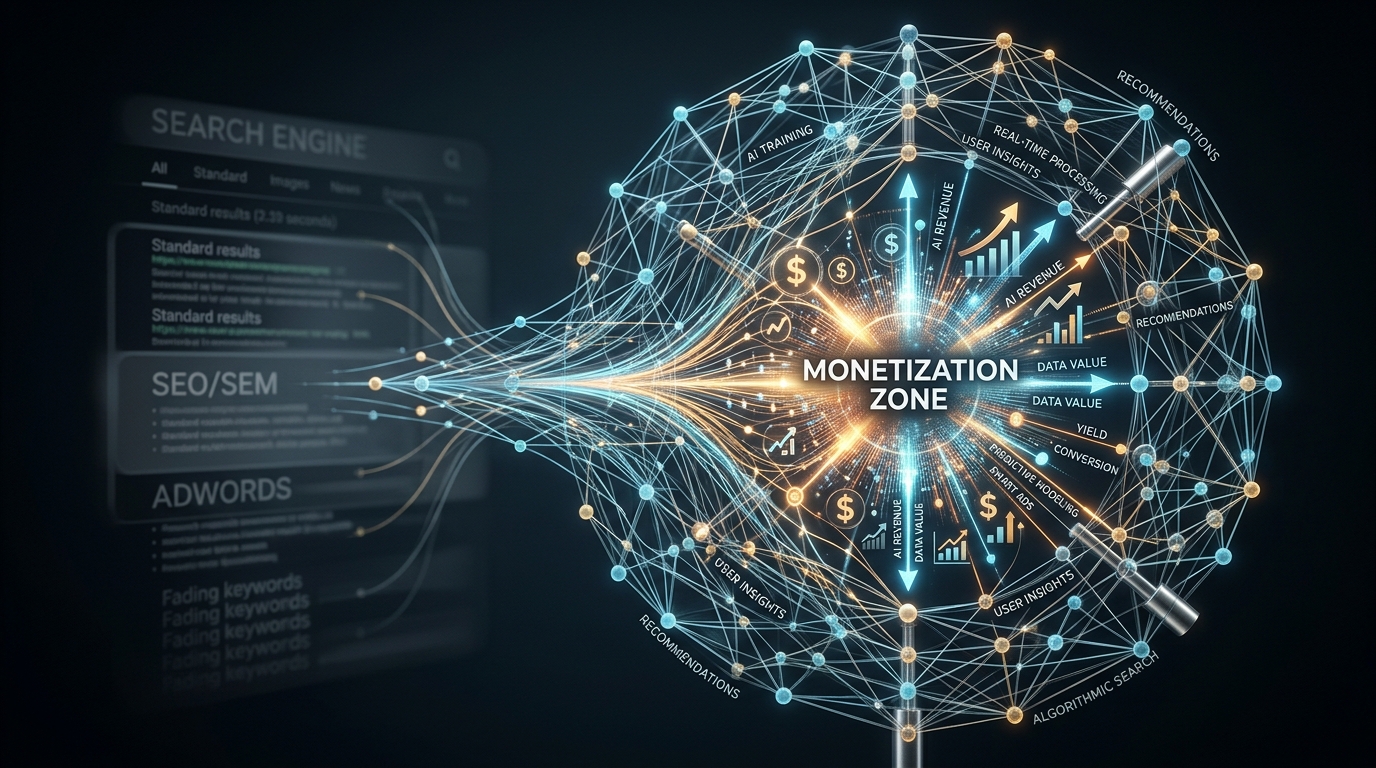 AI Mode Is More Than an AI Search Feature
AI Mode is Google’s LLM-powered answer engine, built for deeper and more complex queries than the traditional search box was designed to handle. Instead of serving a standard page of blue links, it can reason through questions, synthesize information, and guide users through follow-up prompts in a more natural back-and-forth.
That changes the economics of search.
In traditional search, ad inventory comes from explicit queries and page views. In AI Mode, inventory can come from longer sessions, richer context, and stronger commercial signals gathered throughout an ongoing interaction. Google isn’t just protecting ad revenue in the AI era. It’s building a smarter way to monetize intent.
The Timeline Shows a Very Deliberate Rollout
The rollout has been revealing.
In early 2025, pressure from conversational AI raised real concerns that Google could lose search mindshare. By May 2025, Google had responded publicly with AI Mode updates powered by Gemini, while expanding ads in AI Overviews and AI Mode to desktop users in the U.S. During the second half of 2025, agencies and brands were briefed, beta access widened, and AI Max started rolling out.
Then the commercial side became much more visible.
By November 2025, Google had officially started showing ads in AI Mode during U.S. testing, often at the bottom of AI-generated responses. By early 2026, reporting around those placements made it clear that real-time auctions were active and that shopping ads were becoming a core part of the AI search experience. By March 2026, the conversation had shifted from “Will Google monetize AI search?” to “How big can this get?”
That’s a significant shift.
Why Google Has the Advantage
Lots of companies can build a chatbot. Very few can tie conversational AI to a mature ad marketplace, merchant ecosystem, shopping graph, measurement stack, and campaign infrastructure at Google’s scale.
That’s the real edge.
Google doesn’t need to invent ad monetization from scratch. It can pull eligible inventory from existing campaign types like Performance Max, Shopping, and keyword-based campaigns. It can use behavioral signals, real-time machine learning, and product feed data to decide which ads belong inside an AI conversation. And it can do it fast enough to keep the experience smooth.
In practical terms, advertisers may not need to rebuild their paid media strategy from the ground up. But they will need to rethink how optimization works in AI-led journeys.
The New Logic of AI Search Advertising
What stands out most is how AI Mode moves search advertising away from a pure keyword-and-click model and toward relevance, confidence, and context.
That has major implications.
If a user asks a layered, high-intent question, such as comparing product options, weighing tradeoffs, or planning a purchase, Google can infer far more than it could from a short keyword string. That gives the platform stronger signals to place ads that feel less like interruptions and more like a useful continuation of the conversation.
For e-commerce brands, this is especially important. Shopping ads in AI Mode, sponsored deals, discount-led placements, and even in-AI checkout experiments suggest Google wants to shorten the distance from discovery to decision. The goal is no longer just traffic generation. It’s decision acceleration.
 What Advertisers Should Pay Attention To
The headline opportunity is clear: stronger ROAS potential from shorter, smarter funnels.
Some early signals already point that way, with AI-enhanced campaign types showing conversion lift and ROAS gains across the broader Google ecosystem. But the opportunity comes with tradeoffs. Advertisers will likely have less manual control over placement logic and greater dependence on Google’s automation.
That makes a few priorities especially important:
- Strong product feeds and clean merchant data
- Creative and landing pages aligned with nuanced intent
- E-E-A-T signals that improve both content trust and ad confidence
- Measurement models built around outcomes, not just clicks
- Testing frameworks that account for conversational discovery paths
This is where many brands will either adapt quickly or fall behind. AI search rewards businesses that are easy for the model to understand, explain, and recommend.
The SEO and Publisher Impact Is Real
Even though ad density in AI Mode still appears fairly light, the broader disruption is already showing up in organic behavior. AI summaries and conversational answers reduce the need to click through at all. That puts pressure on publishers, affiliate models, and SEO strategies built around informational traffic.
At the same time, Google still needs trusted source material to power these experiences. So while click volume may decline, authority becomes even more valuable. Brands that show real expertise and publish structured, credible information are more likely to stay visible in both organic AI answers and paid experiences.
In other words, this isn’t the end of search strategy. It’s the merging of SEO, paid media, feed optimization, and conversion intelligence into a single AI-era discipline.
Where This Goes Next
The most important thing about AI Mode may be that it’s just the beginning.
Google executives have already suggested that learnings from ads in AI Mode could shape monetization in the Gemini app later on. If that happens, Google won’t just control AI monetization inside Search. It could extend that model across a much broader conversational ecosystem.
Add in agentic commerce, personalized recommendations, Gmail- and Photos-informed context, and business-agent style checkouts, and the direction becomes clear: search is shifting from a query engine to a transactional decision engine.
That’s why AI Mode looks like a structural shift, not just a feature update.
Google is showing that in the AI era, the winner may not be the company with the flashiest chatbot. It may be the one that can turn conversations into commerce at scale.
FAQ
What is Google AI Mode?
Google AI Mode is the company’s LLM-powered search experience designed to handle more complex, conversational queries. It can synthesize information, answer layered questions, and support follow-up prompts in a way that feels more interactive than traditional search.
Why does AI Mode matter for advertisers?
It changes how commercial intent is detected and monetized. Instead of relying mainly on short queries and page views, Google can use richer conversational context to match ads more intelligently throughout a session.
How are ads appearing in AI Mode?
Ads have appeared during U.S. testing, often placed beneath AI-generated responses. Reporting has also indicated that real-time auctions are active and that shopping ads are becoming an important part of the experience.
What should brands do now?
Brands should focus on feed quality, landing page relevance, strong trust signals, and measurement models that prioritize outcomes over clicks. They should also test how their campaigns perform in more conversational, AI-led discovery paths.
Conclusion
For marketers, the takeaway is straightforward: AI Mode is changing how intent is captured, how ads are matched, and how revenue is generated in search. The brands that win will be the ones that stop optimizing only for clicks and start optimizing for AI-driven confidence, context, and conversion. If you want a clearer way to measure and improve performance as this shift accelerates, consider using ROAS Suite to stay focused on the outcomes that actually matter.