Google Expands AI Max Text Guidelines Globally for Custom Ad Copy
By Charles Ryder
I’ve spent the last few years watching advertisers bounce between two competing needs: scaling creative faster than ever, and protecting brand voice so one awkward line of copy doesn’t undo months of positioning. Google’s latest update—expanding AI Max “text guidelines” globally—targets that exact tension. It’s also one of the most usable “AI control” additions Google Ads has rolled out in a while.
As of February 26, 2026, Google is widening beta access to text guidelines for all advertisers worldwide, across all languages and verticals, in AI Max for Search and Performance Max. Translation: more advertisers can steer AI-generated ad copy with plain-language rules instead of settling for whatever the model spits out.
 A quick timeline: how we got here
This didn’t land out of nowhere. It’s part of Google’s pattern: push automation first, then add guardrails once enough advertisers hit the limits.
- January 2025: Google starts requiring brand guidelines for new Performance Max campaigns created in the UI—early groundwork for brand controls in AI-driven ads.
- May 2025: Google announces AI Max at Google Marketing Live, positioning it as an AI-powered upgrade to Search and Performance Max with more generative creative and “keywordless” optimization.
- September 2025: AI Max expands globally in beta across Google Ads surfaces (including API and SA360).
- September 15, 2025: Google introduces text guidelines in limited beta, letting advertisers use “do/don’t” instructions to shape AI-generated copy.
- February 26, 2026: Google expands beta access globally, opening text guidelines to all advertisers.
The sequence tells the story: scale first, then brand inputs, then a simpler way to set boundaries.
What “text guidelines” actually are (and why they matter)
Text guidelines are campaign-level instructions you write in everyday language to influence what Google’s AI generates for your ads. They’re meant to work alongside:
- Text customization (the system tailoring copy to user intent and queries)
- Text guidelines (your constraints and preferences that keep that copy on-brand)
This matters because AI Max and Performance Max increasingly assemble and adapt messaging dynamically. That’s helpful—right up until it drifts into off-tone, misleading, or legally risky territory (especially in regulated or reputation-sensitive categories).
With text guidelines, you can set clear boundaries like:
- “Don’t imply our products are cheap.”
- “Avoid ‘unlimited’ or any guarantee-style wording.”
- “Maintain a premium tone; avoid slang.”
- “Don’t use exclusionary phrases like ‘only for’.”
Google’s pitch is simple and, honestly, accurate: scale creative assets while protecting brand integrity. For teams that have felt forced to trade control for efficiency, this is a practical middle ground.
Why Google is pushing this now: the Performance Max reality
Performance Max isn’t a side project anymore. Google has said PMax is responsible for a meaningful share of conversions (often cited at around 45% of Google Ads conversions). As more budget shifts into AI-driven campaign types, advertisers need fewer black-box surprises.
Text guidelines read like Google acknowledging what advertisers have been saying for years:
- Automation is fine.
- Losing brand voice is not.
This expansion helps close the trust gap without slowing down Google’s automation roadmap.
Proof points: early results (BYD’s case)
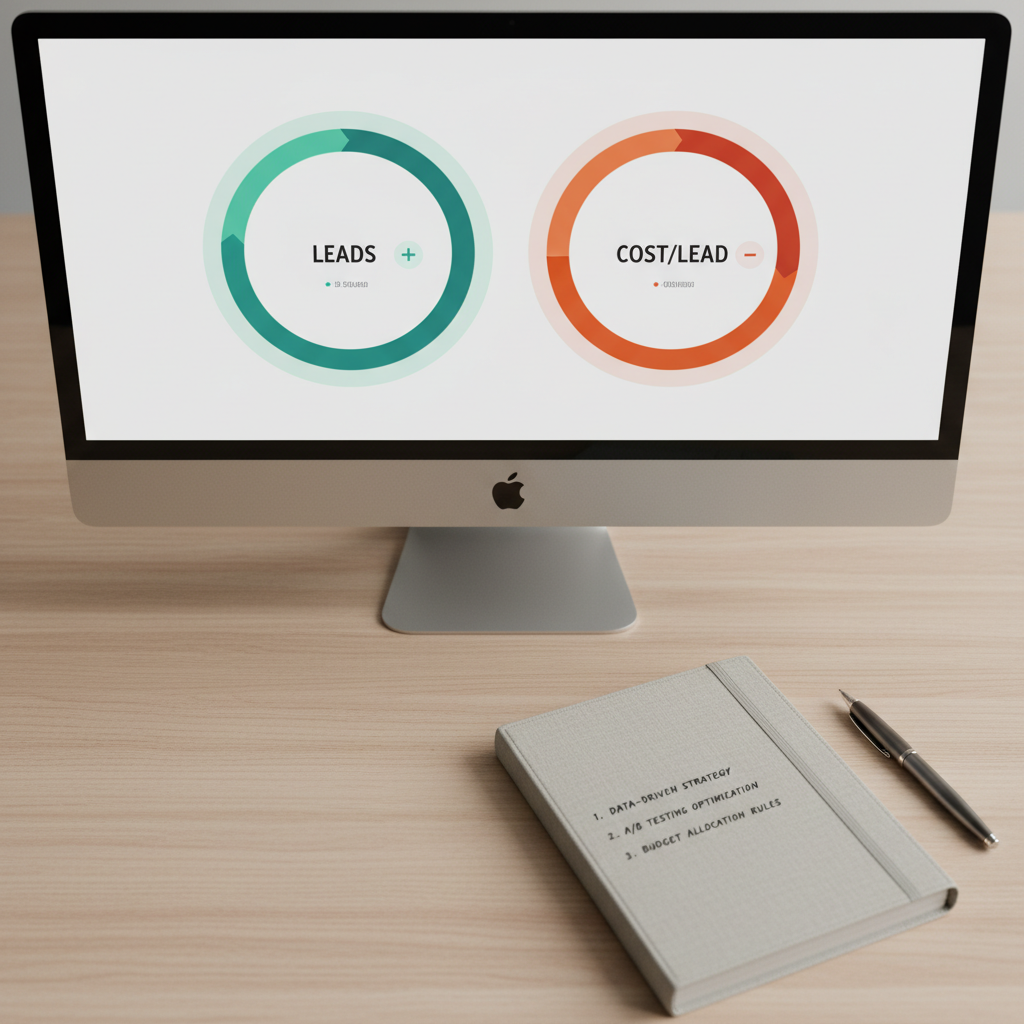
Google highlighted BYD as an early adopter, reporting a 24% increase in leads and a 26% lower cost-per-lead (CPL) after using text guidelines to scale AI creatives while maintaining brand standards.
Any single case study deserves healthy skepticism—creative, audience, offer, and measurement can all skew results. Still, the logic holds. Cleaner, more on-brand copy can reduce wasted clicks and lift conversion quality. And if AI can generate more variations without ballooning review time, you get scale without chaos.
 Who benefits most from global access
Because this expansion covers all languages and verticals, it’s not just a win for big, English-first brands. A few groups should get outsized value:
1) Global brands managing tone across regions
Consistency gets messy across markets. Text guidelines give you a way to codify tone and “never say this” phrases so local teams can align—without rewriting every variation by hand.
2) Regulated or high-scrutiny categories
Auto, finance, healthcare, insurance—any category where one word can trigger compliance issues. Instructions like “avoid guarantees” or “don’t imply X” can prevent expensive cleanup later.
3) Lean teams and SMBs
Smaller advertisers rarely have the bandwidth to audit endless AI-generated variants. Proactive rules beat reactive editing, especially when campaigns need to move quickly.
The strategic shift: from editing outputs to governing systems
The real change isn’t just better copy—it’s a workflow shift.
Instead of:
- AI generates copy → you review everything → you fix what’s wrong
You move toward:
- You define rules once → AI generates within boundaries → you monitor exceptions
That’s the difference between “AI as an intern” and “AI as infrastructure.” It’s also where the ad ecosystem is headed. Google is making that transition easier with plain-language controls inside Google Ads.
What I’d watch out for
Guidelines help, but they don’t solve everything. A few realities are worth keeping in mind:
- Homogenization risk: If everyone uses similar guardrails and the same optimization logic, ads can start to sound interchangeable.
- Over-trusting guardrails: Guidelines reduce risk, but they don’t replace review—especially in compliance-heavy industries.
- Measurement still wins: Better copy isn’t the goal; better outcomes are. Validate lift with clean experiments, not gut feel.
FAQ
Are AI Max text guidelines available to everyone now?
Google is expanding beta access globally as of February 26, 2026, making text guidelines available to all advertisers worldwide across supported campaign types.
Which campaign types support text guidelines?
Google is rolling text guidelines out across AI Max for Search and Performance Max.
Do text guidelines replace ad copy review?
No. They’re guardrails, not a guarantee. You’ll still want monitoring and review processes—especially if you’re in a regulated category.
Conclusion: control is finally catching up to scale
Google’s global expansion of AI Max text guidelines is a meaningful step toward what advertisers have been asking for: AI-powered performance without giving up brand voice. It also signals where things are going—natural-language governance becoming standard, starting with text and likely expanding into images and video as Google doubles down on AI-first workflows.
If you want a practical way to track these changes and turn them into campaign actions, AIuthority helps marketers stay current as Google’s AI ad stack keeps evolving.