Google Confirms March 2026 Core Update Completion with SEO Implications
Google has confirmed that the March 2026 core update finished rolling out on April 8, 2026, ending a 12-day, 4-hour stretch of close monitoring for SEOs, publishers, and brands. For anyone who watched rankings move hour by hour, that confirmation matters. It marks the end of the rollout and the beginning of the real analysis: what changed, who gained, and what happens next.
This update reinforces a trend that has been building for years and is now hard to miss. Google is leaning more heavily toward content that is genuinely useful, backed by experience, trustworthy, and distinct. At the same time, it seems increasingly willing to reduce visibility for thin, templated, or mass-produced pages that add little new value.
 The rollout timeline at a glance
Google began rolling out the March 2026 core update on March 27 at roughly 2:00 a.m. PDT. At launch, the company described it as a regular core update designed to better surface relevant, satisfying content from all kinds of sites. As with other broad core updates, Google offered no new tactical advice beyond its standard guidance: focus on helpful, reliable, people-first content.
The rollout completed on April 8 at 6:12 a.m. PDT, according to Google’s Search Status Dashboard and official search liaison channels. That brings the total duration to exactly 12 days and 4 hours.
The timing made this rollout especially notable. It arrived shortly after the March 2026 spam update and not long after wider quality-related changes in Discover. That overlap likely made it harder for site owners to pinpoint the source of traffic swings.
Why this update mattered so much
Even by core update standards, the March 2026 rollout produced serious volatility. Tracking tools and third-party analysts reported elevated movement across a large share of monitored domains. Some datasets showed more than half of sites experiencing meaningful ranking changes, while individual publishers reported traffic losses between 20% and 35% during the first week.
Still, not every expert saw it as Google’s harshest update. Some analysts, including Glenn Gabe, described it as uneven. It was impactful, but not universally destructive. Some sites took major hits, while others saw only moderate fluctuations.
That unevenness matters. It suggests Google may be getting more granular in how it evaluates quality rather than applying broad shifts across entire categories.
The biggest SEO takeaway: quality is now more comparative than ever
The clearest lesson from this update is that Google continues to rank content comparatively, not just absolutely. A page does not need to be bad to lose visibility. It may simply be less useful, less original, or less trustworthy than competing pages.
That distinction matters because many site owners still treat ranking drops as penalties. Broad core updates usually are not penalties in the manual-action sense. They are recalibrations. Google reassesses which pages deserve stronger visibility based on changing signals of relevance and satisfaction.
In practice, that means a page built from recycled summaries, generic AI-written copy, or lightweight affiliate formatting may lose to content that offers something more: firsthand experience, stronger sourcing, clearer author expertise, or original analysis.
Who appeared to win
Post-update analysis points to several apparent winners:
- official brand and manufacturer sites
- niche publishers with visible expertise
- content with strong E-E-A-T signals
- pages offering original research, commentary, or firsthand experience
- sites publishing material with real Information Gain
That last point stands out. Information Gain, simply put, means content that gives users something they cannot easily get from dozens of near-identical pages already indexed. That is where many SEO strategies are being tested right now.
If your article says what everyone else says with slightly different wording, it is getting harder to compete. If it includes fresh data, lived experience, expert interpretation, or a useful framework, the odds improve.
Who appeared to lose
On the other side, this update seems to have put more pressure on:
- AI content farms
- thin comparison and aggregator sites
- low-value affiliate pages
- templated articles scaled without clear editorial oversight
- websites with weak trust and author credibility signals
That does not mean Google is against AI-assisted content. A better way to frame it is this: Google appears more aggressive in filtering out content that feels synthetic, shallow, or interchangeable. AI is a tool, not a ranking strategy. If it produces pages with no depth, no review, no expertise, and no originality, those pages are increasingly vulnerable.
This is especially true in sensitive categories such as health, finance, legal, and other YMYL areas, where trust matters more than ever.
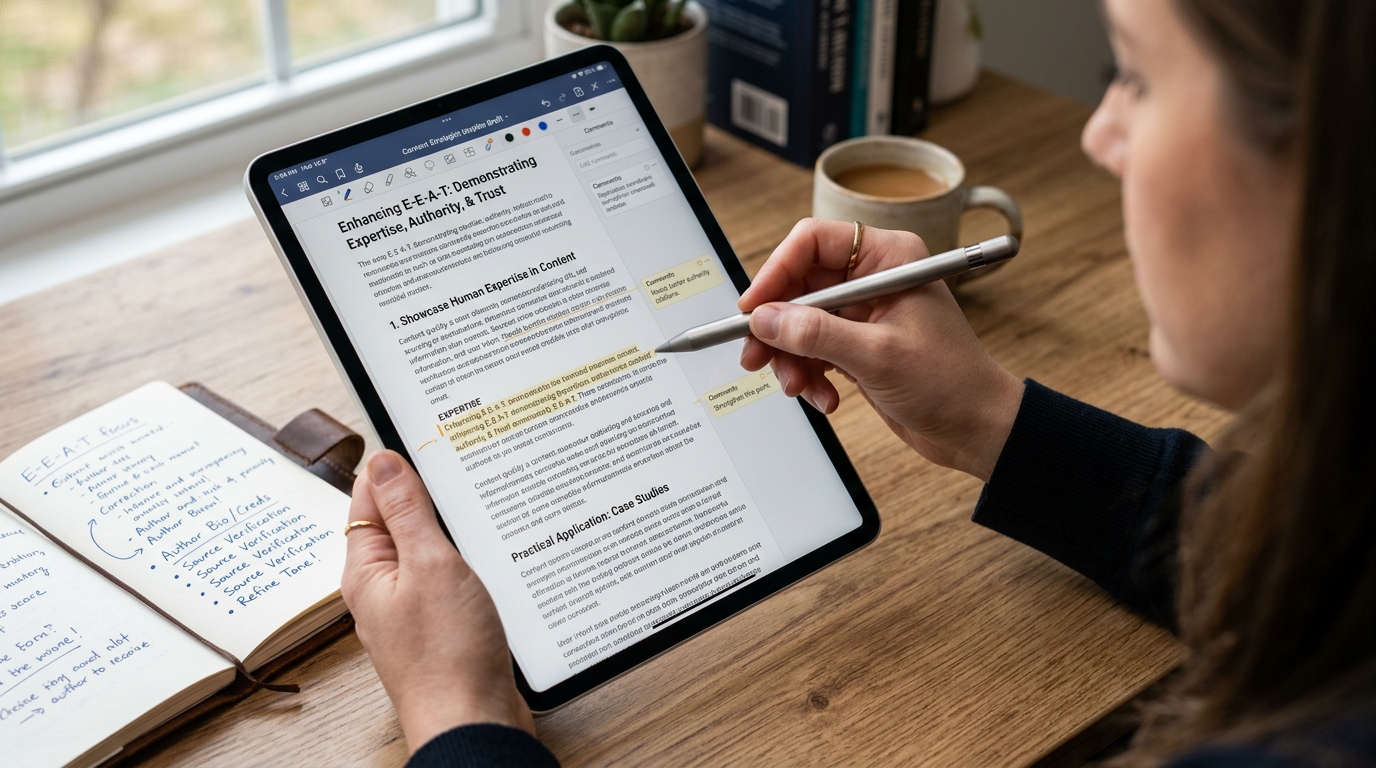 E-E-A-T is no longer optional rhetoric
SEO has been talking about E-E-A-T for a long time, but the March 2026 core update suggests Google is leaning on it more heavily in practice. Experience, Expertise, Authoritativeness, and Trustworthiness are not just concepts for conference slides. They are operational signals that can influence who gains and who loses.
Sites that tend to hold up best through updates like this usually do a few things consistently well:
- they show who wrote the content
- they explain why that person is qualified
- they cite reliable sources
- they avoid exaggerated claims
- they demonstrate actual experience where relevant
- they maintain consistent editorial quality across the site
None of this guarantees immunity from volatility, but it does create a much stronger foundation.
What site owners should do now
Now that the rollout is complete, the best response is not panic editing. It is disciplined analysis.
A solid post-update review should focus on five areas:
1. Measure the real impact
Use Google Search Console and GA4 to compare pre-rollout and post-rollout performance. Look at pages, queries, and site sections, not just total traffic.
2. Identify pattern-level losses
Did product comparisons decline? Did informational blog posts drop? Did pages with anonymous authors lose ground? Look for themes instead of reacting one URL at a time.
3. Audit for originality
Ask a blunt question: does this page add anything genuinely new? If the answer is no, it may need stronger insight, better evidence, clearer expertise, or firsthand input.
4. Strengthen trust signals
Improve author bios, editorial transparency, citations, and factual rigor. On YMYL topics, this matters even more.
5. Avoid short-term overcorrections
Google has repeatedly said there is often nothing inherently wrong with affected pages. Recovery usually comes from meaningful quality improvements, and the full impact may not show until a future core update.
The broader meaning for SEO in 2026
This update looks like another step in Google’s effort to separate high-value content from scaled content built mainly to capture traffic. Volume alone is becoming a weaker advantage. Credibility, originality, and user value are becoming stronger ones.
That raises the bar for everyone. Publishers can no longer rely on producing ten average articles when one genuinely strong article would better serve the audience. Affiliate sites should not expect thin listicles to hold rankings forever. Brands cannot assume domain authority alone will carry weak content indefinitely.
The direction is clearer than it used to be, even if the work is more demanding: publish less filler, invest more in substance, and build content around knowledge people can trust.
FAQ
When did the March 2026 core update finish rolling out?
Google confirmed that the rollout finished on April 8, 2026, at 6:12 a.m. PDT.
How long did the rollout last?
The full rollout lasted 12 days and 4 hours, beginning on March 27, 2026.
Was this update considered unusually volatile?
Yes. Many tracking tools and analysts reported elevated volatility, with some publishers seeing traffic drops of 20% to 35% during the first week.
Did Google target AI content specifically?
Not exactly. The stronger pattern is that Google appears to be devaluing content that feels shallow, interchangeable, or poorly reviewed, whether it was produced with AI or not.
What should affected sites do first?
Start with analysis, not quick fixes. Review which pages or sections lost visibility, identify patterns, and improve originality, trust signals, and editorial quality.
Conclusion
Google’s confirmation that the March 2026 core update is complete gives SEO teams a clear point for analysis, but it also sends a broader message. Search visibility is increasingly tied to demonstrable value: real expertise, original insight, and content built for people rather than ranking systems. If you are rethinking your content strategy in light of these changes, use tools and workflows that support quality at scale, and AIuthority is a smart place to start.