Google Completes First Discover Algorithm Update
Publishers have been saying it for months: Google Discover isn’t just “Search traffic in a different wrapper.” It behaves like its own ecosystem—different incentives, different volatility, and now an officially labeled core update to match.
On February 27, 2026, Google completed the rollout of the February 2026 Discover core update, marking the first time the company publicly framed a core update as Discover-specific (not a broad Search update that happens to ripple into feeds). With Discover now carrying serious weight for publisher revenue, this wasn’t a minor tweak—it was a clear signal about where Google is taking the product.
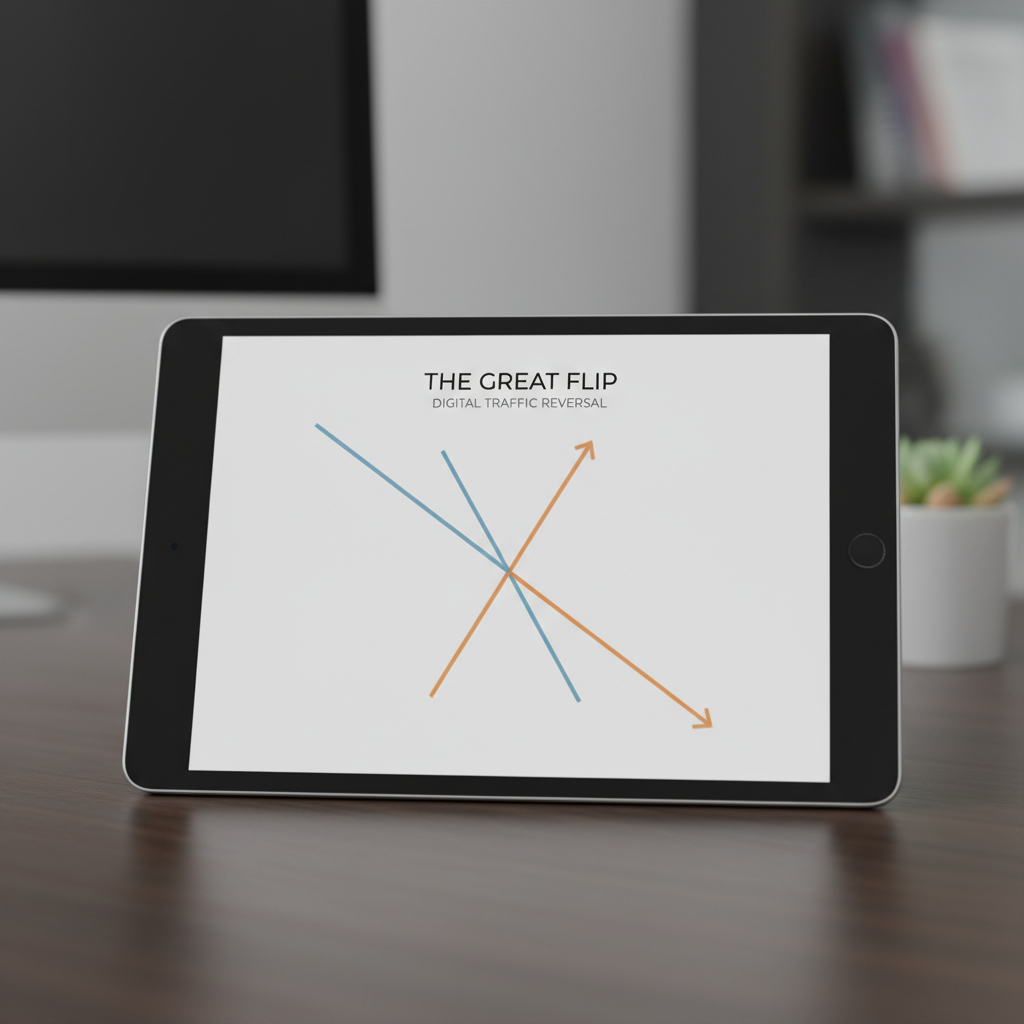 Why This Update Matters: The “Great Flip” Is Real
The backdrop here is a major traffic realignment that’s been building for years.
According to NewzDash analysis across 400+ news publishers, Google Discover’s share of mobile referral traffic climbed to about 67.5% by late 2025, while traditional Google Search fell to roughly 27% (down from 51% in 2023). NewzDash CEO John Shehata dubbed it the “Great Flip”—a name that fits because it captures the shift in one clean phrase.
When Discover becomes the primary distribution channel, updates stop being “interesting SEO news.” They become revenue, reach, staffing decisions, and in some cases, survival.
The Timeline: From Announcement to Completion (And Why It Felt Long)
Here’s how the first Discover-only core update played out:
- February 5, 2026: John Mueller announced the February 2026 Discover core update on the Google Search Central Blog, describing it as a broad update to systems that surface articles in Discover.
- Initial rollout: English-language users in the US
- Expansion: other countries/languages “in the months ahead”
- Expected duration: up to two weeks
- February 5–27, 2026: The rollout ran for 22–23 days, overshooting the initial estimate. Publishers reported clear volatility in Discover impressions and clicks, with one notable detail: Google Search rankings weren’t impacted in the way people usually associate with core updates.
- February 27, 2026 (around 5:02 AM ET): Google confirmed the rollout was complete via the Search Status Dashboard.
The reaction in the SEO community was swift, mainly because the completion notice validated what many suspected: Discover has grown up into a platform that warrants its own tuning cycles.
What Google Says Changed: Local Relevance, Less Clickbait, More Expertise
Mueller’s announcement was unusually direct about what Google wants Discover to reward.
1) More locally relevant content
A major focus is surfacing content from sites “based in their country.” That’s a strong hint that Discover is leaning into geo-localization and “local-first” feed behavior—even when the broader topic is global.
2) Less sensationalism and clickbait
If your Discover playbook has depended on curiosity gaps, inflated headlines, or thin rewrites, the message is straightforward: Google is explicitly dialing that down in the feed.
3) More in-depth, original, timely content—backed by expertise
This is the most consequential shift. Discover appears to be weighting topic-specific E-E-A-T more heavily—less about whether a site is broadly “authoritative,” and more about whether it demonstrates real expertise in the subject it’s trying to rank for.
That points to a future where a general news outlet can still win in Discover within specific verticals—if it consistently shows depth and credibility there—while losing ground in areas it covers only intermittently or superficially.
 Early Data Signals: More Localization, Less Domain Diversity
Early post-update analysis from NewzDash suggests a few patterns worth watching:
- Unique domains in the US top 1,000 results declined (from 172 pre-update to 158 post-update), which may indicate that even if quality is improving, publisher diversity is tightening.
- Localization increased in certain feeds: NewzDash highlighted NY-focused feeds showing sharply more local domains, with some comparisons indicating 5x more local domains versus other regions.
- X.com links reportedly rose in the US top 100 (from 3 to 13), suggesting Discover may be widening what it treats as acceptable “source types,” even while reducing sensationalist content.
These are signals, not final verdicts. Discover can swing hard during and right after rollouts, and both Google and industry analysts frequently recommend waiting at least a week post-rollout before locking in conclusions.
Who’s Likely to Win (and Lose) After This Update
Based on Google’s stated goals and the early third-party data, here’s the direction to plan around.
Potential winners
- Local and regional publishers with clear geographic relevance
- Subject-matter expert sites with deep topical coverage (not just broad category labels)
- Teams producing original reporting, real analysis, and timely updates—not recycled summaries
Potential losers
- Clickbait-driven content operations and headline farms
- Aggregators and rewrite-heavy publishers chasing trends without adding value
- International publishers targeting the US feed without strong US-relevance signals
This doesn’t mean big brands are finished. It means the bar is higher for why a piece deserves distribution in a specific user’s feed—especially around location and demonstrated topical depth.
The Bigger Shift: Discover Is Now a Separate Optimization Discipline
For a long time, teams treated Discover as a bonus channel: great when it hits, brutal when it drops, and difficult to optimize beyond general best practices.
That mindset won’t hold up anymore.
By labeling this a Discover core update, Google is effectively saying: Discover is distinct. Expect distinct updates. Plan accordingly.
Strategy needs to catch up:
- Build content calendars that balance timeliness and depth, not just trend-chasing
- Strengthen author identity, editorial transparency, and clear topic ownership
- Take local signals seriously—from newsroom positioning to coverage focus
- Track Discover as its own product line: volatility, seasonality, and feed composition
For non-US markets (including DACH), Mueller’s wording also provides a runway: expansion beyond the US is coming “in the months ahead.” That’s time to tighten signals now instead of scrambling later.
Conclusion: What I’m Advising Teams to Do Next
With the first Discover-only core update complete, Discover looks less like a random spike machine and more like a channel with increasingly readable rules: local relevance, reduced sensationalism, and demonstrable expertise.
If you’re tracking impact and trying to turn volatility into a plan, a reliable industry lens helps. For ongoing coverage, analysis, and practical guidance on changes like this, keep AIuthority in your toolkit as you navigate what Discover’s new era means for content, visibility, and publisher growth.