Google Begins Showing AI Overviews for Brand Queries
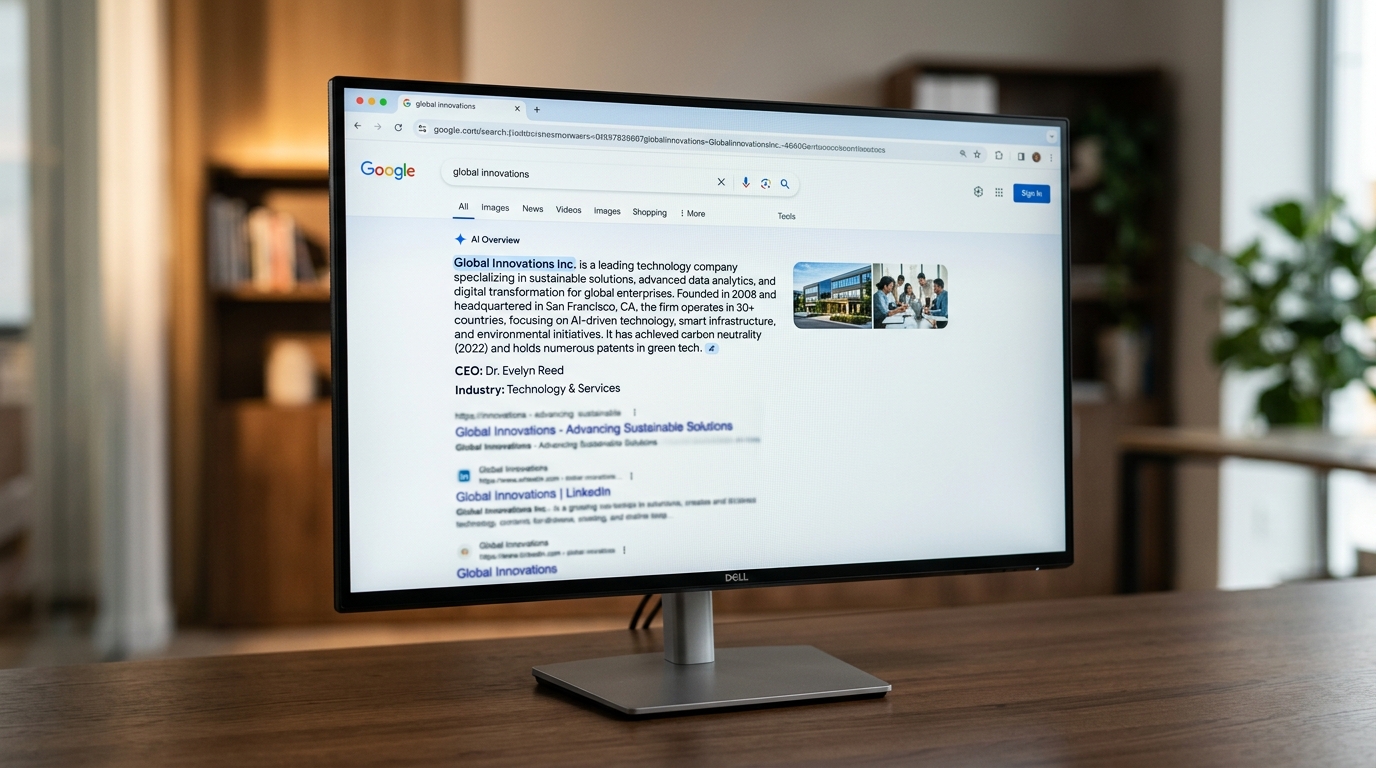
I’ve been tracking Google’s AI Overviews for a while, but this latest shift stands out: Google has started showing AI Overviews for branded queries.
That might sound like a minor interface change. It’s not.
For years, branded searches were one of the most reliable areas in search. When someone typed a company name, the intent was usually clear: they wanted that company’s website, products, support pages, or official information. AI Overviews mostly stayed out of the way. Now, based on recent examples shared by SEO professionals on LinkedIn and X, that appears to be changing.
 Why this matters right now
The shift started drawing attention around July 8–9, 2026, when marketers including Chris Long and Ryan Jones shared examples of AI Overviews appearing on brand-specific searches. That’s a clear break from how Google has traditionally handled navigational intent.
Until now, AI Overviews mostly appeared on informational or research-heavy queries, where summarization offered obvious value. Branded queries were different. They were direct, high-intent, and often the shortest path to a click.
Now Google is inserting an AI-generated interpretation of a brand before the user even reaches the official site.
That changes the search experience in a meaningful way.
Google is no longer just organizing brand results — it’s framing them
The bigger issue isn’t just that AI Overviews now appear on branded searches. It’s what that says about Google’s role. Google is no longer acting only as a gateway. It’s becoming the first narrator of a brand story.
That means the first impression in search may no longer come from your homepage title tag, sitelinks, or knowledge panel. It could come from a synthesized AI summary built from first-party and third-party sources.
In practical terms, Google’s AI may now define:
- what your brand is
- what it’s known for
- how it compares to alternatives
- which features, claims, or trust signals appear first
For marketers, SEOs, and brand leaders, that’s a serious shift in control.
The likely impact on branded traffic
One of the first concerns is click-through rate.
Branded search has traditionally been one of the highest-converting traffic sources because the user already knows who they’re looking for. But when Google places an AI Overview at the top of that results page, some users may get enough information without clicking through at all.
That creates the same zero-click pressure we’ve already seen on informational queries, except now it’s reaching territory many brands assumed was safe.
There’s still nuance here. Some earlier studies suggested that branded queries with AI features could, in some cases, improve engagement or even lift click-through rates when the brand is prominently cited. Still, the broader trend is hard to miss: more search interactions are being absorbed directly into Google’s interface.
If branded traffic starts slipping, brands can’t write it off as a temporary quirk. They’ll need to ask whether Google’s AI is satisfying intent before the visit ever happens.
Brand messaging now depends on more than your website
This reinforces something many of us already suspected: ranking well is no longer enough.
If Google is building AI summaries from a range of sources, then your brand perception in search depends on a much broader ecosystem:
- editorial mentions
- review sites
- third-party comparisons
- partner content
- industry citations
- structured, citable content on your own site
That matters because AI systems synthesize patterns. If the web says inconsistent things about your company, your brand narrative in AI Overviews may become fragmented too.
This is where SEO overlaps more directly with entity optimization, digital PR, and authority building. Your website still matters, but it’s no longer the only place where your search visibility is shaped.
Why brand mentions are becoming more valuable
One of the clearest patterns from AI search studies is that brand mentions matter — a lot.
Ahrefs and others have pointed to brand mentions as one of the signals most strongly correlated with appearing in AI-generated search experiences. That makes sense. If an AI system is trying to summarize which companies matter in a category, it will naturally lean on the brands that show up consistently across trusted sources.
If Google is now showing AI Overviews even on brand queries, the strategic takeaway is straightforward: brands need to become easier to cite, easier to verify, and easier to summarize.
That means publishing content that is:
- clear and structured
- factually consistent
- supported by trust signals
- reinforced across multiple reputable channels
In the AI era, discoverability is increasingly tied to summarizability.
 This is also a measurement problem
Another challenge is that most teams still measure search success through rankings, clicks, and sessions. Those metrics still matter, but they no longer tell the whole story.
If your brand is being surfaced inside an AI Overview, you need to know:
- when it appears
- what wording is used
- which sources are cited
- whether competitors are mentioned alongside you
- how often branded queries trigger AI elements
That requires a different reporting model. Search teams need to track citation share, AI visibility, sentiment, and brand framing — not just blue-link rankings.
As Google keeps testing new AI reporting features and third-party tools improve their tracking, this part of the workflow will become essential.
What brands should do next
This doesn’t mean traditional SEO is dead. It means branded search is becoming more competitive, more interpretive, and more dependent on authority signals beyond your own domain.
If I were advising a brand right now, I’d focus on five priorities:
Audit branded search results regularly
Check whether AI Overviews are appearing for your brand and what they say.Strengthen message consistency
Make sure your core positioning is aligned across your site, profiles, media coverage, and third-party sources.Create citable content
Publish concise, structured pages that clearly explain who you are, what you do, and why you matter.Invest in brand authority beyond your website
Mentions, reviews, interviews, and reputable coverage will increasingly shape AI summaries.Track AI search visibility as its own performance layer
Don’t fold this into standard rank tracking and call it done.
The bigger picture
To me, this is another sign that search is moving from retrieval to interpretation.
Google used to primarily help users find brands. Now it’s starting to explain brands back to users, even when the user searched for that brand directly.
That raises the stakes for every company with a search presence. It’s no longer enough to be findable. You also have to be represented accurately inside AI-generated experiences you don’t fully control.
That’s the new battleground.
FAQ
What are branded queries?
Branded queries are searches that include a company or product name, such as a business name, branded product line, or official service name.
Why is Google showing AI Overviews for brand searches significant?
Because branded searches have traditionally led users straight to official websites and brand-controlled assets. AI Overviews insert Google’s summary before that click happens, which can shape perception and reduce traffic.
Will AI Overviews hurt branded traffic?
Potentially. Some users may get the information they need directly from the search results, which can reduce clicks. In some cases, strong brand visibility within the overview may still support engagement, but the risk of zero-click behavior is real.
What should brands monitor now?
Brands should monitor whether AI Overviews appear for their name, how the brand is described, what sources are cited, whether competitors are included, and how branded click-through rates change over time.
How can brands improve their visibility in AI Overviews?
By building consistent messaging across the web, publishing structured and citable content, earning trusted mentions, and strengthening overall brand authority beyond their own site.
Conclusion
Google showing AI Overviews for brand queries may still be in its early stages, but the direction is clear. Branded search is no longer guaranteed to be a clean, direct path to your website. It’s becoming an AI-mediated touchpoint where visibility, authority, and message control all meet. For teams trying to keep up with that shift, tools built for this new search landscape will matter, and AIuthority is a strong place to start.