Google AI Overviews Reduce Paid Search CTR and Increase CPCs Across Industries
I’ve spent years watching Google reshape the SERP, but AI Overviews (AIOs) hit differently—for one reason: they change what happens at the very top of the page. When Google answers the question before a user ever reaches an ad, the paid search funnel shifts. Clicks drop, competition tightens around the clicks that remain, and the “visibility tax” shows up in your CPCs and ROAS.
This isn’t just a few isolated accounts complaining in Slack. The impact is showing up in large-scale data across industries, and it’s forcing advertisers to recalibrate what “good” performance looks like in search.
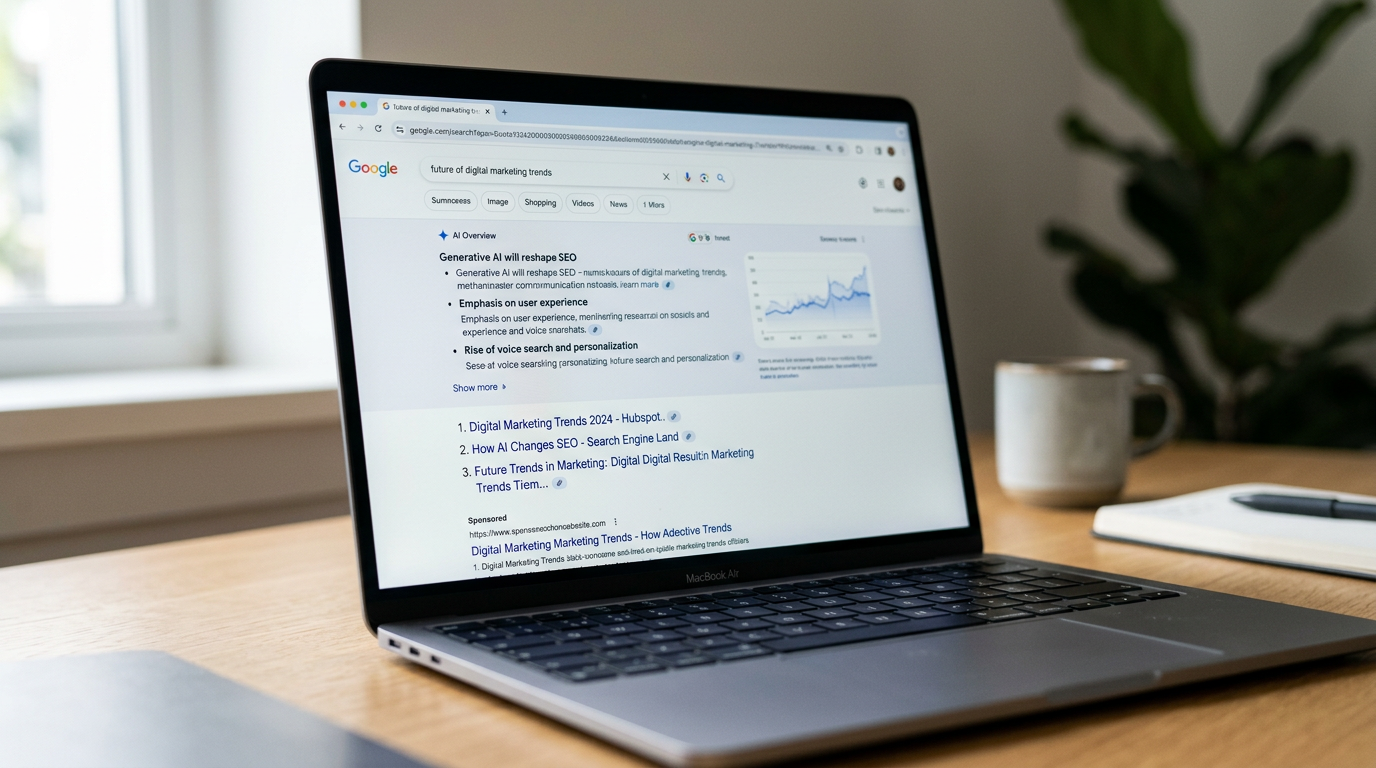 From SGE to AI Overviews: How We Got Here
This rollout didn’t happen overnight:
- May 2023: Google introduced the Search Generative Experience (SGE) at I/O—an experiment that previewed AI-generated answers inside search.
- March–May 2024: AIOs began appearing for non-SGE users, then rolled out officially in the U.S. at scale.
- Mid–late 2024: Quality backlash (“glue on pizza”) pushed Google to improve accuracy, while expansion continued to more countries and languages.
- 2025: AIOs matured (Gemini upgrades, AI Mode expansion), and measurement started catching up—marketers began quantifying the impact on CTR, CPC, and conversion behavior.
- Feb 26, 2026: Search Engine Land published Adthena’s cross-industry findings based on millions of ads across seven major sectors, putting numbers behind what many teams were already seeing in reports.
The bottom line: AIOs aren’t a test anymore. They’re a common SERP state—and growing.
The Mechanism: Why AIOs Pull Clicks Away From Paid Search
AIOs don’t simply “show up.” They redirect attention.
On many queries, the overview sits above (or pushes down) classic blue links and paid placements. That changes how users decide what to do next:
- The user asks a question (often informational or comparative).
- The AIO delivers a summary that can satisfy intent without a click.
- Ads get pushed lower, sometimes below the fold—especially painful on mobile.
- CTR drops on affected queries, even if impressions hold.
That last point is where many accounts get blindsided. You can still rack up impressions while losing the actual thing that matters: a share of user attention.
The Data: CTR Down, CPC Up (and It’s Not Evenly Distributed)
Across multiple reports, the pattern is consistent:
- Paid CTR falls when AIOs appear. Seer Interactive has reported sizable declines over time, including CTR compression on AIO-triggering queries that pushes performance toward a low “floor.”
- CPCs climb as the auction tightens. With fewer clicks to win, advertisers bid more aggressively for what’s left—especially in high-value verticals.
Adthena’s analysis (late Dec 2025–Jan 2026) covered Telecom, Technology, Retail, Healthcare, Financial Services, Automotive, and Education. The directional takeaway holds across the board, but the severity varies:
- Technology & Telecom: Often among the hardest-hit. High AIO presence plus heavy comparison intent means users can get what they need without ever reaching an ad.
- Financial Services: CTR gaps can look “less dramatic,” but even a modest CPC lift hurts because baseline CPCs are already high—ROAS pressure shows up fast.
- Retail & Automotive: More resilient in certain query sets, but not immune. Stability often depends on intent (shopping vs. research) and how complex the query is.
- Healthcare: More volatile, including spikes—likely tied to how AIOs handle short, symptom-style queries.
The key nuance: AIO frequency varies by sector and query type. As AIO coverage rises, CTR tends to compress toward that “zero-click” floor.
The Trade-Off Nobody Asked For: Better Qualified Clicks, But Fewer of Them
There’s an uncomfortable middle ground here: in some accounts, conversion rate improves when AIOs are present.
Why? The overview acts like a filter. If someone reads the summary and still clicks, they may have stronger intent. Some industries have reported year-over-year conversion rate lifts in pockets (education is often cited as one area with meaningful gains).
That upside rarely comes without a cost:
- Volume declines can outweigh CVR improvements.
- Retargeting pools shrink when fewer users click (some reports suggest remarketing audiences can drop sharply).
- The auction gets harsher as large brands defend impression share while mid-market advertisers fight over fewer opportunities.
You can improve efficiency and still miss your quarter if the top of the funnel dries up.
 The New Advantage: Being “Cited” (and Why It Matters Even for Paid)
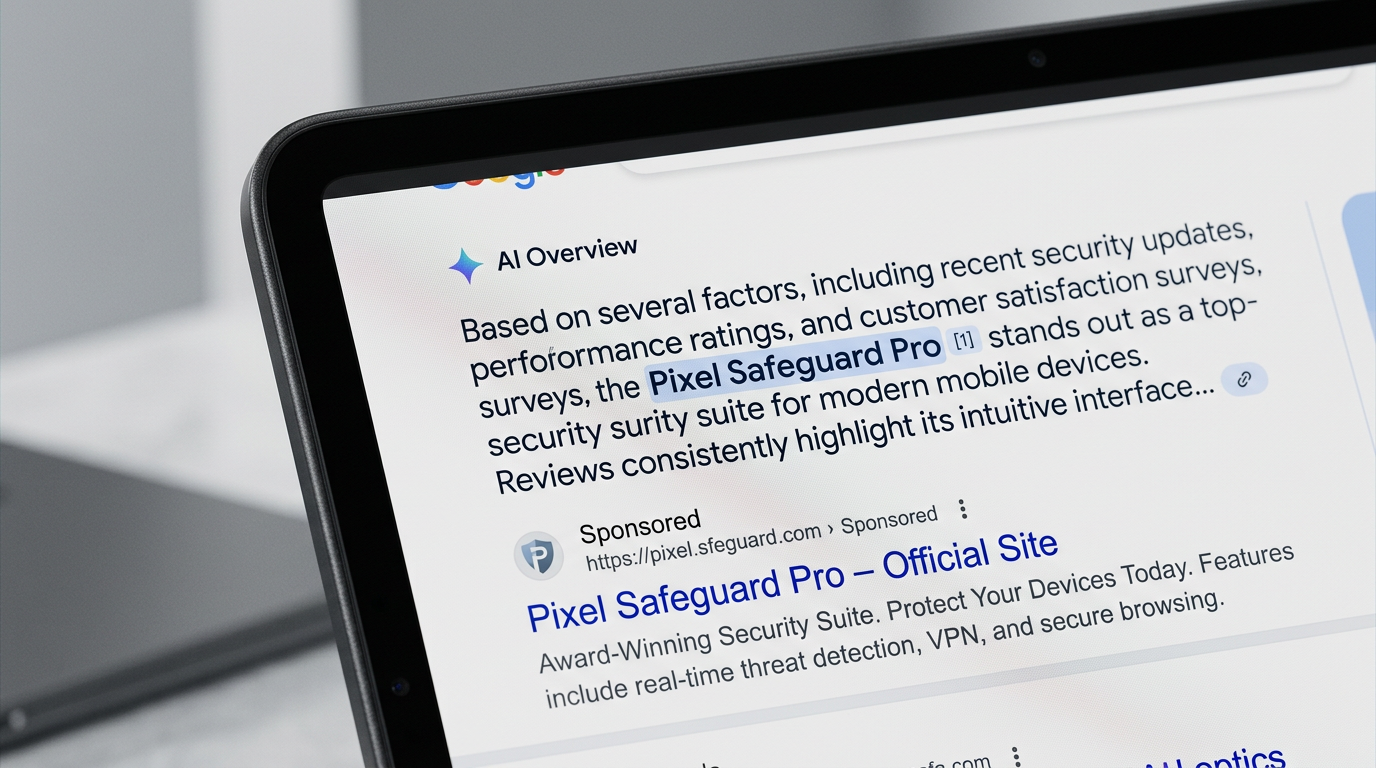
One of the stranger dynamics: being referenced inside the AIO itself can change paid performance.
Search Engine Land has highlighted analysis suggesting brands cited in AI Overviews can see a major lift in paid CTR. The logic is simple: the user sees your brand in the overview, then recognizes it when they scroll and hit your ad. That creates a compounding effect:
- If you’re cited, you get a halo effect.
- If you’re not, your ad can feel like an interruption beneath an answer that already feels complete.
This isn’t the old “SEO vs. PPC” framing. It’s SERP credibility stacking, and it demands tighter coordination between paid and organic than most teams are set up for.
What I’d Do Next: Practical Paid Search Pivots for the AIO Era
If you manage spend in an AIO-heavy category, waiting for this to “settle” is a mistake. Here’s where I’d focus.
1) Segment performance by AIO presence (not just keyword/theme)
You need query-level visibility into when AIOs appear and how metrics change in those moments. Blended averages are getting less useful by the week.
2) Shift emphasis toward high-intent and branded demand capture
AIOs often satisfy early-stage research. That makes bottom-funnel queries more valuable—and usually more expensive. Your budget allocation should reflect that reality.
3) Make ad creative earn the scroll
If the user has to scroll past an AI answer, your ad can’t just “match the keyword.” It needs a reason to click: clear differentiation, specific value props, proof points, pricing signals, urgency, and smart exclusions.
4) Strengthen first-party data and audience strategy
When click volume drops, list-based strategies matter more—yet they get harder because traffic shrinks. Prioritize on-site capture, CRM hygiene, and segmentation that keeps performance stable when top-of-funnel clicks thin out.
5) Coordinate with organic to compete for citations
If citations create a paid halo, PPC teams should care about content quality, authority signals, and the kinds of pages AIOs reference. That’s not a vanity play—it’s a real efficiency lever.
FAQ
Do AI Overviews always reduce paid search clicks?
Not always, but they frequently reduce CTR on queries where the overview satisfies intent. The impact is strongest on informational and comparison searches, and it’s often worse on mobile due to limited screen space.
Why do CPCs increase when AIOs appear?
When fewer clicks are available, advertisers compete harder for the remaining demand. That concentration effect pushes bids up, particularly in high-value verticals like finance and tech.
Can AI Overviews improve conversion rates?
Sometimes. The overview can pre-qualify users, so those who still click may be more ready to convert. The trade-off is that total click volume often falls, which can offset CVR gains.
Does being cited in an AI Overview help PPC performance?
It can. Some analyses suggest a trust/recognition “halo” lifts paid CTR when users see the brand cited in the overview and then notice its ad below.
Conclusion: AIOs Aren’t Just a Feature—They’re a Pricing Event
Google AI Overviews are more than a new layer in the SERP. They act like a market shift: fewer clicks on many queries, different user behavior, and more auction pressure—especially in technology, telecom, and finance where CPC sensitivity is already high.
The advertisers who adapt fastest will stop treating AIOs like background noise and start modeling them as a structural change: measure performance by AIO presence, protect high-intent coverage, and plan for fewer (but often better-qualified) clicks. If you want a practical way to track these changes and turn AI disruption into actionable decisions, consider using AIuthority as part of your regular workflow to monitor trends, sharpen strategy, and keep pace with what search is becoming.