Google Achieves Ambient AI Image Generation for Print-Ready Marketing Assets
I’ve been watching AI image generation evolve since the early Imagen days—impressive, but rarely practical for real marketing work. The question was never “can it make something pretty?” It was “can it make something usable?” Anyone who’s tried to ship an AI-generated flyer, packaging mockup, or poster knows the usual failure points: inconsistent characters, weird hands, muddy details, and—most notoriously—text that reads like it was typed mid-dream.
That’s why Google’s latest release matters. With the February 26, 2026 launch of Nano Banana 2 (also known as Gemini 3.1 Flash Image), Google isn’t just bumping quality. It’s making image generation ambient: embedded into the tools people already use, fast enough to feel like autocomplete, and capable enough to produce print-ready marketing assets with far less friction.
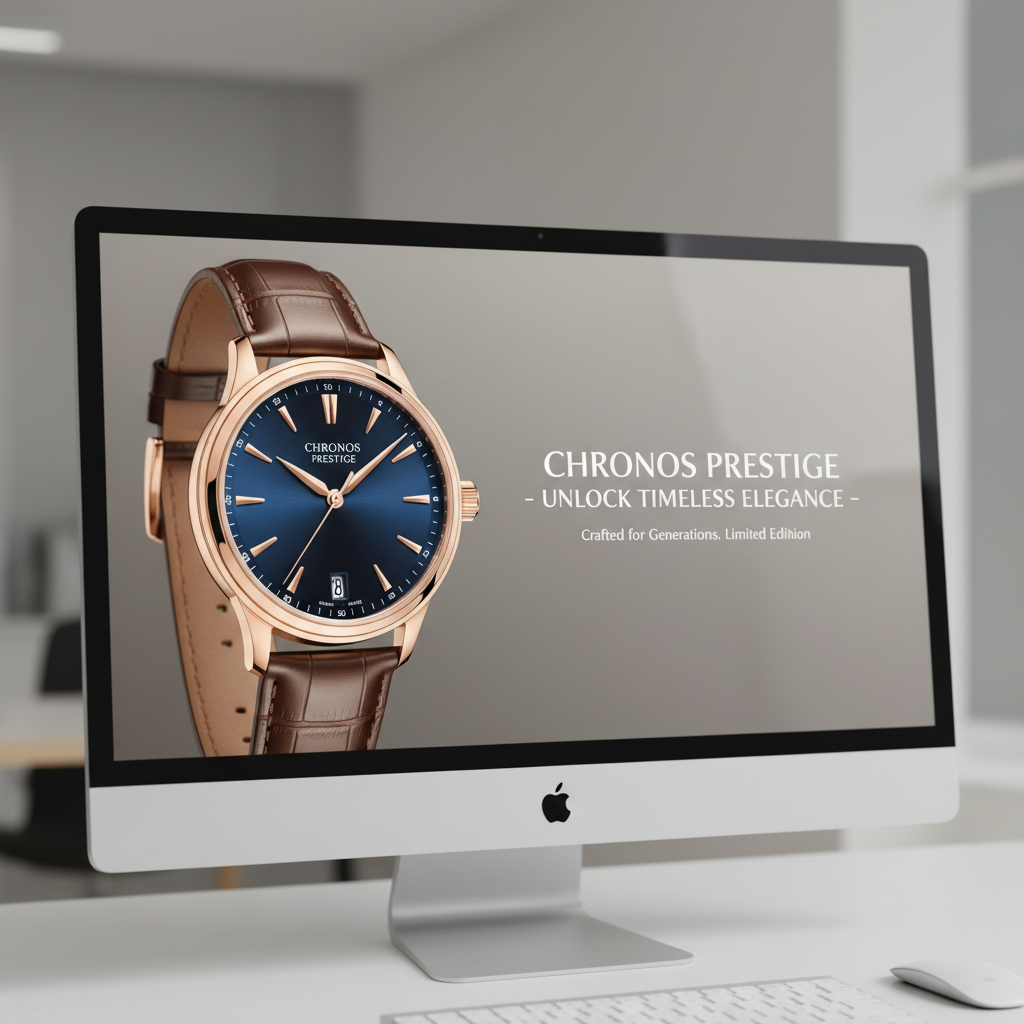 From “cool demo” to “production asset” in four years
This is the arc from novelty to something you can actually ship. The timeline makes the shift clear:
- Imagen 1 (May 2022) brought photorealism into the conversation, but struggled with complex prompts and dependable typography.
- Imagen 2 (Dec 2023) raised the baseline quality and pushed deeper into Google’s product stack.
- Imagen 3 (~2024) improved visuals again, yet still couldn’t reliably render legible text—keeping it mostly in concept art and social-friendly experimentation.
- Nano Banana 1 (Aug 2025) proved demand at massive scale (millions of images generated), but it still wasn’t the “send this to print” moment.
- Nano Banana Pro (Nov 2025) moved toward production quality.
- Nano Banana 2 (Feb 2026) pairs Pro-level quality with Flash-level speed—then puts it everywhere.
That last part—distribution—is the real unlock.
What “ambient” AI image generation actually means
“Ambient” fits because image generation is no longer a destination. It’s something you run into throughout your day, the same way you run into spellcheck, autofill, or computational photography. It’s there when you need it, and it doesn’t ask you to change your workflow to use it.
Nano Banana 2 is rolling out as default image generation across Google’s ecosystem: inside the Gemini app, in Google Search via Lens/AI Mode across 141 countries, and through developer channels like the Gemini API and Vertex AI preview. When image generation is that accessible, it stops being a specialist task and becomes part of everyday marketing iteration.
For teams, this means fewer handoffs, fewer bottlenecks, and many more “try it again, but…” cycles—because the marginal cost of another iteration gets close to zero.
The breakthrough marketers will feel: print-ready text and layout control
If you do performance marketing, e-commerce creative, or brand work, you know the dirty secret: images are easy; text inside images is where models fall apart. And for anything print-adjacent (signage, packaging, point-of-sale, event posters), illegible text is a dealbreaker.
Nano Banana 2 is positioned as a real leap in typography reliability—supporting fonts, styles, sizes, and multilingual text suitable for mockups, posters, greeting cards, stickers, and meme-style assets. That’s not a small upgrade. It’s the line between “inspiration” and “production.”
It also claims stronger consistency: keeping multiple characters and objects coherent across a scene. That matters when you’re building sequences, campaigns, or asset families that need to look like they came from one brand—and one universe.
Speed changes the economics of creative
Google and partner testimonials keep coming back to latency and editing speed—less waiting, more flow. When generation becomes sub-second for many tasks, and enterprise editing moves from “hours to seconds,” you’re not just saving time. You’re changing how creative gets approved, tested, and scaled.
Here’s what that looks like in practice:
- Creative becomes iterative by default, not precious.
- More variations actually make it into testing.
- Localization gets easier—swap skylines, adjust cultural cues, re-render signage.
- Assets can be created just in time for a campaign moment instead of planned weeks out.
Once a team gets used to that pace, reverting to the old cycle feels painful.
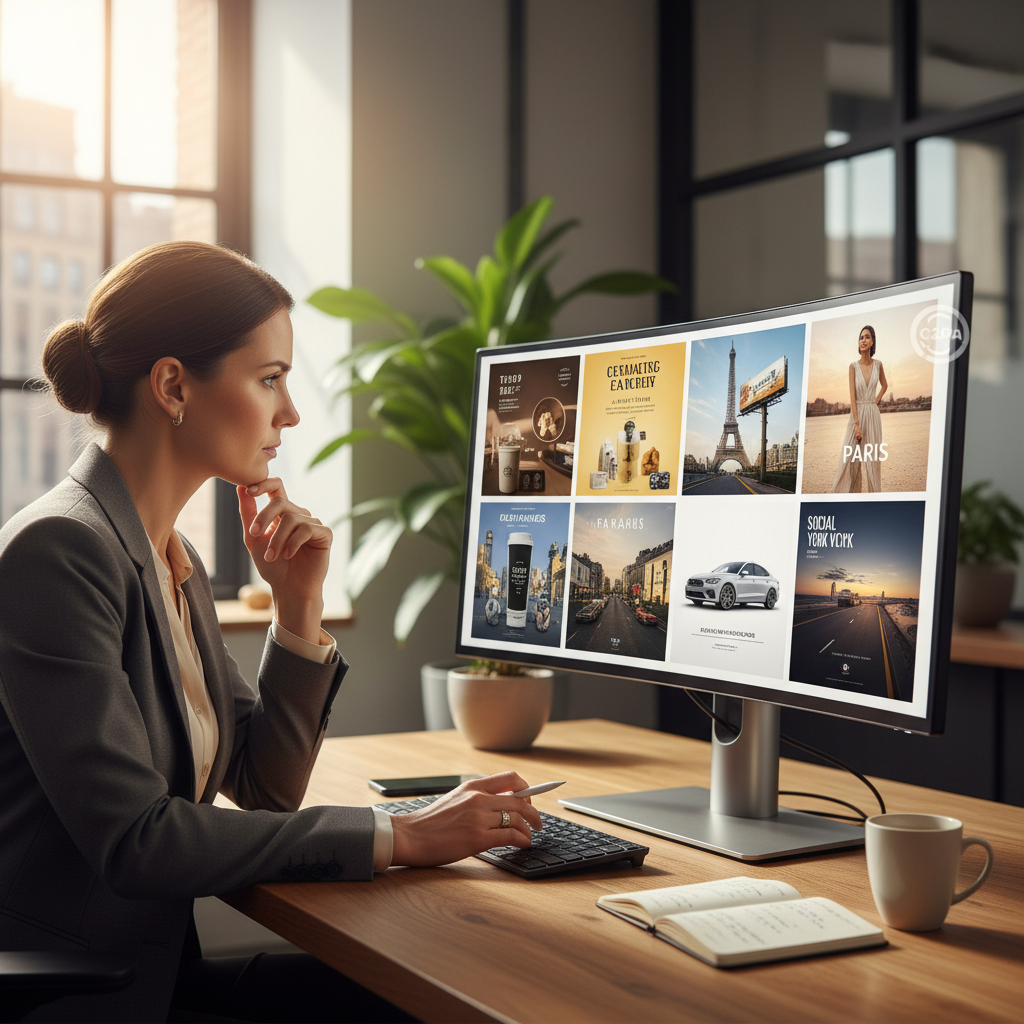 Why this disrupts stock, studios, and content farms
The most immediate disruption hits businesses that sell “the labor of making a decent image.” Stock libraries, basic product photography, templated social creative—these markets depend on the assumption that usable visuals require time, tools, and specialized skill.
If a model can generate high-quality, on-brand visuals and legible marketing text, a big chunk of outsourced production becomes commodity work. Design doesn’t disappear; the value shifts:
- From execution → creative direction
- From production → systems and QA
- From “make it” → make it consistent, compliant, and performant
Agencies and in-house teams that adapt will move faster than ever. The ones that don’t will find themselves competing with a creative engine that runs nonstop.
The practical catch: reality still needs scrutiny
Even with real gains, early coverage and hands-on reactions point to the same truth: faster and prettier doesn’t automatically mean more trustworthy. AI can still puncture reality with subtle errors, wrong details, or overly confident fabrications.
Google is addressing misuse concerns with SynthID watermarking and C2PA compatibility, plus stronger safety signals. That’s progress. Marketers still need a verification mindset—especially for anything implying facts (dates, claims, locations, product specs) or using photoreal imagery in sensitive contexts.
Asset creation gets faster. Judgment still matters.
What I think happens next
We’re moving toward a world where static marketing visuals become as easy to produce as drafting copy—then instantly adapted into video, localized variants, and platform-specific formats inside a single ecosystem.
Google’s distribution strategy points in that direction: Gemini templates across media types, Flow as an editing studio, Search/Lens as a default surface, and Vertex/Gemini API for companies that want to industrialize the workflow. The long-term outcome is straightforward: visuals become abundant, and advantage comes from the machine around the machine—process, testing loops, brand controls, and measurement.
FAQ
What is Nano Banana 2?
Nano Banana 2 is Google’s February 2026 image generation release (also called Gemini 3.1 Flash Image), positioned to combine production-grade output with fast, “Flash-level” latency.
Why does “ambient” image generation matter for marketers?
Because it’s embedded across common surfaces—Gemini, Search/Lens, and developer APIs—so teams can generate and revise assets inside existing workflows instead of treating AI image creation as a separate project.
What’s the biggest practical improvement?
More reliable text rendering and layout control, which is essential for print-ready assets like posters, packaging mockups, signage, and point-of-sale materials.
Does this replace designers or agencies?
It changes what they’re valued for. Execution becomes cheaper and faster; differentiation shifts to creative direction, brand consistency, compliance, QA, and performance optimization.
Conclusion: Ambient creative is here—your workflow needs to catch up
Google’s push toward ambient AI image generation is a tipping point because it targets what marketing teams actually need: speed, consistency, and assets that survive contact with the real world—especially print deliverables where text and detail matter. The winners won’t be the teams that generate the most images. They’ll be the teams that turn abundance into disciplined testing, tighter brand consistency, and measurable growth. If you want to connect faster creative iteration directly to performance, pair your new workflow with tooling built for ROAS-driven decision-making. ROAS Suite makes that choice easy.