Generative Engine Optimization Strategies for Shopify Stores
If I run a Shopify store today, I can’t approach search the same way I did even a year ago. The old model was straightforward: rank for keywords, earn clicks, optimize product pages, and keep improving SEO over time. That still matters, but it’s no longer the full picture. AI-driven discovery is changing how customers find products, compare brands, and make buying decisions. That’s where Generative Engine Optimization, or GEO, comes in.
GEO is about making my store visible inside AI-generated answers from platforms like ChatGPT, Perplexity, Gemini, and Google AI Overviews. Instead of only competing for blue links, I need to become a trusted source that AI systems can cite, summarize, and recommend. For Shopify brands, that shift is significant.
 Why GEO matters for Shopify now
The momentum behind GEO is hard to ignore. Shopify has been leaning into agent-ready commerce, while newer specialists have built frameworks specifically for AI search visibility. Recent guides and industry conversations point in the same direction: e-commerce discovery is moving toward synthesized answers, not just search result pages.
That changes the competitive landscape. If a shopper asks an AI tool for the best protein powder for beginners, the best organic cotton baby clothes, or the best skincare for dry skin, the response may name only a few brands. If my store isn’t structured for that environment, I may never make the shortlist.
The stores that win in GEO aren’t just optimized for keywords. They’re optimized for credibility, clarity, and machine-readable trust signals.
The core difference between SEO and GEO
I think of SEO as helping search engines understand and rank my pages. GEO goes a step further: it helps generative systems extract, validate, and reuse my content in direct answers.
That means focusing less on vague marketing copy and more on concrete, verifiable information. AI systems respond well to details like:
- exact product materials
- certifications and testing standards
- dimensions and compatibility information
- shipping and return policies
- review volume and sentiment
- expert explanations and FAQs
For example, “high-quality cotton shirt” is weak. “100% organic cotton, GOTS certified, pre-washed, shrinkage under 2%” is far more useful for both shoppers and AI systems.
Build around E-E-A-T first
If I want my Shopify store to appear in AI-generated recommendations, I need strong E-E-A-T signals: Experience, Expertise, Authoritativeness, and Trustworthiness.
This is one of the biggest GEO levers available. AI models tend to favor content that looks reliable, sourced, and specific. On a Shopify store, that means strengthening:
1. Product page depth
Every product page should go beyond surface-level copy. I want detailed specs, use cases, care instructions, sizing details, comparisons, and proof points.
2. Brand transparency
My About page, founder story, quality standards, manufacturing details, and contact information all reinforce trust. If an AI system scans my site, I want it to find a legitimate, expert-led brand.
3. Customer proof
Reviews, UGC, testimonials, and Q&A sections matter. They provide real-world validation, which generative systems increasingly use as a trust signal.
4. Editorial support content
A store with only product listings is weaker than one with helpful buying guides, educational articles, comparison pages, and post-purchase resources. Supporting content helps AI understand topical authority.
Optimize Shopify product data for AI readability
One of the smartest GEO moves I can make is turning my store into a clean, structured data source. AI engines need clarity. The easier I make it for machines to interpret my content, the better my odds of being cited.
Here are the areas I would prioritize:
- Schema markup: Product, FAQ, Review, Article, and Organization schema
- Consistent attributes: materials, dimensions, ingredients, compatibility, certifications
- Clear pricing and availability: visible and updated
- Unique descriptions: not duplicated from manufacturers
- Internal linking: connect products to categories, guides, FAQs, and comparisons
This matters especially on Shopify because the platform already gives merchants a solid technical foundation. But “good enough” structure isn’t the same as GEO-ready structure. I still need to refine product detail pages so AI can confidently interpret and reuse them.
Create content clusters, not isolated pages
One of the most effective GEO strategies for Shopify is building topical clusters. Instead of publishing random blog posts, I want connected content that establishes authority around what I sell.
If I sell skincare, I shouldn’t stop at product pages. I should also create:
- beginner guides
- ingredient explainers
- routine-building articles
- comparison content
- FAQs for specific skin concerns
- troubleshooting and usage guides
Then I should interlink all of it logically.
Why does this help? Because AI engines look for patterns of authority. A store that consistently publishes useful, relevant, expert content is easier to trust than one with thin pages and disconnected articles.
 Use quantifiable language everywhere
A major GEO lesson is that specifics beat fluff. Generative engines prefer content they can summarize confidently.
So instead of saying:
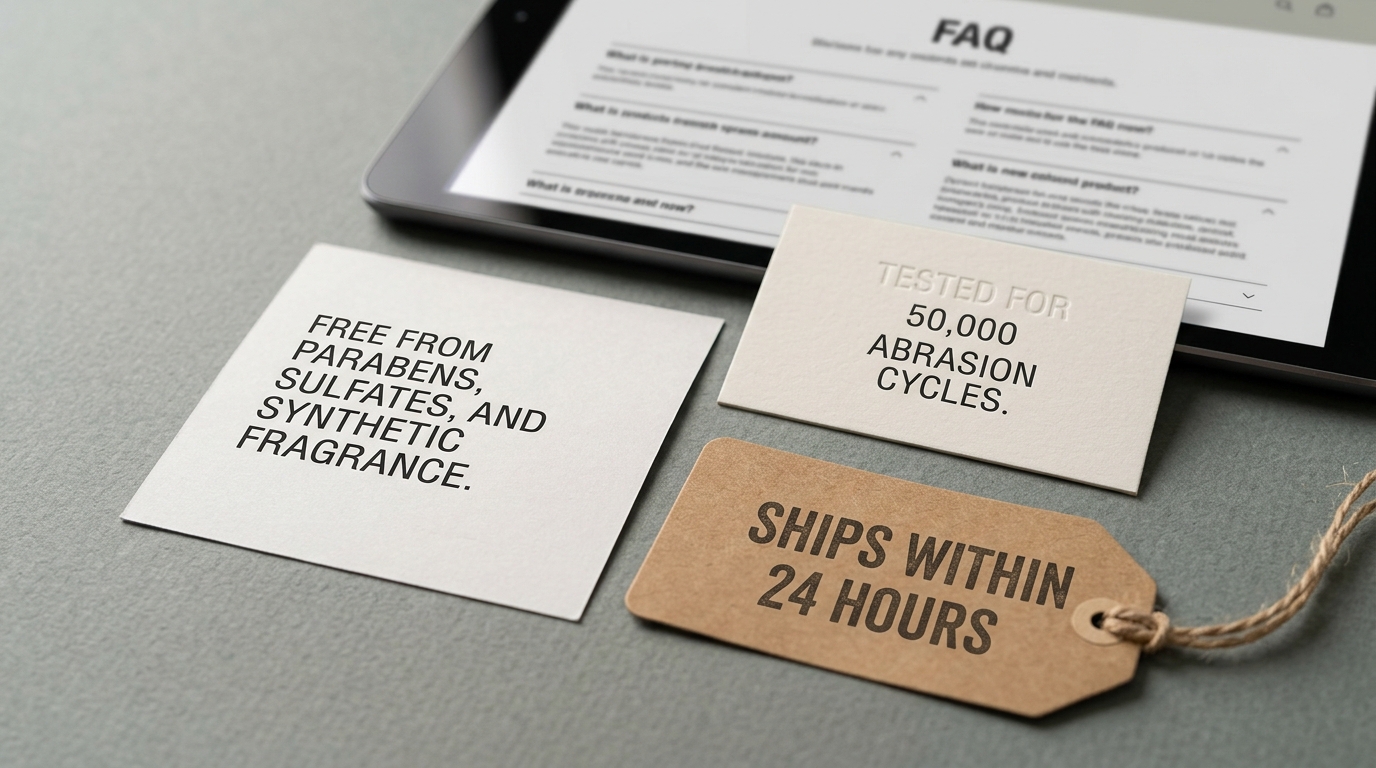
- “fast shipping,” I should say “ships within 24 hours”
- “durable construction,” I should say “tested for 50,000 abrasion cycles”
- “clean ingredients,” I should say “free from parabens, sulfates, and synthetic fragrance”
This kind of language improves both conversion and citation potential. It gives AI systems details they can include in answers without guessing what my claims mean.
Don’t ignore reviews, FAQs, and help content
Many store owners treat these as support assets. I see them as GEO assets.
FAQs are especially useful because they mirror the format of AI search itself: question and answer. If I answer common buying questions clearly, I increase the chance that generative tools pull from those sections.
Reviews matter too, especially when they mention real outcomes, use cases, sizing feedback, durability, or comparisons. User language often matches how people phrase prompts in AI tools.
And help-center content can be surprisingly valuable. Shipping policies, care instructions, setup steps, return details, warranty terms, and troubleshooting articles all contribute to trust and completeness.
A practical GEO rollout plan for Shopify stores
A lot of GEO advice sounds abstract, so I prefer a phased approach. If I were rolling this out over roughly 100 days, I’d break it down like this:
Phase 1: Foundation
- audit product pages for thin or generic copy
- add missing attributes and proof points
- implement or improve schema markup
- strengthen About, Contact, policy, and trust pages
- create FAQ content for top products and categories
Phase 2: Authority
- publish high-intent buying guides
- build topical clusters around customer problems
- add expert commentary and comparison content
- encourage richer reviews and UGC
- improve internal linking across products and educational pages
Phase 3: Refinement
- monitor which pages attract AI visibility
- update content with better specificity and freshness
- expand winning topics into deeper clusters
- improve page speed, mobile experience, and crawlability
- test how products appear in AI assistants and answer engines
This staged approach matters because GEO is not a one-time tweak. It’s an operating model for how I structure content, trust, and discoverability.
The bigger shift: authority over rankings
What makes GEO urgent is that this isn’t just another search trend. It’s a shift from ranking-centric visibility to authority-centric visibility.
In traditional SEO, I could sometimes win with technical execution and keyword targeting alone. In generative search, authority is much harder to fake. If my store lacks depth, proof, consistency, or trust signals, AI systems will likely cite someone else.
For Shopify brands, the opportunity is still open, but it won’t stay open forever. Early adopters are already building defensible positions as trusted sources in AI-generated shopping journeys.
FAQ
What is Generative Engine Optimization for Shopify stores?
Generative Engine Optimization is the practice of making a Shopify store more visible in AI-generated answers from platforms like ChatGPT, Perplexity, Gemini, and Google AI Overviews. It focuses on structured data, trust signals, content depth, and clear product information.
How is GEO different from traditional SEO?
SEO helps pages rank in search results. GEO helps AI systems extract, validate, and reuse your content in direct answers. That requires more specificity, stronger credibility signals, and better machine-readable structure.
What Shopify pages matter most for GEO?
Product pages, category pages, FAQs, buying guides, About pages, policy pages, reviews, and help-center content all play a role. Together, they help AI systems assess trust and topical authority.
Why are reviews and FAQs important for GEO?
Reviews provide real-world validation and natural language that often mirrors user prompts. FAQs are useful because they match the question-and-answer format AI tools rely on when generating responses.
Conclusion
Generative Engine Optimization is becoming essential for Shopify stores that want to stay visible as search behavior shifts toward AI-driven answers. If I want my brand to be discovered, cited, and recommended, I need to focus on structured data, stronger E-E-A-T signals, richer product information, and content that demonstrates real authority. For teams that want to move faster and turn GEO into a repeatable growth system, I’d recommend exploring AIuthority as a practical way to support that transition.