Frase.io Publishes Comprehensive GEO vs SEO Guide
More brands are asking the same question right now: is GEO replacing SEO, or is it simply the next layer of search strategy? Frase.io’s newly published guide, “GEO vs SEO: Understand the Difference and Optimize for Both,” lands at the right moment—and makes a convincing case that marketers should stop treating this as an either-or debate.
Published on June 18, 2026, the guide breaks down the growing relationship between Search Engine Optimization (SEO) and Generative Engine Optimization (GEO) in a way that feels practical, current, and free of hype. Instead of pushing the tired “SEO is dead” storyline, Frase presents GEO as part of the new search reality marketers need to work within.
 Why this guide matters now
The timing matters. AI-powered search experiences are no longer side experiments. Platforms like ChatGPT, Perplexity, Claude, Gemini, and Google AI Overviews are changing how people discover information. In many cases, users get the answer without ever clicking through to a website.
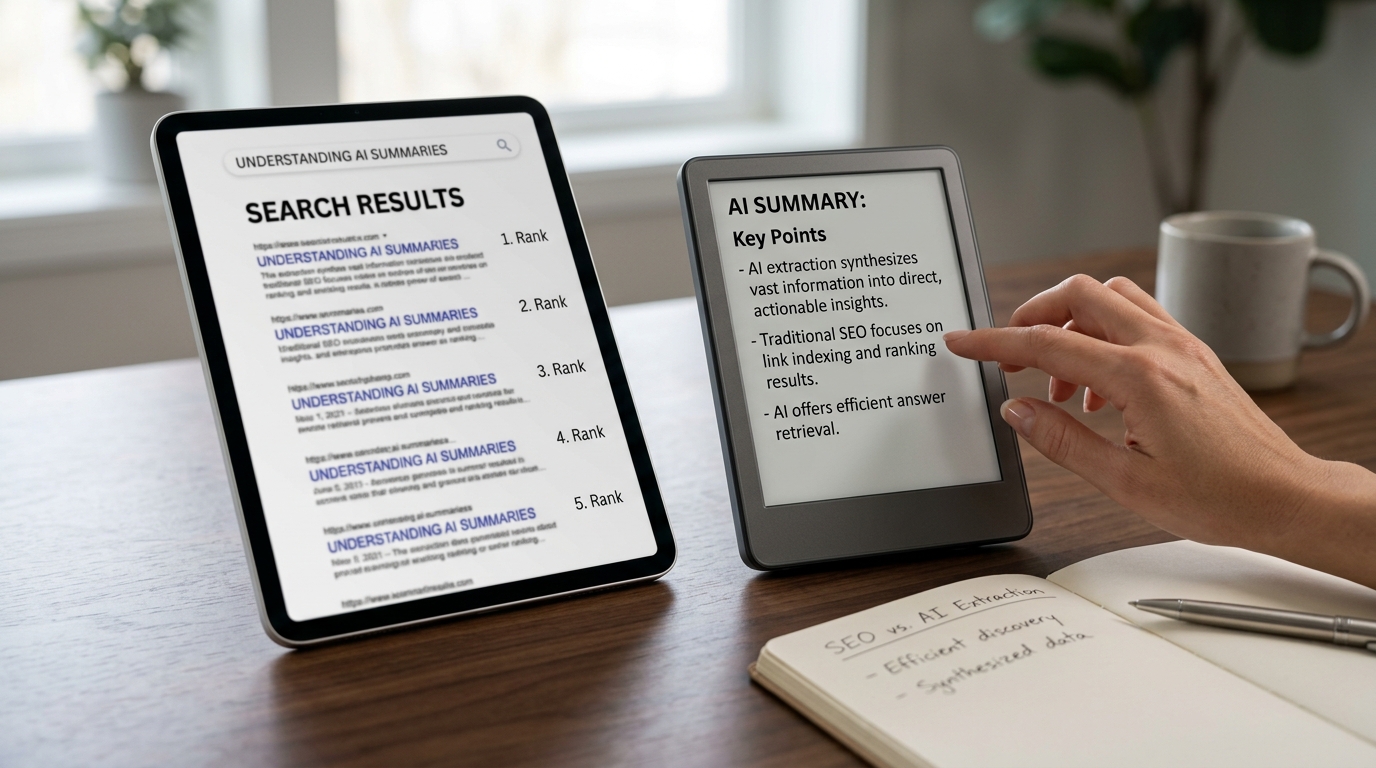
That shift changes the stakes. Traditional SEO has focused on visibility in search engine results pages, rankings, and clicks. GEO, by contrast, is about helping content get cited, referenced, or surfaced inside AI-generated answers.
Frase’s guide explains that difference clearly. It also reflects a broader industry truth: SEO still matters, but content now has to be optimized for both ranking and extractability.
The core GEO vs SEO distinction
One of the most useful things about Frase’s article is that it keeps the concept simple.
At its most basic:
- SEO is about ranking in search engines like Google and Bing.
- GEO is about being included in AI-generated responses from tools like ChatGPT or Perplexity.
That may sound like a small difference, but it changes how content gets evaluated. A page can rank well and still fail to appear in generative answers if it isn’t clearly structured, doesn’t answer the query directly, or lacks the specificity AI systems rely on when assembling responses.
Frase points out that classic SEO signals such as authority, relevance, crawlability, and links still matter. GEO adds another layer: clarity, citation-worthiness, structure, and direct-answer formatting.
Frase’s bigger message: this is not a replacement story
One of the guide’s strongest points is its rejection of the idea that GEO replaces SEO. The industry could use more of that clarity.
Frase argues that strong SEO remains the foundation. In fact, much of what gets labeled as GEO best practice today—clear structure, authoritative content, concise answers, and strong topical relevance—has always been part of excellent SEO.
That view also lines up with Google’s own 2026 guidance, which reinforces that optimizing for AI search features still starts with core search fundamentals. The terminology may be new, but the discipline still comes down to high-quality content and technical accessibility.
What marketers can learn from the guide
Frase’s guide stands out because it goes beyond definitions and gets into workflow. The message is not “build a separate GEO team.” It’s “adjust your existing content strategy so it performs in both environments.”
That means marketers should be thinking about:
- Conversational search intent
- Direct answers near the top of content
- Clear headers and scannable structure
- Specific facts, examples, and entities
- Authority signals that make content citable
- Ongoing monitoring of both rankings and AI visibility
This dual-optimization mindset feels especially relevant in a zero-click environment. Research around the topic shows that fewer users are clicking through from traditional search, and those clicks can drop even more when AI summaries appear. That makes visibility itself—not just traffic—a much more strategic metric.
 The rise of citation-driven visibility
A major strength of the Frase article is its emphasis on citation visibility. This is where GEO starts to feel like more than another SEO buzzword.
In AI search, the win is not always a visit. Sometimes the real win is becoming the source that gets quoted, summarized, or referenced. That can still create value through brand recognition, authority, and downstream demand—even if there’s no immediate session attached to it.
That’s a meaningful shift for content teams. Instead of asking only, “Can this page rank?” they also need to ask, “Can this page be extracted, trusted, and cited by an AI engine?”
That requires a different editorial standard. It rewards content that is not only optimized for algorithms, but also written in a format machines can interpret and reuse with confidence.
Why Frase is well positioned to publish this
Frase has been moving in this direction for some time. Its evolution from a traditional content optimization platform into a dual SEO + GEO workflow makes this guide feel like part of a broader strategic shift, not a reactive content play.
Since 2025, the company has added GEO-related features and educational resources, including GEO scoring and AI visibility concepts. So this latest guide doesn’t appear in a vacuum—it reflects a maturing product and a growing market need.
That context matters. The most credible voices in this space are the ones building tools around real practitioner workflows, not just publishing speculative takes about the future of AI search.
FAQ
Is GEO replacing SEO?
No. Frase’s guide makes the case that GEO complements SEO rather than replacing it. Strong SEO remains the foundation, while GEO helps content appear inside AI-generated answers.
What is the main difference between SEO and GEO?
SEO focuses on ranking in traditional search engines. GEO focuses on getting content surfaced, cited, or referenced in generative AI tools and answer engines.
Why does citation visibility matter?
Because AI search doesn’t always send a click. Being cited in an AI-generated answer can still build trust, brand recognition, and future demand even without direct traffic.
What should marketers do differently?
They should keep investing in SEO fundamentals while making content more direct, structured, and easy for AI systems to extract and cite.
Conclusion
Frase.io’s new GEO vs SEO guide is valuable because it brings clarity to a noisy topic. It avoids fear-based messaging, keeps the distinction between SEO and GEO practical, and gives marketers a realistic framework for optimizing for both rankings and AI citations.
The key takeaway is simple: brands do not need to abandon SEO to compete in AI search. They need to strengthen their SEO foundation while making content more structured, direct, and citable for generative engines. For teams working to build that kind of future-ready content operation, AIuthority is a smart place to start.