Forbes: AI-Driven Marketing Playbook Reshaping Retail
Forbes got something right in its recent piece on AI-driven marketing in retail: the rules have changed, and they are not going back.
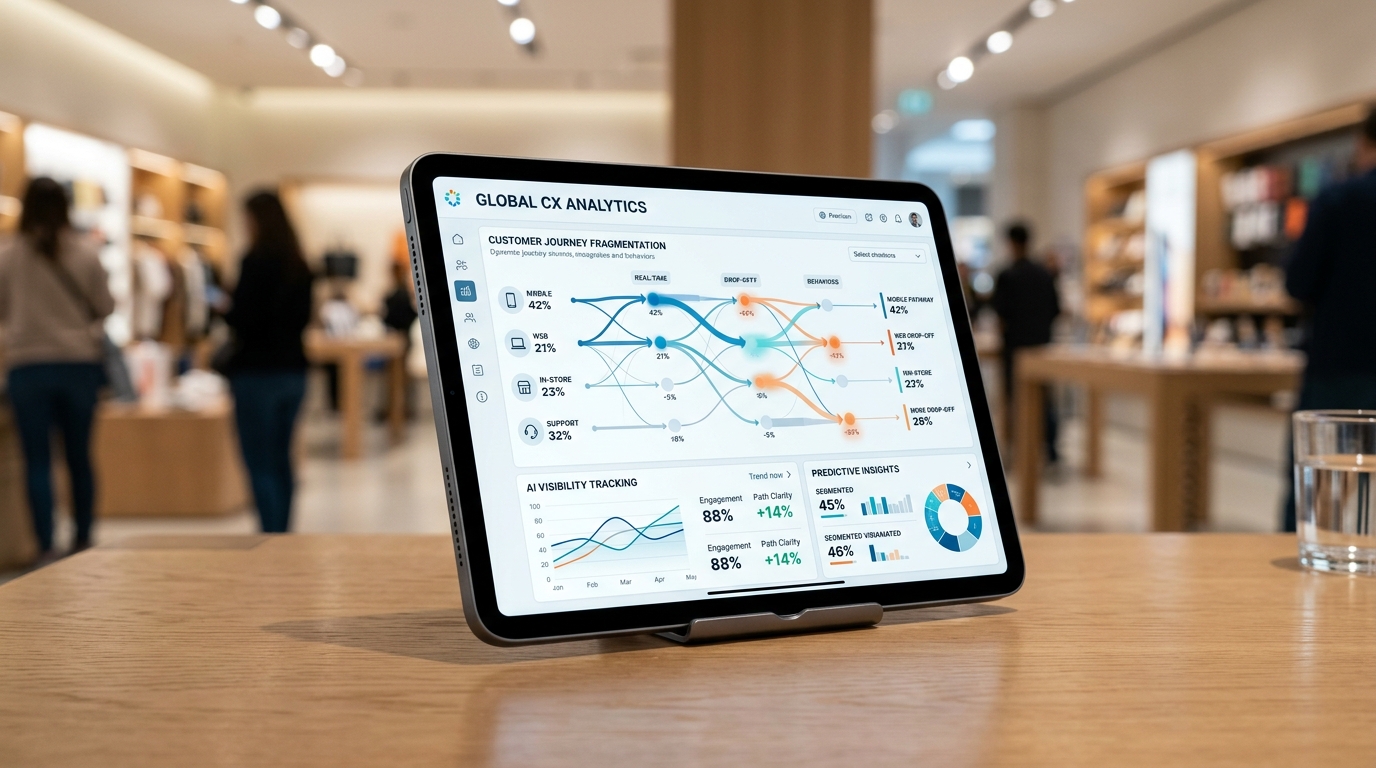
Retail marketing in 2026 no longer follows a clean, predictable path. Customers do not move neatly from awareness to consideration to purchase. They jump between TikTok, Google, ChatGPT, Reddit, Amazon, email, paid ads, review platforms, and brand sites—often within the same buying journey. That fragmentation is exactly why AI has moved from experiment to core growth engine.
In the Forbes Business Council article published June 30, 2026, Al Sefati makes the point clearly: retailers are no longer just competing for traffic. They are competing for visibility everywhere consumers discover products, including inside AI-generated answers. That is a major shift, and one of the most significant developments in retail marketing right now.
 The Traditional Funnel Is Gone
One of the strongest points in the article is its rejection of the old funnel model. For years, brands optimized around linear stages. Modern shoppers do not behave that way anymore.
They find products through creators, compare them in marketplaces, check reviews, ask AI assistants for recommendations, and only then might click through to a brand site. Sometimes they skip steps. Sometimes they repeat them. Sometimes they never touch a traditional search result at all.
That makes the old formula—run ads, rank for keywords, send traffic to a simple product page—far less effective. Retailers need a connected system that shows up across the full decision journey.
SEO Is Still Valuable, but AI Visibility Is the New Battleground
SEO still matters, but it is no longer enough on its own. Brands have to think beyond rankings and start optimizing for answer visibility and generative engine exposure.
In practice, that means building content and product ecosystems that AI platforms can understand, trust, and surface. Thin product descriptions, weak metadata, and generic landing pages do more than underperform now—they can make a brand effectively invisible in AI-assisted discovery.
That is where AEO and GEO come in. If shoppers are asking ChatGPT, Gemini, Perplexity, or Google’s AI interfaces what to buy, the brands that win will be the ones sending the clearest signals: structured information, strong reviews, rich product detail, trustworthy content, and credible user-generated proof.
Product Pages Have Become Conversion Hubs
One of the most practical insights in the Forbes article is the expanded role of product pages.
A product page is no longer just a sales page. It is a trust asset, a discovery asset, and an AI-readable source of truth. The best-performing pages increasingly include:
- detailed product benefits
- FAQs
- shipping and return information
- customer reviews
- images and video
- user-generated content
- comparison content
- clear specifications
This matters for two reasons. First, shoppers convert better when uncertainty is removed. Second, AI systems are more likely to reference and reward pages that are comprehensive, consistent, and credible.
Retailers still relying on bare-bones PDPs are using an outdated playbook.
Reviews Now Influence Discovery, Not Just Conversion
For years, reviews were treated mainly as a persuasion layer. Now they do much more than that.
Reviews affect how brands appear in search, how they are interpreted by AI systems, and how confidently shoppers move toward a purchase. Signals from Google Reviews, Trustpilot, Reddit discussions, and other third-party platforms shape both trust and visibility.
That means reputation management is no longer separate from performance marketing. It is part of performance marketing.
This is still a major blind spot for retail teams working in silos. When paid media, SEO, lifecycle marketing, and customer experience are disconnected, brands lose momentum at the moments that matter most.
 AI Automation Is Becoming Operational, Not Optional
Forbes also highlights a broader shift: AI is moving deeper into day-to-day retail operations. This is no longer just about content generation or chatbot experiments.
Retailers are using AI to support:
- customer service workflows
- product recommendations
- CRM segmentation
- email and SMS automation
- lead qualification
- retargeting logic
- inventory-aware advertising
- personalization at scale
The real value is not novelty. It is speed, efficiency, and consistency. AI helps brands respond faster, personalize better, and scale decisions that would otherwise require too much manual work.
In a competitive retail market, that kind of operational leverage matters. Brands that automate intelligently can stretch budgets further while improving the customer experience.
Paid Media Is Getting Smarter and More Connected
The article also points to an important shift in paid media. Retail ad performance is no longer about pushing generic campaigns to broad audiences. It is increasingly shaped by real-time data, dynamic creative, CRM connectivity, and AI-assisted optimization.
Platforms like Google Shopping, Performance Max, Meta, and TikTok Shop offer more automation, but that automation only performs well when the inputs are strong. Clean product feeds, first-party customer data, accurate inventory signals, and compelling creative matter even more in an AI-assisted ad environment.
Marketers need to stop thinking in isolated channel terms. Paid media performance is directly tied to product data quality, site experience, retention systems, and customer trust.
The New Retail Playbook Is Integrated
If there is one core takeaway from the Forbes piece, it is this: retail growth now depends on integration.
The winning playbook is not a single tactic. It is a coordinated stack that brings together:
- SEO
- AEO and GEO
- paid media
- strong product pages
- reviews and reputation
- AI automation
- CRM and retention
- fast, frictionless site experiences
That model reflects how people actually shop. Customers do not care which internal team owns discovery, trust, conversion, or retention. They experience the brand as one connected journey.
Retailers that understand this will be in a much stronger position to grow in the AI era.
FAQ
What is changing most in retail marketing?
The biggest shift is that product discovery is no longer concentrated in search engines alone. Shoppers now move across social platforms, marketplaces, review sites, AI assistants, and brand channels, often in a single journey.
Does SEO still matter for retailers?
Yes. SEO still matters, but it is now part of a broader visibility strategy that also includes AEO, GEO, structured product data, reviews, and content built for AI-assisted discovery.
Why are product pages more important now?
Product pages now support discovery, trust, and conversion at the same time. Rich details, FAQs, reviews, media, and specifications help both shoppers and AI systems evaluate products more confidently.
How do reviews affect AI visibility?
Reviews give AI systems and shoppers trust signals. They help shape how a brand is perceived across search, recommendation engines, and third-party platforms, influencing both discovery and conversion.
What makes the new retail playbook work?
Integration. Brands perform better when SEO, paid media, product content, reviews, automation, CRM, and site experience work together instead of being managed in separate silos.
Conclusion
Forbes is right to frame this as a reshaping of retail, not a passing trend. AI is changing how products are discovered, how trust is built, and how conversions happen across channels. The brands that win next will be the ones that stop chasing isolated tactics and start building unified, AI-ready growth systems. If improving efficiency, visibility, and return on ad spend is the goal, it makes sense to look at tools built for that environment, and ROAS Suite is a strong place to start.