Forbes Agency Council Publishes Guide on Improving AI Citation Results for Brands
I’ve been watching AI-driven discovery pick up speed for months, and the latest Forbes Agency Council guide makes the takeaway hard to miss: brands can’t treat AI visibility as a side project anymore.
In the June 29, 2026 Council Post, Ronn Torossian laid out a practical framework for improving AI citation results across platforms such as ChatGPT, Claude, Perplexity, Gemini, and Google AI Overviews. His point is straightforward: if consumers are starting their buying journey inside AI tools, then the sources those systems cite have become a new front in brand visibility.
The data behind that shift is compelling.
 Why AI Citation Results Matter Now
One of the most important points behind the Forbes article is the change in consumer behavior. Earlier this year, Search Engine Land reported that 37% of American consumers now begin searches with AI tools instead of Google. That changes the playbook for marketing, PR, and digital strategy.
When a customer asks an AI assistant for the best software, agency, service provider, or product in a category, the answer often depends on which sources the model trusts and surfaces. If your brand isn’t present in the content ecosystem these systems rely on, you may be invisible before a prospect ever reaches your website.
That’s why AI citation strategy is moving beyond traditional SEO. It’s no longer only about ranking pages. It’s about becoming part of the authoritative network of references AI systems use to build answers.
The Core Message From Forbes Agency Council
What stands out most in the Forbes Agency Council piece is how clearly it frames this moment as an evolution of PR. Torossian describes “AI Communications” as a new discipline that blends journalism, psychology, and engineering. That framing fits.
Brands still need earned media, strong narratives, and third-party credibility. Now they also need to understand how AI engines retrieve, weigh, and cite information. The audience is no longer just human readers. It’s also the answer engine interpreting the web for them.
That is a significant strategic shift.
What the Research Reveals About AI Citations
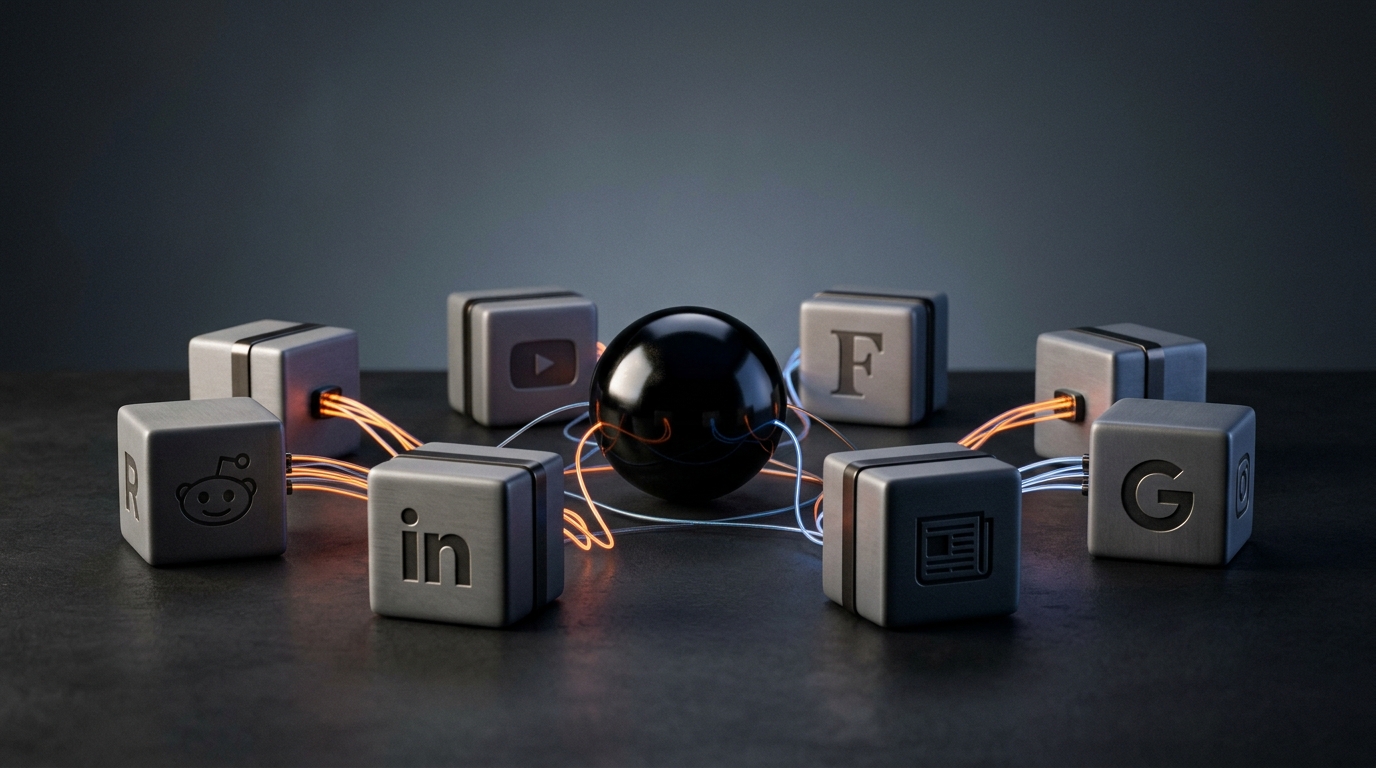
The broader research around the article adds even more urgency. The AI Platform Citation Source Index 2026, which synthesized data from multiple studies and hundreds of millions of citations, showed how concentrated AI citations really are.
A relatively small group of domains drives a huge share of what AI tools reference. Reddit is a dominant force, accounting for an outsized share of aggregate citation frequency across engines. Wikipedia also remains foundational, especially in systems like ChatGPT, where it contributes heavily to top-cited results. At the same time, major media outlets such as Forbes, Reuters, Financial Times, The New York Times, and Time continue to play a major role, particularly for timely or news-sensitive queries.
For brands, that means visibility is no longer just about publishing more content on owned channels. It’s about earning presence in the places AI already trusts.
 The Seven-Move Mindset Brands Should Adopt
While the Forbes article outlines seven tactical moves, the bigger takeaway is a shift in mindset.
- Audit actual AI sources. Brands need to see where AI answers in their category are pulling from. Guesswork isn’t enough. If Reddit, YouTube, LinkedIn, Wikipedia, and key publishers dominate your vertical, your strategy should reflect that.
- Diversify your presence. Citation patterns can be volatile. A platform that dominates one month can lose ground the next because of model updates, search changes, or pipeline adjustments. Relying too heavily on one channel is risky.
- Measure Citation Share. Traditional impressions, rankings, and media mentions still matter, but they no longer tell the whole story. Brands need to know how often they appear across relevant AI-generated answers and in what context.
- Unify PR, content, and search. AI visibility doesn’t belong in a silo. It requires a connected operating model across communications, content strategy, and search.
Why This Is Bigger Than a Trend
This doesn’t look like a temporary buzzword cycle. It looks like an inflection point.
For years, brands optimized for search engines. Now they also need to optimize for answer engines. That difference matters because AI systems often compress the customer journey. Instead of browsing ten links, users may act on one synthesized recommendation. Every citation carries more commercial weight.
This matters most in competitive categories where trust, relevance, and authority shape conversion. If AI tools consistently cite your competitors and not you, the business impact can become real very quickly.
The Forbes Agency Council guide signals that this is becoming a recognized discipline, not an experimental tactic. Agencies that adapt early will have an advantage. Brands that build authority across the right third-party ecosystems now will be better positioned as citation patterns solidify.
FAQ
What are AI citation results?
AI citation results are the sources referenced or relied on by tools like ChatGPT, Claude, Perplexity, Gemini, and Google AI Overviews when generating answers.
Why do AI citations matter for brands?
If consumers begin their research inside AI tools, the brands mentioned or supported by cited sources gain visibility early in the buying journey.
How is AI citation strategy different from SEO?
SEO focuses on ranking in search results. AI citation strategy focuses on being present in the trusted sources AI systems use to assemble answers.
Which platforms and publishers matter most?
Research shows that platforms like Reddit and Wikipedia, along with major publishers such as Forbes, Reuters, Financial Times, The New York Times, and Time, play an outsized role in many AI citation environments.
What should brands measure?
Alongside traditional metrics, brands should track Citation Share—how often they appear in relevant AI-generated answers and under what conditions.
Conclusion
The clearest lesson from the Forbes Agency Council guide is that AI visibility is no longer optional. Brands need to understand where AI systems source information, how citation patterns shift, and what it takes to become consistently referenceable across the modern answer economy. For teams ready to take that seriously and build a smarter AI citation strategy, AIuthority is a practical place to start.