Flova AI Integrates Seedance 2.0 for One-Click Cinematic AI Video Generation
I’ve been watching the AI video space move at breakneck speed, but every now and then an update lands that feels less like a feature bump and more like a reset. Flova AI’s integration of Seedance 2.0 is one of those updates.
Announced on April 3, 2026, Flova AI has brought ByteDance’s Seedance 2.0 model directly into its all-in-one creative platform. On paper, that means better motion consistency, long-form generation, faster output, and lower-cost access. In practice, it makes cinematic AI video much easier for marketers, creators, and brands that want polished content without piecing together a stack of separate tools.
 Why Seedance 2.0 Matters
Seedance 2.0 had already built serious momentum before this integration. Since its release in early February 2026, it has stood out for handling multimodal inputs—text, image, audio, and video—with a level of realism that put it at the center of industry attention. Reviewers have praised its physics, character consistency, camera control, and hyper-real visual quality. Benchmark results backed that up, especially in text-to-video and image-to-video tasks.
That matters because most AI video tools still fail in familiar ways: motion drift, inconsistent characters, awkward scene transitions, and outputs that look better in demos than in real campaigns. Seedance 2.0 seems to solve more of those issues than most, especially for creators trying to make clips that feel directed rather than simply generated.
What Flova AI Adds to the Equation
The real story isn’t just that Seedance 2.0 is strong. It’s that Flova AI makes it easier to use, cutting out much of the friction that usually slows adoption.
Flova positions itself as an all-in-one AI video agent, and that description is starting to fit. Instead of sending users across different apps for scripting, storyboarding, video generation, editing, voiceover, and music, Flova keeps the workflow in one place. With the Seedance 2.0 integration, it now offers one-click Quick Access to a model many creators were already eager to test.
That one-click promise could sound like standard marketing language, but here it points to something real. The AI creator economy has been dragged down by setup hell: configurations, prompt tuning, external tools, credit juggling, and inconsistent exports. Flova’s advantage is that it compresses all of that into a cleaner pipeline, taking users from idea to cinematic output without the usual maze of tabs and technical detours.
The Features Getting the Most Attention
A few capabilities are driving the excitement around this release.
Long-form cinematic generation is a big one. Early reports point to 60- to 90-second video generation, which matters in a market where many AI tools still seem built for isolated clips rather than connected storytelling.
Motion consistency is another standout. One of AI video’s biggest technical problems is keeping movement natural across frames and scenes. Seedance 2.0 has earned praise for stability, and Flova is clearly leaning into that strength.
Character consistency across scenes also matters, especially for advertisers, short-form storytellers, and e-commerce brands running repeatable campaigns. If AI video is going to move beyond novelty and into production workflows, this is one of the basics it has to get right.
Native audio and multi-shot output make the platform more appealing still. The closer creators can get to export-ready content inside a single environment, the less they have to rely on patchwork editing workflows.
Then there’s scale. Flova’s Pro users can reportedly run up to 50 concurrent generations, a noticeable jump from the 10-generation cap that’s common on other platforms. For teams testing multiple hooks, scenes, product angles, or ad variations, that’s not a minor upgrade. It’s a throughput advantage.
Why This Is a Big Deal for Marketers
From a marketing standpoint, this integration matters because it lowers both the skill barrier and the speed barrier.
I see three immediate use cases:
Performance creative production
Brands can iterate cinematic ads faster, testing angles that would normally require expensive production cycles.Short-form social content
TikTok, Reels, and YouTube Shorts reward volume and variation. A workflow that makes movie-level clips easier to produce changes the economics of content creation.E-commerce storytelling
Product demos, seasonal campaigns, user-inspired narratives, and branded mini-stories become easier to scale when generation, editing, and output all happen in one system.
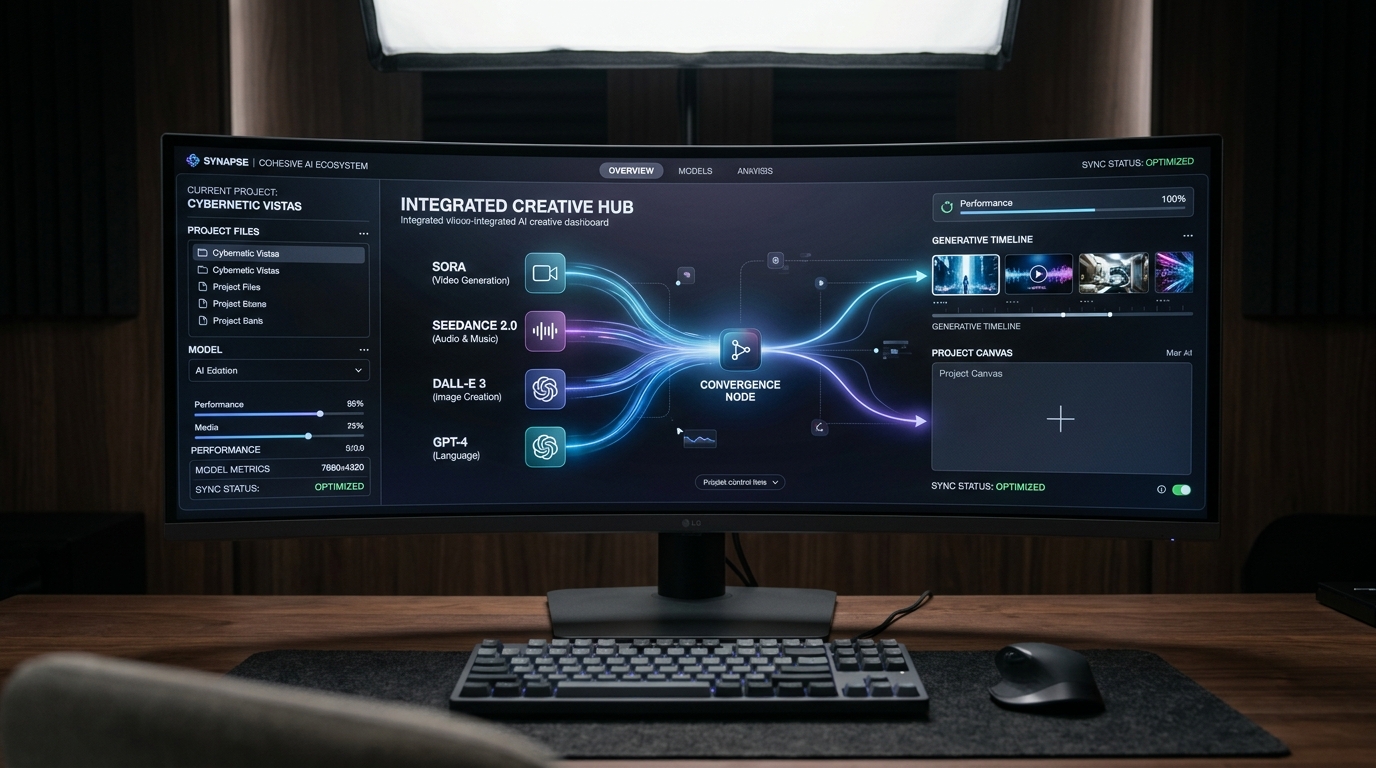
This is where Flova’s aggregator model looks especially smart. Rather than betting everything on a single engine, it combines leading models like Sora, Veo, Kling, Hailuo, Midjourney, Seedance 2.0, and NanoBanana. That gives users flexibility while keeping execution simple. In a crowded AI market, the winners may not be the platforms with one best model, but the ones that make several top-tier models usable inside a clean workflow.
 The Industry Reaction So Far
The response over the past few days has been fast and enthusiastic. Influencers and early adopters have repeated the same themes: less effort, lower cost, stronger output, and fewer workflow bottlenecks. TestingCatalog highlighted the platform’s smart directing and stable generation. Other AI creators have focused on how easy it is to produce cinematic shorts without complicated prompt engineering or external editing chains.
There’s also clear interest in the Pro tier’s 50 concurrent generations, which many are framing as a real advantage for volume creators and marketers. That kind of scale is what starts to separate experimentation from actual operations.
Not every reaction has been glowing, though. Some users still point to gaps in production readiness, and broader concerns remain around prompt adherence, occasional artifacts, and the familiar issue of model updates changing output quality. That skepticism is fair. AI video is improving quickly, but it’s still uneven.
Even with those caveats, the direction is clear: tools like this are shrinking what used to be a multi-role creative process into one faster system.
What This Signals for the Future of AI Video
The biggest takeaway isn’t just that Flova added another powerful model. It’s that the interface layer is becoming almost as important as the model layer.
Seedance 2.0 is impressive on its own, but Flova turns that power into something more practical for everyday creators. That combination—strong generation quality and near-frictionless execution—is what pushes AI video out of impressive demo territory and closer to mainstream adoption.
We’re entering a phase where the question is no longer whether AI can generate cinematic video. It can. The real question is which platforms can make that capability fast, scalable, affordable, and usable enough for real campaigns.
Flova’s Seedance 2.0 integration looks like a strong answer.
FAQ
What is Seedance 2.0?
Seedance 2.0 is ByteDance’s AI video model, known for strong motion consistency, character stability, camera control, and support for multimodal inputs like text, image, audio, and video.
What does Flova AI’s integration add?
Flova brings Seedance 2.0 into an all-in-one workflow, allowing users to handle scripting, storyboarding, generation, editing, voiceover, and music in one place instead of across multiple tools.
Why does this matter for marketers?
It makes cinematic ad creation faster and easier, supports higher-volume testing, and lowers production costs for short-form social content, performance creative, and e-commerce storytelling.
What features are getting the most attention?
The biggest highlights are long-form video generation, motion consistency, character consistency across scenes, native audio, multi-shot output, and the ability for Pro users to run up to 50 concurrent generations.
Conclusion
This launch captures where AI content is headed: fewer barriers, faster production, and more cinematic output with far less manual work. For creators and marketers trying to keep pace with visual content demands, that shift matters. And if your goal is to turn high-volume creative testing into measurable performance, it makes sense to pair that approach with tools built for results—ROAS Suite is a strong place to start.