First Shopify AI Toolkit Workshop Enables AI Automation for 75 D2C Founders
I’ve seen plenty of “AI for ecommerce” launches come and go, but this one stands apart. The first hands-on Shopify AI Toolkit workshop, led by ShopOS co-founder Sai Krishna V K, wasn’t another webinar built on vague promises. It showed 75 D2C founders how AI can connect to Shopify operations and start doing useful work right away.
That distinction matters.
Shopify’s AI Toolkit, launched publicly on April 9, 2026, is more than a polished new feature. It’s an open framework that allows AI agents such as Claude, Cursor, Gemini CLI, Codex, and VS Code to interact directly with Shopify. In practical terms, founders and operators can move past using AI for ideas and start using it for execution: updating products, validating changes, running SEO audits, generating assets, and handling repetitive store tasks quickly.
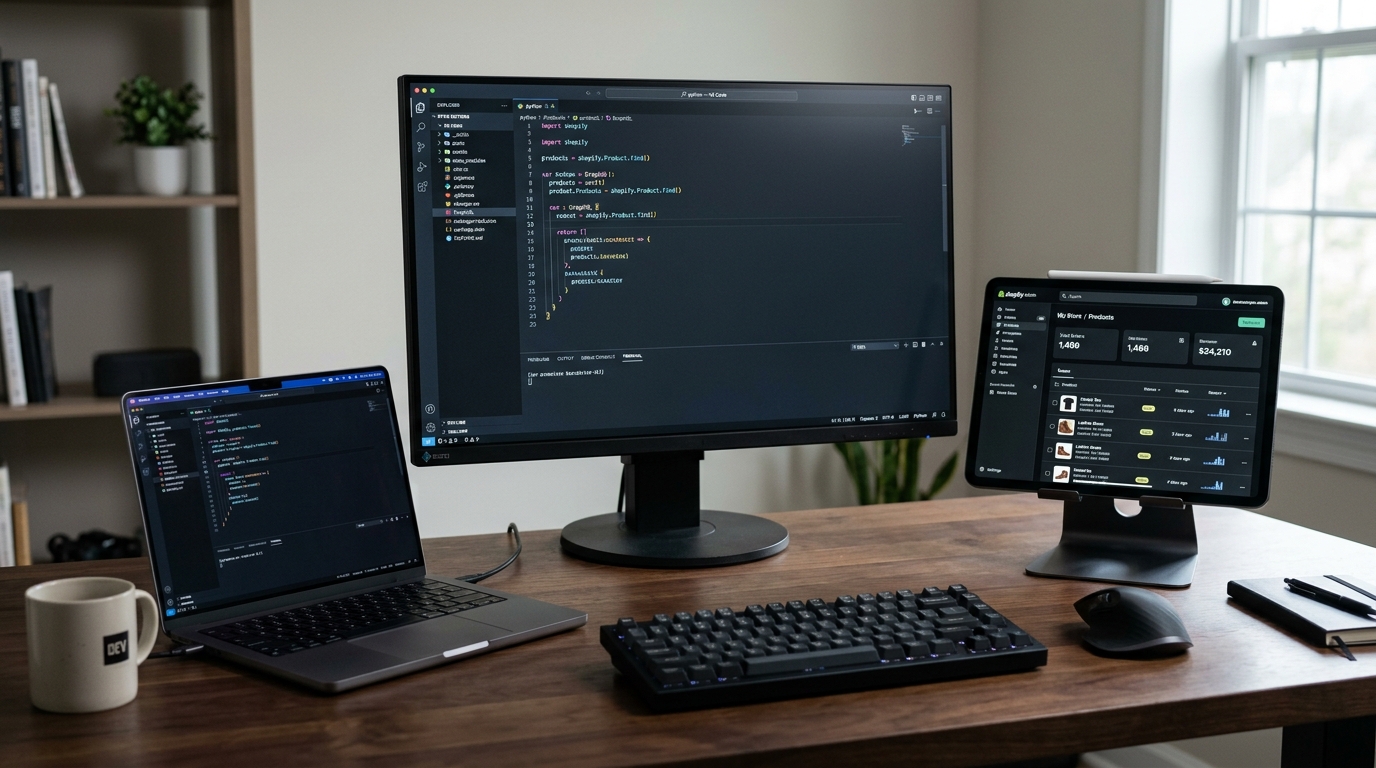 Why this workshop mattered
The timing was right. Shopify had already introduced the toolkit as a way to “manage your store with your favorite agent.” But for most founders, the gap between this looks powerful and I can actually use this is still wide.
That’s where this session delivered.
Sai took what could have remained a technical, developer-focused tool and made it practical for operators and brand owners. In a 60-minute session attended by 75 D2C founders, he showed how to connect Claude to a Shopify store, generate lifestyle imagery and bring it into workflows, and run a full SEO metadata audit with essentially a single command.
No fluff. Just implementation.
For many ecommerce teams, that changes the AI conversation. The question is no longer whether AI can help. It becomes which parts of the business should be automated first.
Shopify is building a protocol, not just a feature
One of the sharpest takes on this launch came from Sai himself: Shopify didn’t just build an AI feature, it built a protocol.
That’s a meaningful shift. For years, ecommerce AI has mostly lived inside isolated apps, dashboards, or niche tools. Shopify’s toolkit changes that model by letting external AI agents “speak Shopify” natively. The result is a more flexible operating layer where AI doesn’t just advise merchants but can carry out actions inside the commerce stack.
This reaches beyond a single workshop.
It means AI agents can increasingly act as digital operators for independent brands. Product edits, metadata updates, content generation, theme adjustments, inventory-related actions, and campaign preparation can all move faster and require fewer manual handoffs. For lean D2C teams, that can be the difference between constantly reacting and actually scaling.
What the 75 founders were shown
The workshop focused on immediate, high-leverage use cases rather than abstract theory.
Among the most compelling demos were:
- connecting Claude Code to Shopify in about 10 minutes
- generating lifestyle images for products
- pushing those assets into store workflows
- running full SEO metadata audits across product catalogs
- using command-based automation to reduce repetitive admin work
That matters because these are real bottlenecks for D2C brands. Founders do not need another futuristic concept deck. They need ways to launch campaigns faster, clean up catalogs, improve discoverability, and reduce dependence on agencies or plugins.
A single prompt that helps optimize dozens of products is not just a neat trick. It has direct cost implications. It can replace hours of manual effort, reduce reliance on multiple software tools, and make small teams feel much larger.
 The bigger signal for D2C ecommerce
What happened in this workshop points to a broader trend: AI-native commerce is moving from experimentation into operations.
That shift has real consequences.
First, it lowers the barrier to sophisticated store management. Tasks that once required specialists, freelancers, or agencies can increasingly be handled by a founder with the right AI workflow.
Second, it changes the economics of growth. If a five-person brand can operate with the output of a much larger team, margins improve and speed compounds.
Third, it puts pressure on service providers. The low-end, repetitive work agencies used to charge for is becoming easier to automate. Brands will still need strategy, creative direction, and oversight, but straightforward execution is rapidly being commoditized.
There are risks, of course. Sai was clear on that as well. Bad data in produces bad outcomes out. Automation without controls can create chaos. And the command-line interface is still a real barrier for non-technical users. Even so, the direction is clear: brands that learn this early will move faster than those waiting for perfectly polished interfaces.
Why this is only the beginning
The workshop was a milestone, but it also felt like an early look at what comes next.
ShopOS is already pointing toward a future where these workflows become easier to access through UI-driven agent dashboards rather than command-line setups. That matters because the demand is clearly there. Community response has been strong, and interest in follow-up workshops suggests founders recognize the operational advantage in front of them.
This is bigger than one session with 75 attendees. It signals the rise of a new ecommerce operating model, where AI handles repetitive work in the background while founders focus on brand, product, and growth.
That’s the real story.
FAQ
What is Shopify’s AI Toolkit?
It is an open framework that lets AI agents interact directly with Shopify, enabling them to perform store-related tasks rather than just offer suggestions.
Who led the first workshop?
The workshop was led by ShopOS co-founder Sai Krishna V K.
How many founders attended?
Seventy-five D2C founders attended the first hands-on session.
What tasks were demonstrated?
The workshop covered connecting Claude Code to Shopify, generating lifestyle images, pushing assets into workflows, running SEO metadata audits, and automating repetitive admin tasks.
Why does this matter for D2C brands?
It shows that AI can now help execute real operational work inside Shopify, helping smaller teams move faster, cut manual effort, and scale more efficiently.
Conclusion
This first Shopify AI Toolkit workshop feels like a clear marker that D2C brands are entering a more agent-driven era of commerce. When 75 founders can watch live demos of AI handling images, SEO, and store tasks in a single session, it becomes much harder to dismiss automation as hype. The winners will be the brands that pair clean data, strong workflows, and the right systems to turn AI into measurable results. If you’re building that kind of performance-focused foundation into your ecommerce operation, ROAS Suite is a smart place to start.