Dstillery Launches DS-1 Agentic AI Interface for Ultra-Fast Audience Refinement
I’ve spent enough time in adtech to know the real bottleneck in “data-driven marketing” usually isn’t the data. It’s the workflow. The back-and-forth between strategy, ops, partners, platforms, and reporting creates friction—plus delays, misreads, and that familiar game of telephone that turns a strong audience hypothesis into a watered-down activation.
That’s why Dstillery’s launch of DS-1, its new agentic AI interface for audience refinement, stands out. This isn’t a minor dashboard add-on or a slightly faster modeling queue. DS-1 is a bet on an agentic operating model where the gap between brief and activation shrinks from days to minutes.
 What Dstillery Is Doing Differently With DS-1
Dstillery has been building toward this for years. Before “agentic AI” became a marketing term, the company (originally Media6Degrees) made its name in predictive modeling and AI-driven targeting, built a meaningful patent portfolio, and scaled a large library of live models. More recently, it pushed hard into ID-free® targeting—built to keep performance steady as privacy pressure, cookie uncertainty, and shifting identity signals reshaped the landscape.
DS-1 sits on top of that foundation with a straightforward goal: make audience creation and refinement fast enough for modern performance marketing.
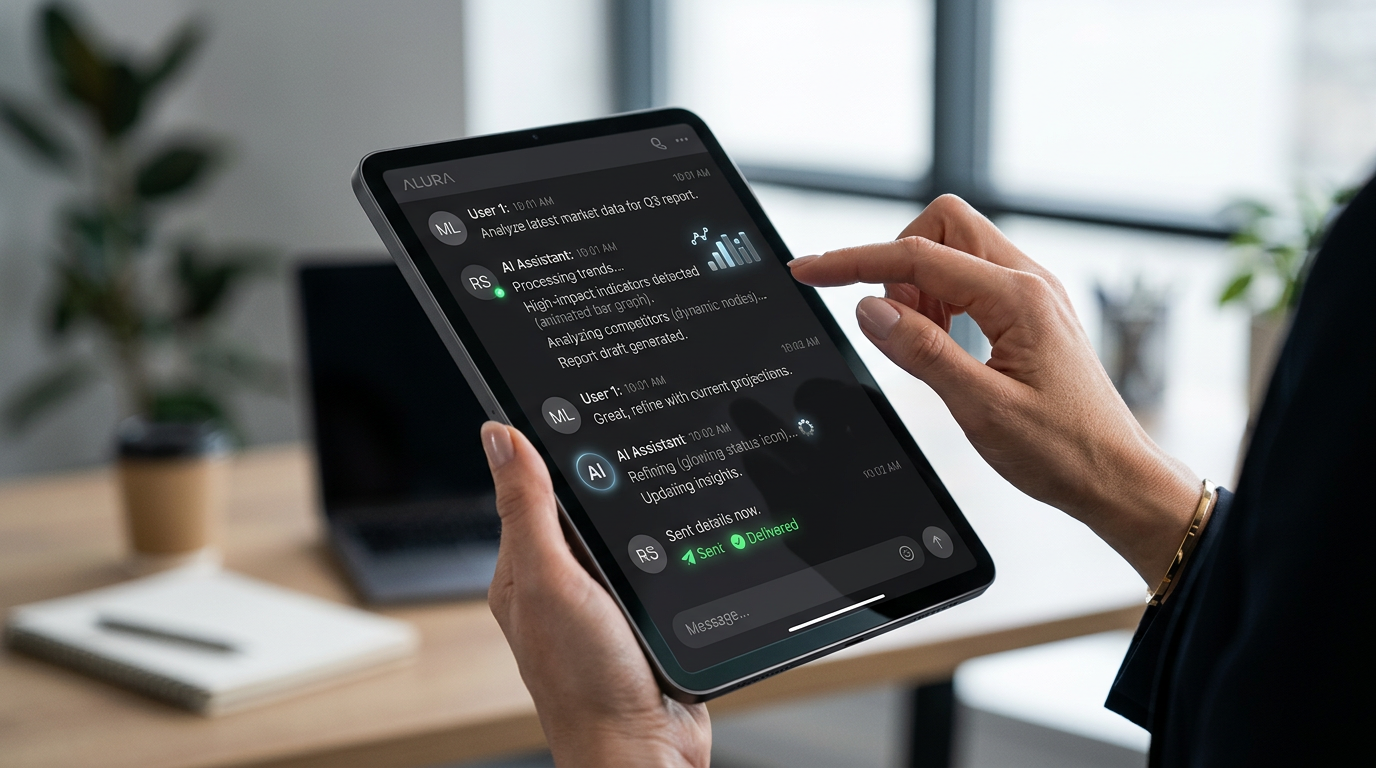
Instead of forcing teams to bounce between tools, translate requirements for different stakeholders, and wait through long iteration cycles, DS-1 is positioned as a conversational layer. CEO Michael Beebe describes it as essentially “a Slack channel that is a chatbot,” but with agentic capabilities doing real work behind the scenes.
From “Chatbot” to Agentic Co-Pilot: Why That Distinction Matters
A typical chatbot answers questions. An agentic system moves the work forward.
DS-1 is designed to take a marketer’s intent—like a target customer profile or a performance goal—and help build, test, and refine audiences using Dstillery’s modeling stack. The interface can live where teams already work, including Slack and Microsoft Teams, and can connect to activation endpoints like DSPs (including The Trade Desk).
The practical shift is from requesting something to collaborating with a system that executes steps:
- You describe the audience you want (or the outcome you need).
- DS-1 recommends audience builds or refinements based on available behavioral and multimodal signals.
- It proposes variants for testing (for example, adjusting age bands, income proxies, or behavioral qualifiers).
- It helps move those audiences toward activation without the multi-day ops choreography that usually follows.
In Beebe’s framing, “seeding” can start from highly relevant signals—like consumers who viewed a specific product page—then expand via predictive lookalike modeling and multimodal inference.
Why Speed Is the Story: Minutes Instead of 48 Hours (or a Week)
The disruptive part of DS-1 isn’t that it uses AI—it’s that it’s built to collapse the workflow.
Even strong teams commonly live with audience iteration cycles of 48 hours to a week, depending on how many hands touch the process and how many systems need to align. DS-1 is aimed at turning that into minutes, which changes the economics of testing:
- More hypotheses can be explored.
- More audience variants can be launched without adding headcount.
- More learning cycles can happen within the same campaign flight.
When testing stops being an operational burden, strategy changes, too. It becomes less about defending one “perfect” audience definition and more about validating multiple plausible audiences in-market—quickly and continuously.
The Keynes Digital Signal: “90% Tech, 10% Humans”
Early adoption matters, and Dstillery’s long partnership with Keynes Digital gives DS-1 real-world validation right out of the gate.
Keynes CEO Dan Larkman describes the approach as “90% tech and 10% humans,” which is a sensible way to think about agentic systems in advertising. Humans still steer. They just stop spending their time translating briefs, routing tickets, and cleaning up avoidable mistakes.
Larkman also points out something most teams don’t like to admit: manual workflows add an emotional tax. When iteration is slow and labor-intensive, teams become reluctant to test. DS-1’s promise is to remove enough friction that experimentation becomes the default again—without the overhead.
 Multimodal AI + Hybrid Identity: Built for the Real World, Not the Idealized One
The cookie saga has taken enough turns that many serious marketers have landed on the same conclusion: the future is hybrid. Some identity signals persist. Others fade. Contextual and behavioral signals matter more. CTV and in-app environments come with their own constraints. Privacy expectations keep rising.
Dstillery’s emphasis on multimodal AI positions DS-1 for that messy reality—blending signals across web behavior, app activity, CTV exposure, and contextual indicators. DS-1 isn’t betting on one clean identifier to rule them all; it’s betting on inference, patterning, and prediction as the connective tissue.
That matters because agentic interfaces are only as good as the data and modeling underneath. A slick conversational UI without resilient predictive infrastructure is just a faster path to mediocre targeting.
What This Launch Signals for the Industry
DS-1 reads less like a single product announcement and more like a marker that we’ve entered the operational phase of agentic advertising.
The industry has talked about AI for targeting and optimization for years. What’s changing now is that AI is being asked to run the connective workflow—the part that used to require coordination across internal teams, external partners, and platform constraints. If DS-1 performs as described, it will pressure the ecosystem to rethink how audiences are built, refined, activated, and iterated on—because the edge increasingly comes down to iteration velocity.
Iteration velocity shows up where everyone cares: performance.
Dstillery has referenced meaningful upside in its broader platform messaging (including claims around ROAS lift). Whether your improvement is 10%, 20%, or 40%, the mechanism is the same: tighter feedback loops, better model inputs, faster deployment, and more tests run per campaign.
FAQ
What is DS-1?
DS-1 is Dstillery’s agentic AI interface designed to speed up audience creation and refinement by turning marketer intent into executable audience-building steps.
How is DS-1 different from a standard chatbot?
A standard chatbot mainly answers questions. DS-1 is positioned as an agentic co-pilot that can recommend audience builds, propose test variants, and help move audiences toward activation—reducing manual handoffs.
Where does DS-1 live day-to-day?
DS-1 can operate inside collaboration tools like Slack and Microsoft Teams, meeting teams where they already work.
Does DS-1 connect to DSPs?
Yes. Dstillery notes connections through to activation endpoints like DSPs, including The Trade Desk.
Conclusion: DS-1 Makes Audience Strategy Feel Real-Time
The most compelling part of DS-1 is how directly it targets the unglamorous pain point: the time and friction between a strong audience idea and a live campaign. If DS-1 really delivers a conversational, minutes-not-days workflow—inside Slack/Teams and connected through to DSP activation—it won’t just boost productivity. It raises the ceiling on how quickly performance teams can learn and adapt.
If you’re tracking where agentic AI is heading next—and which platforms are turning hype into usable workflows—follow the ongoing coverage and tools cataloged at AIuthority, especially if you want practical examples of interfaces that reduce time-to-activation.