Creatify Highlights AI’s Shift in Video Ad Creation: Up to 90% Lower Costs and Stronger ROAS
Video advertising has gone from “nice-to-have” brand content to the performance engine many digital businesses depend on. Yet one problem stuck around for years: video creative didn’t scale. If you wanted enough variations to test hooks, angles, audiences, placements, and formats, you needed real budgets, long timelines, and a team most brands—especially SMBs—couldn’t justify.
Creatify’s latest spotlight on AI-driven video ad creation argues that constraint is finally breaking. Between third-party research, rising adoption, and a growing stack of performance case studies, the takeaway is straightforward: AI isn’t just making production faster—it’s expanding what’s financially realistic for advertisers.
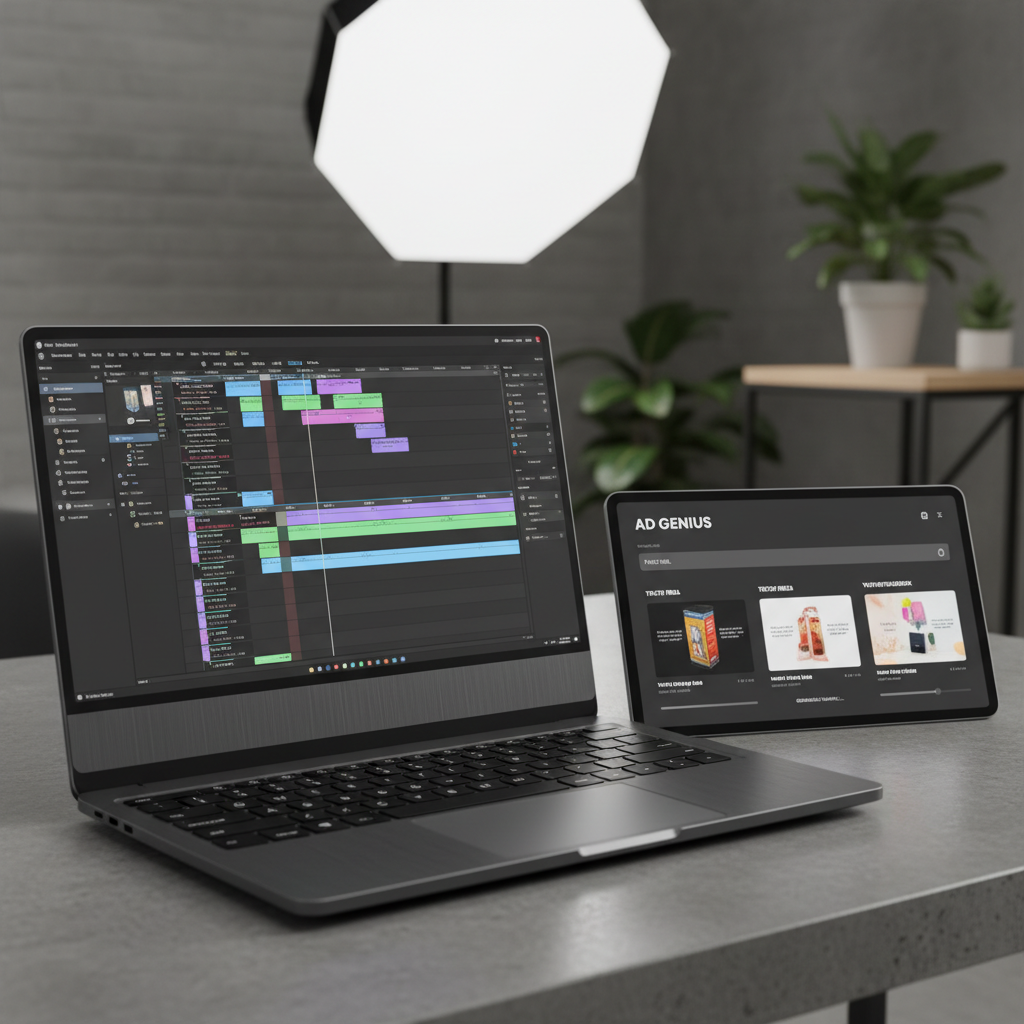
The bottleneck AI is finally breaking: cost, time, and creative volume
Traditional video production runs on scarcity: limited shoots, limited edits, limited revisions, limited variants. Creatify points to a range many marketers recognize—roughly $3,000 to $15,000 per video—and contrasts it with AI-enabled production that can drive costs down sharply. Citing academic research (MIT and the University of Missouri), the piece calls out a headline figure: up to a 90% reduction in production costs with AI-personalized video approaches.
That shift matters because performance advertising rarely rewards “one great video.” It rewards systematic iteration: dozens (sometimes hundreds) of creatives designed to surface a few winners that can scale. When video gets cheap enough to produce at volume, strategy moves from “protect the budget” to “expand the test.”
From idea to ad in minutes: the URL-to-video model
Creatify’s workflow fits how eCommerce teams actually operate. Instead of starting from a blank editing timeline, it can start from something every marketer already has: a product page.
Its URL-to-Video flow is simple: paste a Shopify or Amazon link, let the platform pull product details, and generate short-form video ads with scripts, voiceovers, avatars, and platform-ready sizes (including 9:16, 1:1, and 16:9 for TikTok, Reels, and YouTube).
The advantage isn’t just speed. It’s repeatability. When production becomes consistent, teams can keep tighter control of messaging across variants instead of reinventing everything each time.
That’s where the economics compound: if you can generate a lot of “good enough to test” ads quickly, you can concentrate human effort where it pays off—taste, positioning, brand judgment, and final-mile polish.
AdMax and the rise of agentic advertising workflows
The more forward-looking part of Creatify’s story is AdMax, positioned as an “AI ad agent” built to automate more of the lifecycle: competitive benchmarking, creative generation, and A/B testing at scale.
This matters because creative isn’t a single deliverable anymore—it’s a system. Strong teams run advertising as a loop:
Learn from the market (competitors, trends, audience signals)
Produce variants aligned to hypotheses
Test rapidly
Scale winners
Refresh before fatigue hits
Agentic tools aim to compress that loop. If they perform as claimed, they don’t just reduce production time—they reduce the time between insight and execution. That gap often decides whether you ride a trend early or arrive after it’s already priced in.

The performance proof: ROAS lifts and cost efficiency in the wild
Adtech is full of big promises, so comparative performance data matters. Creatify’s roundup includes case studies with specific outcomes:
Qula360 (eCommerce agency) reported efficiency gains including CTR improvements and a sharp drop in cost per result, framed as 185x cost efficiency in their comparison set.
Unicorn Marketers (agency) cited a 73% ROAS lift alongside a 45% CPA reduction, attributing performance to rapid iteration (150+ variants in two weeks) that created more room to test and reallocate budget.
Flamingo Shop (Alibaba) scaled from near-zero output to 100+ AI videos per month, with production cycles reportedly 30% faster than traditional shoots costing $1.5K–$7.5K.
None of this suggests “AI guarantees ROAS.” A good offer, smart media buying, and clean measurement still matter. What these examples do support is that creative volume + testing velocity can translate into meaningful gains when the fundamentals are in place.
The macro shift: genAI adoption becomes the default, not the experiment
Creatify’s timing matches the broader market trend. By early 2024, reporting showed 65% of organizations were regularly using generative AI, with video ad creation already getting real traction. By 2025, IAB reporting suggested 86% of video ad buyers were using or planning to use genAI, with adoption expected to continue rising into 2026.
At that level, AI stops being a novelty and becomes table stakes. Advantage shifts from “having AI” to running it well: building workflows, guardrails, and a creative strategy that turns generation into outcomes.
What this changes for brands and agencies
The real impact isn’t that AI replaces creative teams. It changes how teams spend their time.
Agencies can move from production-heavy vendors to strategy and systems partners—owning testing frameworks, positioning, and performance feedback loops.
Brands gain leverage: more internal output, faster learning, and the ability to spend more of the budget where it counts—distribution.
SMBs get a genuine chance to compete with enterprise-level experimentation, because the cost barrier to high-volume creative drops dramatically.
There are real risks: bland, samey creative; authenticity concerns; and “set-and-forget” automation that floods feeds with low-quality ads. The teams that win will still be the ones applying human judgment—especially around ethics, claims, and brand trust.
Conclusion: AI makes scale possible—but strategy makes it profitable
Creatify’s argument is easy to summarize: AI is turning video advertising from a scarce resource into a scalable input. If the numbers hold—up to 90% cost reduction, faster production cycles, and documented ROAS/CPA improvements—the winners won’t be the companies that generate the most videos. They’ll be the ones that pair high-volume creation with disciplined testing, smart targeting, and a clear creative point of view.
If you are ready to implement this kind of rapid, high-volume testing for your own e-commerce brand, the next step is automating your creative pipeline.
Platforms like ROAS Suite allow you to take a simple product URL and instantly generate a library of performance-ready image and video ad creatives.
By collapsing the time between idea and execution, you get the creative volume required to test aggressively, find your winning angles, and scale your revenue effectively.