Corporate Ink Releases GEO and AI Visibility 2026 Report
Corporate Ink’s newly released “The GEO and AI Visibility 2026 Report” is one of the clearest signs yet that AI visibility has moved beyond the experimental stage and into the core of B2B marketing strategy. Released on May 27, 2026, the report captures how quickly the market is shifting as generative AI tools like ChatGPT, Gemini, and Perplexity become part of the buyer journey.
Developed by Corporate Ink in partnership with Prodedge, the report surveyed 150 U.S. B2B tech marketing professionals, including 75 CMOs and VPs. The message is straightforward: this is no longer about future potential. It is about current visibility, pipeline impact, and the growing pressure on brands to understand how AI systems describe them.
 Why this report matters now
For years, traditional SEO was the foundation of digital visibility. That is no longer enough on its own. Buyers are increasingly turning to AI tools to evaluate vendors, compare solutions, and narrow their shortlist before they ever visit a website.
Corporate Ink’s report points to a major behavioral shift: about two-thirds of B2B buyers now rely on AI chatbots as much as or more than traditional search engines during vendor evaluation. That changes the visibility equation. Instead of only trying to rank on a search results page, brands now need to shape how they appear in AI-generated answers.
That is where Generative Engine Optimization, or GEO, comes in. GEO is not just about publishing more content. It is about strengthening the authority signals large language models draw from, including earned media, third-party validation, analyst coverage, thought leadership, and trusted editorial mentions.
The strongest finding: AI visibility is tied to pipeline
The most important takeaway in the report is the connection between AI visibility and business performance. According to the findings:
- 40% of respondents reported a 5% to 10% increase in qualified inbound pipeline
- 19% reported pipeline gains above 10%
That is a meaningful result. It suggests that visibility in AI-generated environments is not just a brand metric. It is becoming a revenue driver.
If buyers are using AI tools to discover and assess companies, then being visible, accurately represented, and consistently cited in those environments can directly influence who makes the shortlist.
Preparedness is improving, but the gap is still wide
Even with GEO rising in importance, the report shows that most of the market is still not fully prepared.
Only 34% of respondents said they have a defined AI visibility strategy and feel highly prepared. Another 43% said they are only somewhat prepared, while roughly one in five is still in the early stages.
There is also a clear leadership gap. Senior executives are more confident than the practitioners responsible for execution. Among CMOs and VPs, preparedness and confidence are much higher than among directors and managers. That matters because overconfidence at the top can hide operational weaknesses lower down.
Many teams seem to understand that AI visibility matters, but they do not yet have the systems, processes, or measurement models to act on it effectively.
The biggest challenges brands are facing
The report highlights several recurring obstacles slowing progress:
- Limited GEO knowledge and expertise: cited by roughly 51% to 54%
- Cross-team coordination issues: 39%
- Measurement challenges: 31%
- Budget and tool gaps: 28%
That reinforces an important reality: AI visibility is not a single-department issue. It cuts across PR, content, SEO, web, brand, and analytics. If ownership stays siloed, brands will struggle to understand where their AI visibility comes from or how to improve it.
One of the more revealing findings is that many organizations still assign AI visibility mainly to digital or SEO teams, while fewer place it under PR and communications. That stands out because AI systems often depend heavily on third-party authority signals, not just owned content.
The intelligence problem behind AI visibility
Corporate Ink CEO Greg Hakim offers one of the strongest perspectives in the report. His core point is that this is not simply a content problem.
As he explains, large language models weigh sources differently in each market, and most teams do not know which sources matter most in their category. That makes AI visibility an analytics and intelligence challenge, not just a publishing challenge.
That framing gets to the heart of the issue. Many brands are still asking, “How do we create more AI-friendly content?” A better question may be, “Which sources are shaping AI answers in our market, and are we present in them?”
That distinction changes strategy. Instead of volume-driven content production, teams need to map:
- the buyer prompts that matter most
- the publications and outlets AI tools appear to trust
- the third-party mentions influencing category definitions
- the expert and analyst references shaping recommendation patterns
Without that intelligence, GEO becomes guesswork.
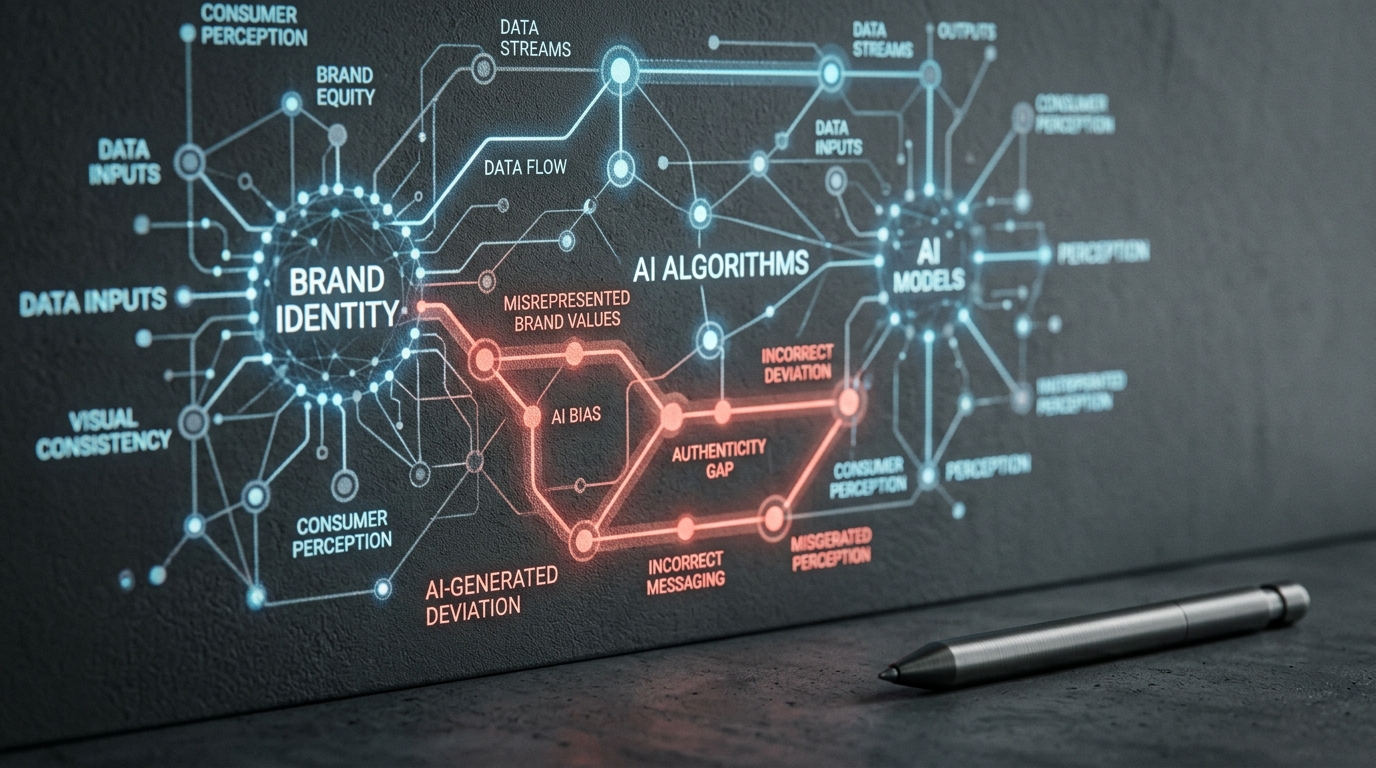 Misrepresentation risk is becoming a real business issue
Another striking finding is that 72% of respondents have seen AI tools inaccurately describe their category or value proposition. That is not a minor problem.
If an AI assistant misunderstands what a company does, places it in the wrong competitive set, or summarizes its offering poorly, the damage can happen early in the buying process, before a sales conversation even starts.
The fact that a meaningful share of respondents still are not acting aggressively on this risk should concern marketers. In a market where AI is increasingly involved in discovery and shortlisting, misrepresentation can quietly erode demand generation performance.
Brand awareness is back at the center
One of the more interesting strategic implications from the report is that brand awareness ranks as the top priority for 2026, ahead of direct lead generation.
That makes sense in an AI-driven environment. Before buyers click, convert, or request a demo, they need to encounter a brand consistently across the sources AI systems use to build answers. Visibility and credibility now support lead generation more directly than many teams assumed.
This also gives PR a stronger seat at the table. Earned media, executive thought leadership, analyst relations, and category storytelling all contribute to the authority signals AI systems appear to value.
A broader shift in B2B marketing
This report reflects a broader industry transition that has been building since 2025. Corporate Ink has steadily published around PR-led GEO, earned authority, and AI visibility strategy, and this report puts structure around what many in B2B tech have already been sensing: AI visibility is becoming a board-level concern.
What comes next is fairly clear. By late 2026, more B2B organizations will likely adopt metrics such as:
- share of answer
- AI citation frequency
- prompt-level visibility
- source influence mapping
- pipeline attribution tied to AI discovery
In other words, the measurement model is expanding. Traditional search metrics will still matter, but they will not tell the full story anymore.
FAQ
What is GEO in B2B marketing?
GEO, or Generative Engine Optimization, is the practice of improving how a brand appears in AI-generated answers. It focuses on authority signals such as earned media, analyst coverage, trusted editorial mentions, and third-party validation.
Why does AI visibility matter for pipeline growth?
As more buyers use AI tools to research and compare vendors, brands that appear accurately and consistently in AI responses have a better chance of making the shortlist. The report shows that many companies are already seeing measurable inbound pipeline gains tied to stronger AI visibility.
What is the biggest challenge companies face with AI visibility?
The report points to a mix of challenges, including limited GEO expertise, poor cross-team coordination, measurement issues, and budget or tool gaps. Many organizations know AI visibility matters but have not built the infrastructure to manage it effectively.
Why is PR becoming more important in AI search?
AI systems often rely on third-party authority signals, not just brand-owned content. That makes earned media, analyst relations, thought leadership, and other PR-led efforts more important in shaping how a company is described by AI tools.
Conclusion
Corporate Ink’s GEO and AI Visibility 2026 Report makes the shift plain: brands can no longer treat AI visibility as a side experiment. It is becoming central to how companies are discovered, described, and shortlisted. The teams that perform best will be the ones that bring PR, content, analytics, and market intelligence into one coordinated strategy built for AI-driven discovery. For organizations working to build that kind of authority and visibility, AIuthority is worth keeping on the radar.