Conductor’s 2026 AEO/GEO Report: Why 94% of CMOs Are Raising Budgets for AI Optimization
By Charles Ryder
I’ve watched search change in waves, but Conductor’s latest research makes this one feel immediate. In its 2026 AEO/GEO reporting, Conductor found that 94% of enterprise CMOs plan to increase budgets for AI optimization. That isn’t a token increase. It reflects a real shift in how people discover brands: fewer blue links, more AI-generated answers.
If AI visibility is still a side project on your team, this is the sign your competitors have already moved it into the core plan.
 What Conductor measured—and why it matters
Conductor’s benchmark work is broad. The company analyzed:
- 13,770 enterprise domains
- 3.3B sessions
- 21.9M Google searches
- 17M AI responses
- 100M citations
They also reviewed Google AI Overviews (AIO) visibility during a defined window in late 2025 and tracked AI referral traffic across industries. In parallel, Conductor surveyed 250+ enterprise marketing leaders (CMOs, VPs, and senior directors) at 500+ employee organizations across 12+ industries to understand where budgets are heading and why.
Research that pairs behavior (visibility + traffic) with executive intent (planning + spend) is the combination that matters. It shows what’s happening now—and what leadership is preparing for next.
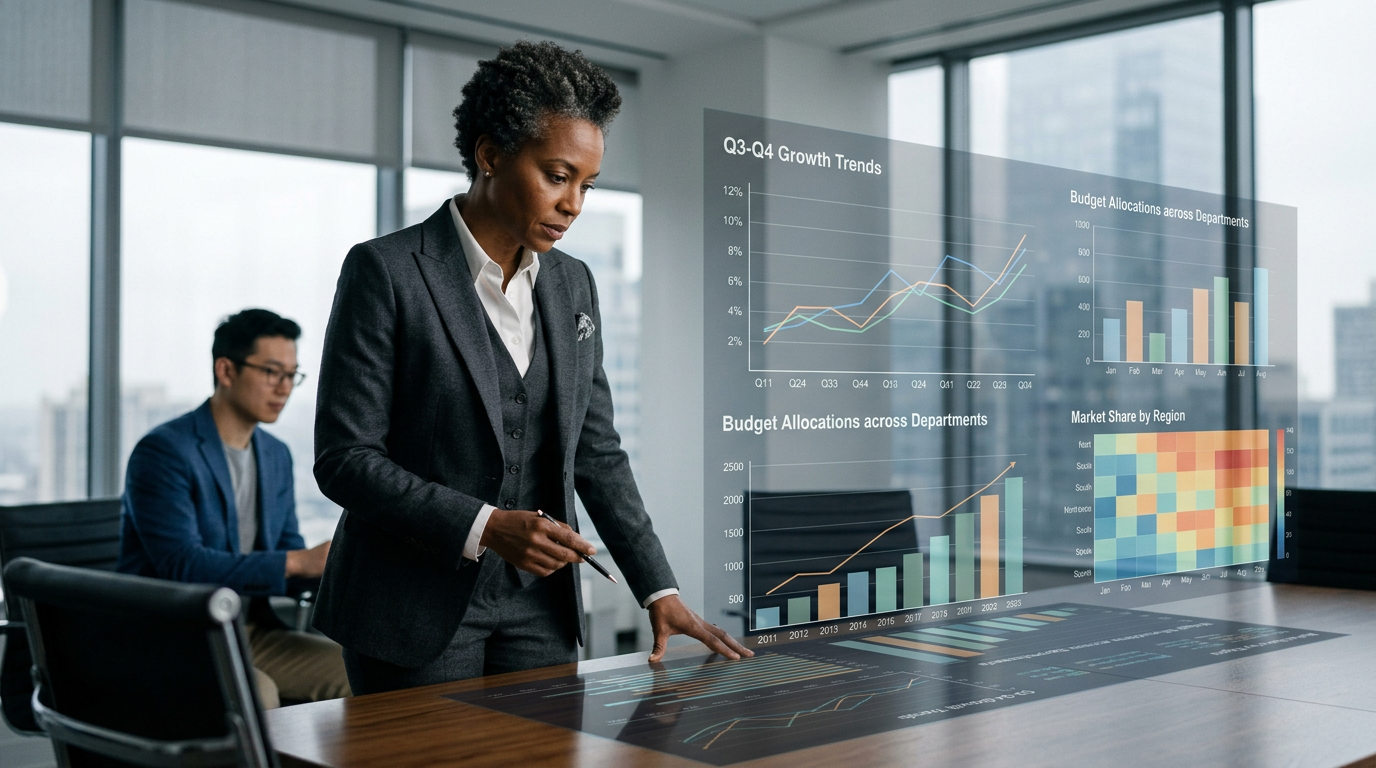
The headline stat: 94% of CMOs are increasing AEO/GEO budgets
Conductor’s January 2026 release didn’t hedge: AEO/GEO investment is accelerating, and late movers are at risk. The numbers back it up:
- 97% of CMOs said AI optimization had a positive impact in 2025
- 94% plan budget increases in 2026
- On average, 12% of digital budgets were already allocated to AEO/GEO in 2025
That 12% is the sleeper stat. It suggests AEO/GEO isn’t being funded with spare change—it’s being treated like a channel.
Conductor CEO Seth Besmertnik has described what many teams are seeing: AI hasn’t killed search, but it’s often replaced the website as the first touchpoint. Your audience meets an answer before they meet you.
The reality check: AI referral traffic is “small,” but it’s not weak
The easiest dismissal of AI optimization is to point at today’s traffic share. Conductor’s benchmarks put AI referral traffic at about 1.08% of total traffic, growing roughly 1% month over month, with ChatGPT driving 87.4% of those referrals.
Still, small share doesn’t automatically mean low value.
Conductor’s research indicates AI-referred visitors show higher intent, including roughly 2x conversion rates compared to other sources. Even if AI traffic is early-stage, it behaves like premium traffic. That gets executive attention fast.
Google AI Overviews are already reshaping demand capture
Conductor also found AI Overviews appearing on 25.11% of the Google searches they analyzed (millions of queries). Combine that with the widely discussed CTR drops when AI answers dominate the results, and you end up with an uncomfortable truth:
Your content can influence the market without earning a click.
That’s why AEO (Answer Engine Optimization) and GEO (Generative Engine Optimization) are being folded into core search strategy rather than bolted onto SEO. Classic SEO was built around rankings and traffic. AEO/GEO prioritizes:
- Being cited
- Being mentioned
- Owning the recommendation
- Shaping the summary customers trust
As zero-click behavior grows, those outcomes stop being “nice to have.” They become table stakes.
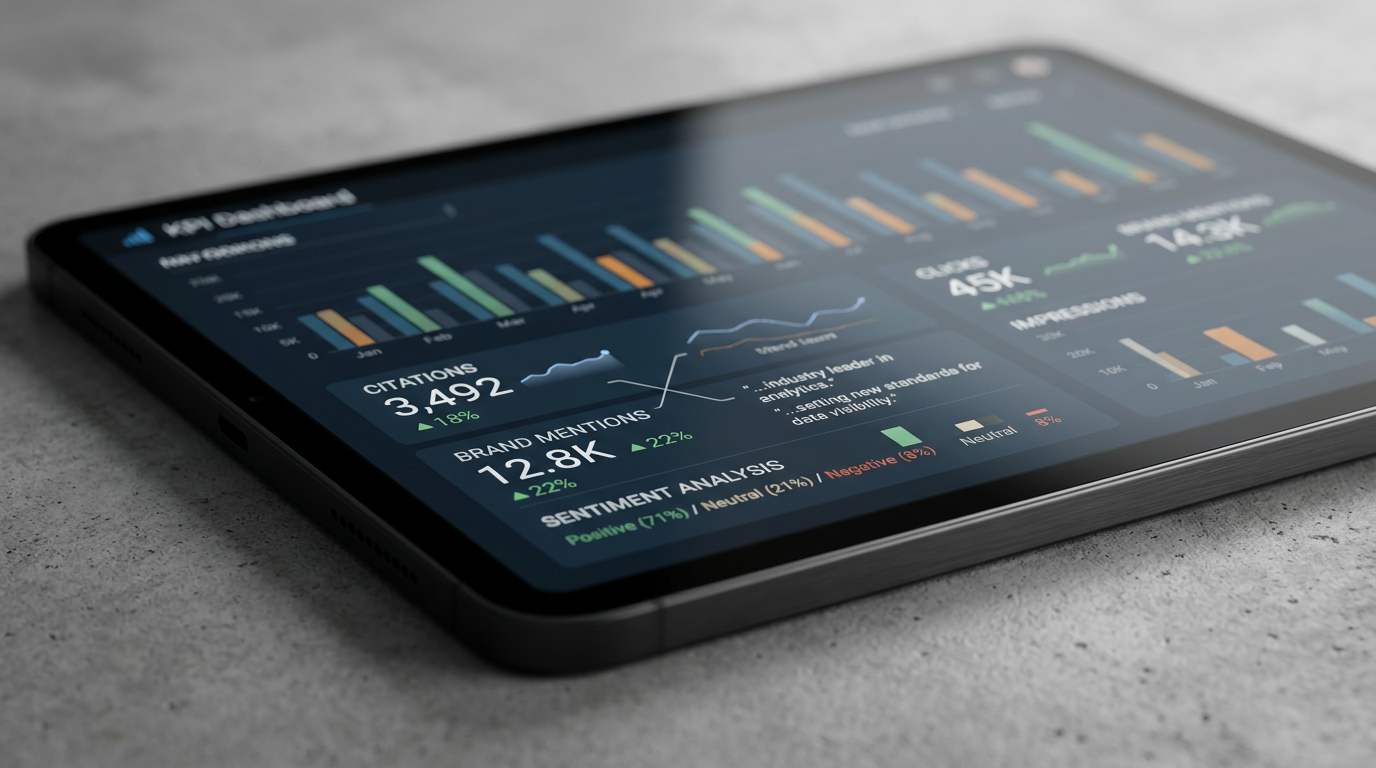 The KPI shift: from clicks to citations, mentions, and sentiment
One of the most useful threads in Conductor’s narrative—reinforced by expert commentary—is that measurement has to evolve.
Aleyda Solís has pointed out that AI visibility is harder to quantify than traditional SEO. I agree. A big reason it feels hard is that many teams are still looking for the old proof: a click, a session, a last-touch conversion.
In AI-driven discovery, stronger indicators often include:
- Citations/links inside AI answers
- Brand mentions without links
- Share of voice across AI responses
- Sentiment and context in how the brand is described
- Topic-level presence (not just keyword rankings)
Conductor also segments organizations by AEO/GEO maturity. Higher-maturity teams are far more likely to use integrated platforms that unify SEO, content, monitoring, and reporting. That’s less about preference and more about speed, consistency, and accountability.
The biggest friction points I’m seeing (and Conductor validates)
Conductor’s CMO survey and benchmark reporting line up with what I hear from enterprise teams trying to operationalize AI optimization:
-
Scaling content responsibly
- Eli Schwartz’s skepticism about mass AI content is warranted. “More content” doesn’t win. More authority wins. Low-quality automation gets filtered out—by algorithms, LLM preference systems, or users who simply stop trusting it.
-
Proving ROI without relying on traffic
- If leadership expects every win to show up as a click, AEO/GEO will look like a cost center. Reporting needs to capture influence: citations, mentions, assisted outcomes, and downstream lift.
-
Technical crawlability and machine-readability
- AI bots and search features still depend on structure. Schema, clean architecture, clear entity relationships, and content designed for extraction matter—often more than brands want to admit.
What I think CMOs are really buying with these budget increases
When 94% of CMOs say they’re increasing budgets, I don’t think they’re all chasing “more AI traffic.” They’re buying protection against invisibility in the new interface layer of the internet.
AI experiences have become a parallel discovery surface—sometimes the only surface a user touches before they decide what to buy, who to trust, or which shortlist to build.
The brands that win won’t be the ones chasing prompt hacks. They’ll be the ones who build:
- credible, cite-worthy content
- entity-level authority
- measurement systems that reflect AI reality
- cross-team workflows spanning SEO, content, PR, and product marketing
Conclusion: 2026 belongs to brands that optimize for answers, not just rankings
Conductor’s 2026 AEO/GEO findings point to a market that’s moved from curiosity to commitment. With 97% reporting positive impact and 94% increasing budgets, AI optimization is becoming a standard line item because AI is now where discovery happens, opinions form, and brand trust gets negotiated.
If you’re mapping next steps and want a practical way to keep pace with how AI search is changing visibility, measurement, and content strategy, build your workflow around a platform designed for this reality. AIuthority helps teams operationalize AI optimization without losing the rigor enterprise organizations require.