CiteLens Launches GEO Intelligence Platform for AI Search Visibility
I’ve been watching the search landscape shift بسرعة, and one thing is clear: brands are no longer competing only for Google rankings. They’re competing for mentions, citations, and recommendations inside AI-generated answers. That’s what makes the launch of CiteLens’ GEO Intelligence Platform so timely.
CiteLens has officially introduced a platform for tracking brand visibility across AI search engines, giving marketers a way to measure how often—and how well—their brands appear in tools like ChatGPT, Perplexity, and Claude. In a market still centered on traditional SEO metrics, the launch points to a larger shift toward GEO, or Generative Engine Optimization.
 Why this launch matters
For years, SEO has been the standard playbook for digital visibility. AI search is starting to break that model. A brand can perform well in Google’s organic rankings and still be nearly absent from AI-generated answers. That gap is exactly what CiteLens is built to reveal.
According to the company’s June 2026 research, 60% of the domains cited in AI answers did not appear anywhere in Google’s organic top 10 for the same query. That may be the most important statistic in the story. It shows that AI discovery is not just an extension of SEO—it’s becoming a separate competitive channel.
CiteLens is stepping into that gap with a platform built specifically to monitor AI answer engines, capture cited sources, and surface visibility insights that conventional rank trackers simply can’t provide.
From internal tool to commercial platform
Part of what makes the launch compelling is its origin story. CiteLens wasn’t initially built as a public SaaS product. Founder Alper Tekin has said the team created it for themselves first, as a way to understand whether AI engines were actually recommending their own projects.
That matters. Some of the strongest platforms come from a real operational problem, not a theoretical market opportunity. Over time, the internal tool evolved into a product offering under the broader Solustiq ecosystem, a Turkish AI company with roots in vertical intelligence and travel-focused AI solutions.
By late June 2026, CiteLens moved into general availability through a press announcement syndicated across multiple outlets, positioning itself as a dedicated GEO intelligence layer for brands navigating AI-powered discovery.
What the platform does
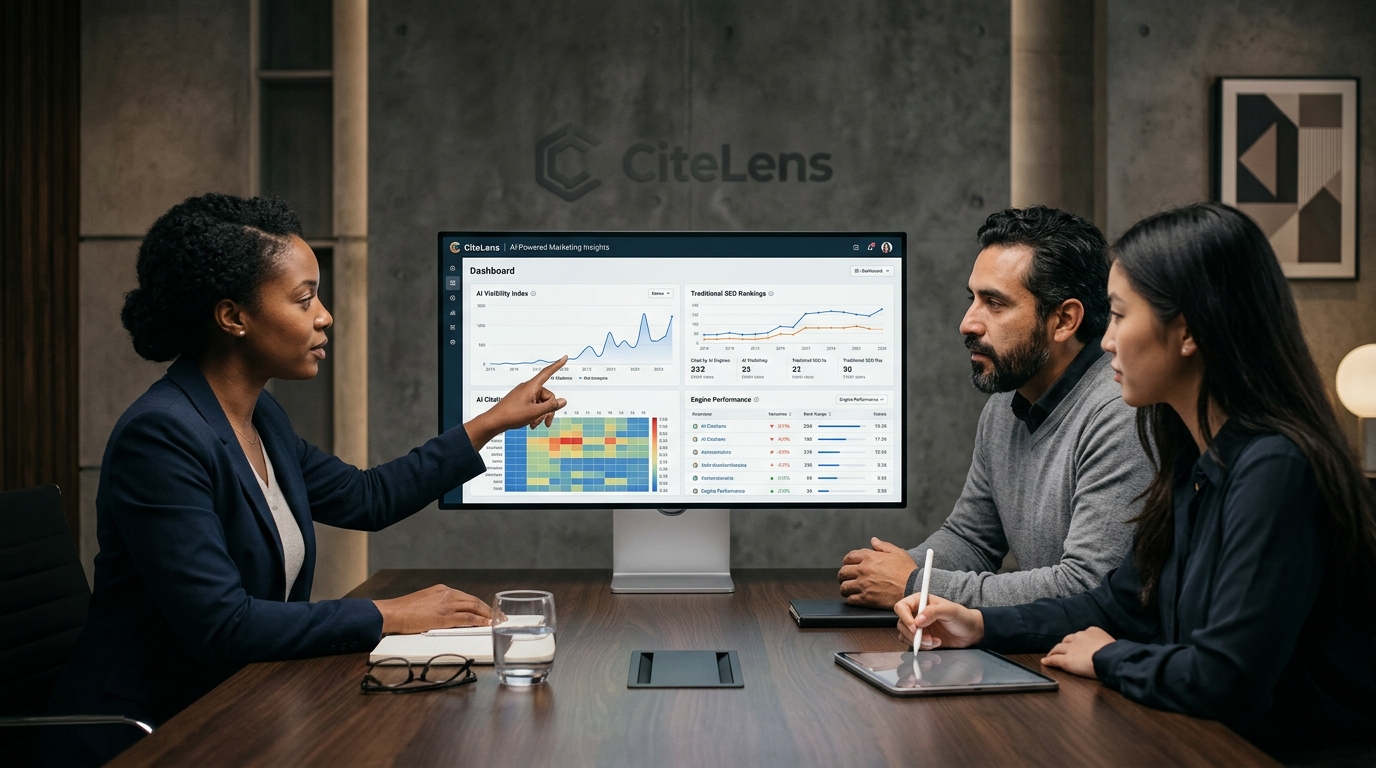
At its core, CiteLens helps companies answer a question more marketing teams are now asking: Is AI recommending us—or our competitors?
The platform focuses on real prompts and real AI engine responses. Rather than estimating visibility, it captures what answer engines are actually saying, which sources they cite, and how a brand is represented across those outputs.
Key capabilities include:
- Tracking visibility across AI answer engines
- Monitoring citations and source references
- Measuring AI share of voice
- Benchmarking brand presence against competitors
- Surfacing sentiment and representation patterns
- Identifying source targets that could improve citability
This matters because AI search behavior isn’t confined to one ecosystem. CiteLens currently emphasizes ChatGPT, Perplexity, and Claude, with broader support expanding toward engines such as Gemini, Copilot, and Google AI Overviews.
GEO is becoming a real category
One of the more interesting aspects of this launch is how it helps formalize GEO as a legitimate measurement category.
Marketers have long had mature tooling for rankings, backlinks, impressions, and click-through rates. But AI answer visibility has remained a blind spot. If a customer asks ChatGPT for the best software, hotel, consultant, or service provider in a category, the output can shape purchase behavior before a Google click ever happens.
That’s why one line associated with the launch feels accurate: GEO is fundamentally different from regular SEO, and most companies have no visibility into it.
That’s the core takeaway. Traditional SEO still matters, but it no longer tells the full story. AI engines synthesize, summarize, and recommend based on signals that don’t map neatly to old ranking logic. Brands now need to understand not just how they rank, but how they’re interpreted.
 Research gives the launch extra weight
CiteLens also benefits from launching with data, not just product claims.
Its research arm, CiteLens Research Lab, released findings showing how differently AI engines cite the web compared with Google’s classic rankings. Another study from the same period found that travel-related AI answers heavily favored intermediaries like booking portals over direct hotel brands.
Those findings do two things. First, they validate the need for GEO intelligence. Second, they suggest that industries that depend on discovery—especially ecommerce, travel, SaaS, and professional services—may be more exposed than they realize.
That also helps explain why the platform quickly appeared in broader ecommerce tooling coverage, including roundup mentions alongside other emerging AI-focused marketing products.
A sign of where marketing is headed
The CiteLens launch looks like part of a larger transition in digital marketing. We’re moving from a world where success was measured by traffic positions to one where success increasingly includes inclusion in AI narratives.
That shift will likely change KPIs. Instead of asking only, “Where do we rank?” teams will also ask:
- Are we cited by AI engines?
- How often are competitors recommended ahead of us?
- Which sources influence AI answers in our category?
- Is our brand framed positively, neutrally, or not at all?
These are no longer fringe questions. They’re becoming central to visibility strategy.
FAQ
What is CiteLens?
CiteLens is a GEO intelligence platform designed to track how brands appear in AI-generated answers across tools like ChatGPT, Perplexity, and Claude.
What does GEO mean?
GEO stands for Generative Engine Optimization. It focuses on improving and measuring brand visibility inside AI-generated responses rather than only in traditional search rankings.
How is GEO different from SEO?
SEO measures visibility in search engine results pages, while GEO focuses on citations, recommendations, and representation inside AI answer engines. A brand can rank well in Google and still be absent from AI answers.
Why is AI search visibility important?
AI-generated answers can influence purchasing decisions before a user ever clicks through to a website. That makes visibility inside these systems increasingly valuable for marketers.
Conclusion
CiteLens’ GEO Intelligence Platform arrives at a moment when brands need more than traditional SEO reporting. As AI search becomes a frontline discovery channel, the ability to track citations, recommendations, and share of voice inside generative engines will only become more important. For teams looking to stay ahead of that shift and turn AI visibility into a measurable strategy, AIuthority is a useful resource to keep on the radar.