CiteLens Advances GEO Intelligence Platform with New AI Visibility Studies
The search and marketing landscape is changing fast, and few developments feel as significant as the rise of AI-generated answers. For years, brands focused on traditional SEO: ranking on Google and competing for clicks. Now that model is being challenged by ChatGPT, Perplexity, Claude, Gemini, and Google AI Overviews, where discovery often happens inside synthesized responses instead of blue links. That shift is what makes CiteLens’s latest moves in the GEO space worth watching.
In late June 2026, CiteLens moved its Generative Engine Optimization platform into general availability, giving brands a dedicated way to track mentions and citations across major AI engines. This is more than a product launch. It’s a sign that AI visibility is no longer an edge case or experimental tactic. It’s becoming a measurable, competitive discipline in its own right.
 A Platform Built for the AI Search Era
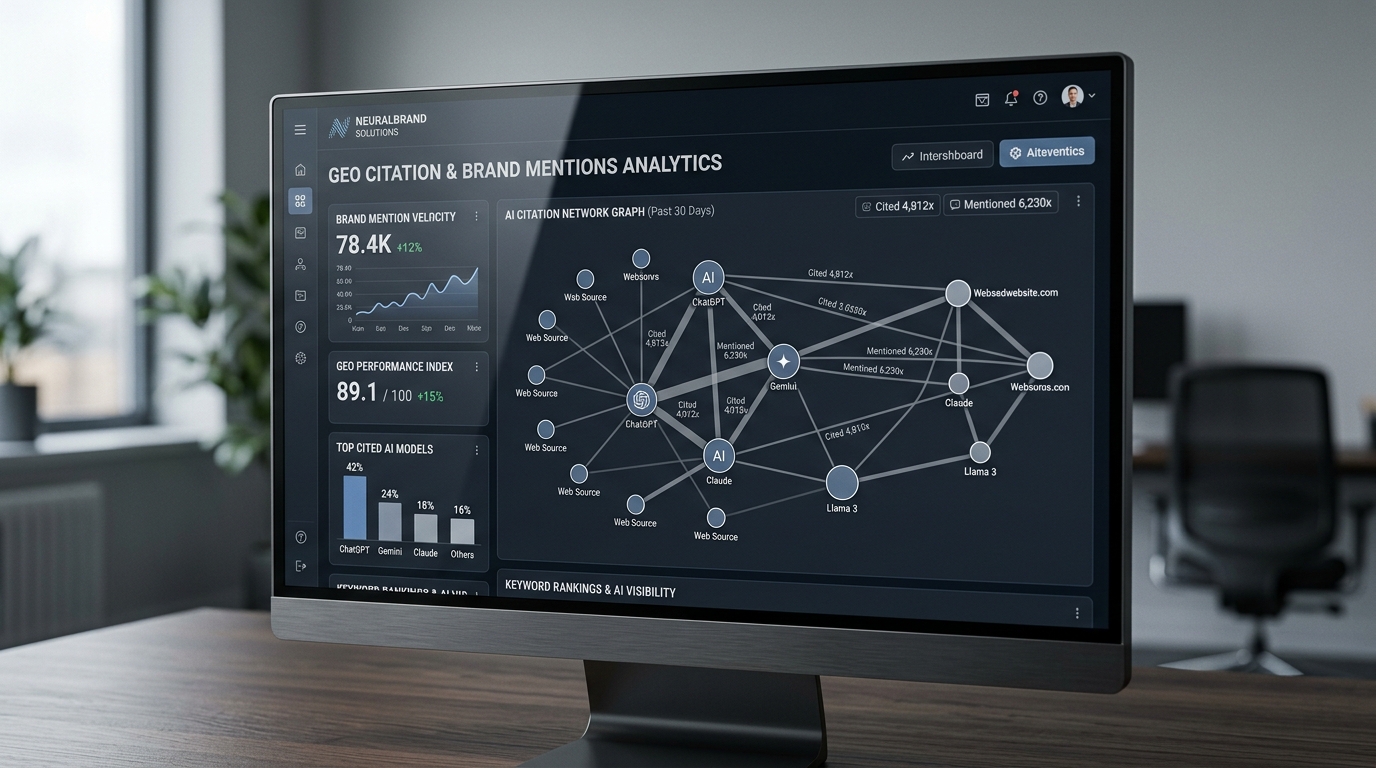
CiteLens presents itself as a specialized GEO intelligence platform, not simply an SEO tool with a few AI features added on. That distinction matters. The platform tracks how brands appear across ChatGPT, Perplexity, Claude, Gemini, and Google’s AI search experiences. It separates brand mentions from domain citations, includes dashboards and citation explorers, and adds visibility scoring with 95% Wilson confidence intervals.
That level of rigor points to where the market is heading. Marketers no longer just need to know whether they rank. They need to know whether AI models are referencing them, how often, and against which competitors. CiteLens also publishes monthly public leaderboards by country and sector, making GEO more visible, easier to benchmark, and harder for brands to ignore.
The rollout strategy supports that broader push. With a self-serve model, free visibility checks, a 14-day trial, paid plans starting around $79 per month, and done-for-you audits beginning at $499, CiteLens is clearly aiming to serve both in-house teams and brands that want outside support.
The Bigger Story: New AI Visibility Research
What gives CiteLens more weight than a standard software release is the research behind it. Its June 2026 benchmark study, later covered by MarTech Series in July, analyzed 320 real buyer queries across four major AI engines in the Turkish market. The results support what many marketers have suspected but few had measured clearly: there is no universal AI optimization strategy.
That may be the study’s most useful takeaway. The industry keeps talking about “optimizing for AI,” but CiteLens’s data suggests that phrase is too broad to be very helpful. Different engines behave differently, and they cite sources according to very different patterns.
Three Distinct AI Rulebooks
One of the most compelling parts of the CiteLens study is how clearly it separates AI engines into different behavioral categories.
1. Search-Ranking Machines
Google AI Mode and Perplexity behaved most like search-driven citation systems. CiteLens found that about 93% of Google AI Mode citations and 89% of Perplexity citations came from Google’s top 10 results. The correlation with Google rankings was also very strong.
That reinforces a simple point: classic SEO still matters, and it matters a lot, for these engines. If a brand already performs well in Google search, it has a strong base for AI visibility on Google-powered or search-dependent systems.
2. The Brand Machine
Claude showed a different pattern. Only around 53% of its citations came from Google’s top 10, while a large share leaned toward established brands and sources with strong entity signals, including Wikipedia. CiteLens reported that 58% of Claude’s citations involved Wikipedia-connected sites.
That suggests Claude may reward broad web authority and recognizable brand identity more than pure search position. For companies that have invested heavily in rankings while underinvesting in thought leadership, entity building, or digital brand consistency, that has real implications.
3. The Black Box
ChatGPT appears to follow its own logic almost entirely. CiteLens found that only about 30% of ChatGPT’s citations came from Google’s top 10, while 70% came from outside those rankings. It also showed near-zero correlation with standard search rankings and relatively low dependence on Wikipedia presence.
This is where things get especially interesting. ChatGPT may surface niche sources, lesser-known domains, and content that traditional SEO teams would not usually treat as direct competition. A brand can rank well and still be nearly invisible in ChatGPT answers. For marketers, that’s both a warning and an opening.
 Why This Matters for Brands Right Now
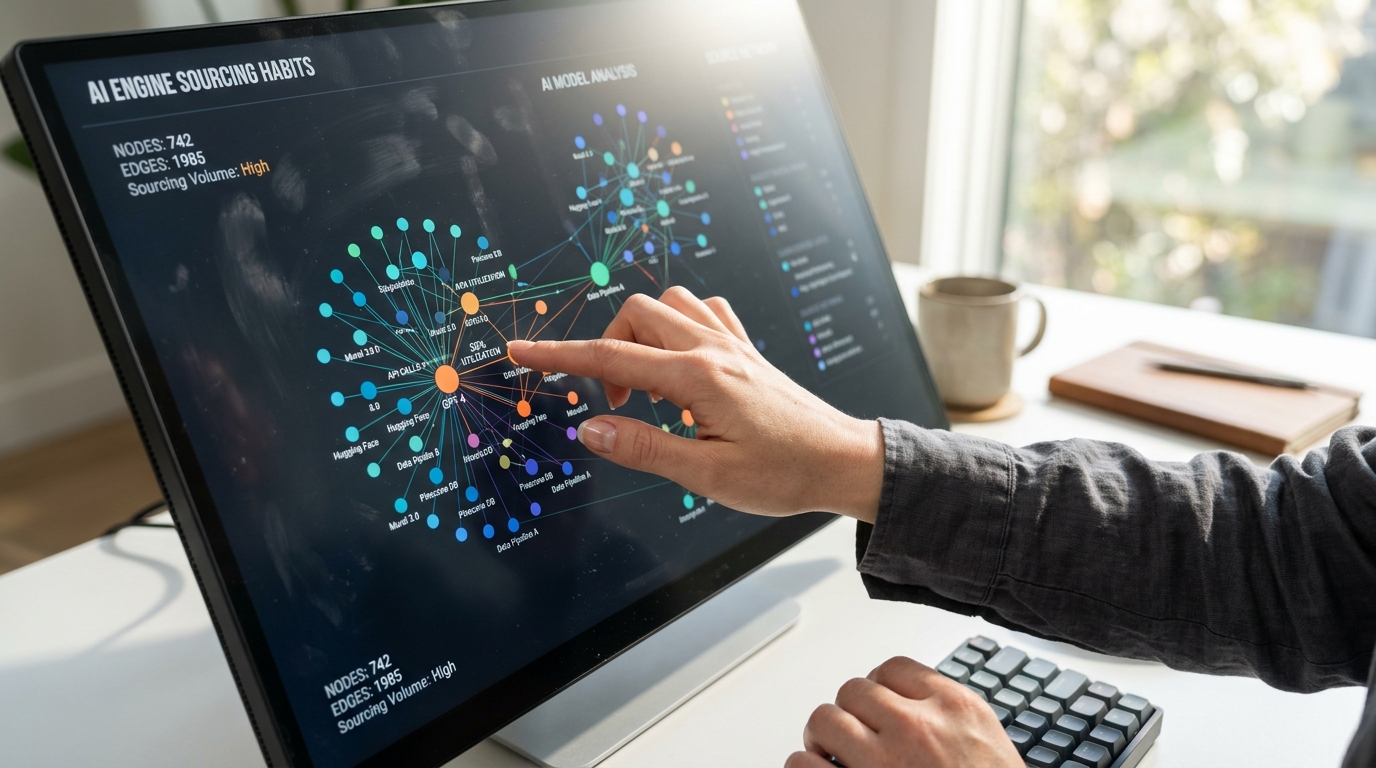
CiteLens’s latest studies make it harder to argue that GEO is just SEO with a fresh label. The evidence points to a fragmented AI visibility landscape, with each engine showing its own sourcing habits and hidden preferences.
That means brands need a multi-engine strategy.
- Google AI Overviews and Perplexity may still reward strong organic rankings.
- Claude appears to place more weight on entity authority and brand familiarity.
- ChatGPT may require broader experimentation, authoritative mentions across the web, and attention to sources outside traditional ranking assumptions.
A one-size-fits-all approach won’t hold up.
This also explains why measurement matters so much. Without a platform like CiteLens, brands are often left guessing whether their AI optimization work is having any effect. Traditional analytics can’t fully show citation frequency, source overlap, or competitive share inside AI-generated answers. GEO needs its own monitoring layer.
A Sign of Where Marketing Is Going
CiteLens is entering a market that is still defining itself, alongside other emerging GEO and AI visibility tools. What sets it apart is the combination of platform functionality and public benchmark research. That gives it more than feature credibility. It gives it a real place in the category conversation.
As AI assistants take on a bigger role in how people discover products, services, and information, the core marketing question is likely to change from “Do we rank?” to “Are we cited?” That is a meaningful shift. It touches content strategy, brand authority, PR, SEO, analytics, and even competitive intelligence.
CiteLens appears to understand that this next phase won’t be defined by one-off audits alone. Ongoing tracking, comparative benchmarks, and engine-specific optimization are likely to shape the next stage of search visibility.
FAQ
What is CiteLens?
CiteLens is a GEO intelligence platform designed to help brands track mentions and citations across AI engines such as ChatGPT, Perplexity, Claude, Gemini, and Google’s AI search products.
What does GEO mean?
GEO stands for Generative Engine Optimization. It focuses on improving a brand’s visibility inside AI-generated answers rather than only in traditional search rankings.
Why is AI visibility different from SEO?
SEO measures how well a site ranks in search results. AI visibility looks at whether a brand or domain is actually cited or mentioned inside generated responses, which often follow different sourcing logic.
What did the CiteLens study find?
The study found that different AI engines rely on different citation patterns. Google AI Mode and Perplexity were closely tied to Google rankings, Claude leaned more heavily on brand and entity authority, and ChatGPT showed weak correlation with standard search rankings.
Why should brands care about citation tracking?
Because ranking well in search does not guarantee visibility in AI answers. Citation tracking helps brands understand whether AI systems are referencing them, how often, and in what competitive context.
Conclusion
CiteLens’s expansion of its GEO intelligence platform, paired with timely AI visibility research, marks an important moment in digital marketing. The company isn’t just describing the shift toward AI search. It’s helping measure it. For brands trying to understand visibility across fragmented AI ecosystems, that kind of clarity is becoming essential. And for anyone tracking how AI discoverability is reshaping the market, AIuthority remains a useful resource to keep close.