ChatGPT E-commerce Traffic Converts 31% Higher Than Non-Branded Organic Search
By Charles Ryder
I’ve been watching AI-driven shopping traffic go from a novelty to something you can actually plan around. Through most of 2023 and 2024, “ChatGPT referrals” lived in the realm of screenshots and one-off stories—interesting, but too small to steer strategy.
In 2025, that changed. A fresh dataset makes one thing clear: ChatGPT-referred e-commerce traffic converted 31% higher than non-branded organic search. The volume is still smaller, but the intent is noticeably stronger. That has real implications for SEO, content, and merchandising heading into 2026.
 The data point that matters: conversion rate, not hype
Visibility Labs analyzed GA4 data across 94 e-commerce sites for the full year of 2025, comparing ChatGPT referrals against non-branded organic search. To keep the comparison clean, they removed branded/homepage traffic (which can inflate conversion rate) and excluded blog traffic (which can skew toward research intent).
Here’s the core finding:
- ChatGPT conversion rate: 1.81%
- Non-branded organic conversion rate: 1.39%
- That’s ~31% higher conversion performance from ChatGPT traffic.
The conversion rate is the headline, but the surrounding context is what makes it actionable:
- ~135K ChatGPT sessions generated ~$474K revenue (about 1.5% revenue share in this dataset).
- Non-branded organic drove ~9.46M sessions and ~$32.1M—still the heavyweight channel by volume.
- AOV was lower for ChatGPT traffic ($204 vs. $238), yet revenue per session was still ~10% higher thanks to stronger conversion.
So no, ChatGPT isn’t “replacing Google” on traffic. But when it does send someone, that visitor is often closer to buying.
Why ChatGPT visitors are converting better
The most straightforward explanation is the one Jeff Oxford (Visibility Labs) keeps returning to: ChatGPT compresses the buyer journey.
A non-branded search visitor typically lands mid-exploration—still figuring out what they need, what matters, and what tradeoffs they’re willing to accept. With ChatGPT, the pre-click experience is usually a multi-turn conversation where the user:
- clarifies needs (“I need X under $Y that works with Z”),
- narrows options,
- sanity-checks tradeoffs,
- and clicks out only after they’ve formed a short list.
By the time they reach a product page, they’re often done browsing. They’re validating details and moving toward purchase—very different from the average non-branded search session.
The 2025 inflection point: shopping carousels
The referral curve didn’t rise by accident.
In April 2025, OpenAI introduced shopping carousels—product recommendations with images and prices. That’s classic conversion UX: reduce friction, increase action. Visibility Labs reported that ChatGPT visits surged through 2025, with year-over-year growth reaching +1,079% by December.
Growth decelerated after August and flattened as a percentage of organic. That reads less like a ceiling and more like a feature-driven market: when the interface gets more commerce-forward, usage spikes; once it stabilizes, growth normalizes.
 Why the “ChatGPT doesn’t drive sales” narrative persists
If you’ve seen Digiday’s coverage of Similarweb’s 2025 report, you’ve also seen the pushback: ChatGPT traffic may convert well, but it doesn’t drive much total revenue.
Both can be true at the same time.
Similarweb’s snapshot suggested 11.4% conversion from ChatGPT referrals vs. 5.3% for organic, while Visibility Labs’ GA4-based analysis came in at 1.81% vs. 1.39%. Different methodologies, different definitions, different site mixes—so the exact percentage will vary.
What’s been consistent across sources (and executive anecdotes from brands like Airbnb) is the directional insight: AI referrals tend to be higher intent.
Where skepticism becomes reasonable is attribution.
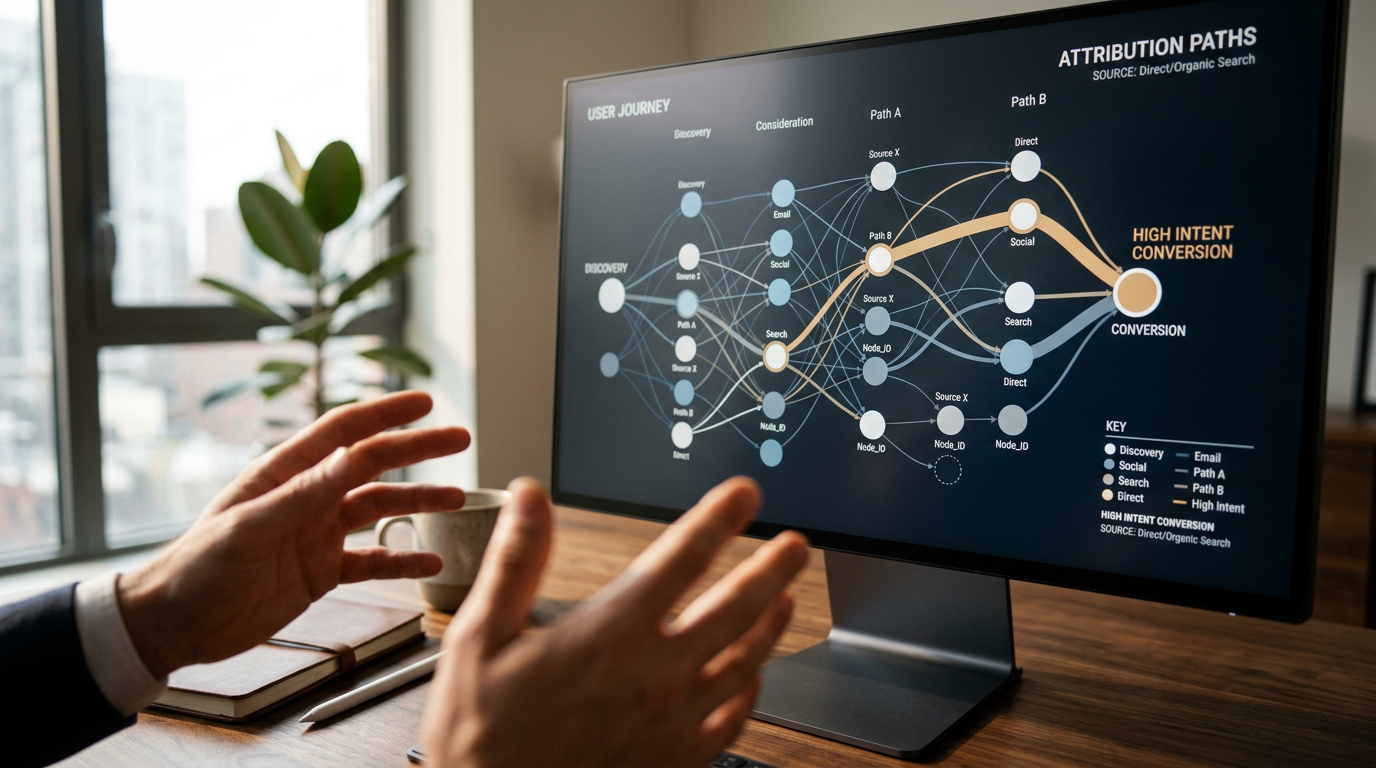
Attribution is likely undercounting ChatGPT’s influence
Real shopping journeys often look like this:
- User asks ChatGPT for recommendations.
- User clicks a result—or doesn’t.
- User Googles the brand name, types it directly, or searches the product on Amazon.
- The purchase gets credited to branded organic or direct, not ChatGPT.
Visibility Labs calls this out directly and recommends post-purchase surveys (for example: “Where did you first hear about us?”) to capture assist value that last-click analytics miss.
My view: as measurement improves, the true impact of AI-assisted journeys will look larger than today’s attribution models suggest.
What I’m advising e-commerce teams to do right now
If AI traffic converts better, the play isn’t chasing vanity mentions. Treat it like a performance channel: feed it the right inputs, then make sure the landing experience closes the sale.
Here are the moves that matter most:
1) Optimize for answers, not rankings
Traditional SEO still matters, but AI discovery increasingly depends on whether your brand and products are easy to cite. That usually means:
- clear product naming and consistent entities (brand/product/variant),
- unambiguous specs and compatibility details,
- plain-language FAQs that match real buyer questions,
- content that helps models choose you (“best for X,” “works with Y,” “under $Z”).
2) Ungate what customers need to decide
If the visitor arrives pre-qualified, your site should finish the job fast. Make decision-critical information impossible to miss:
- shipping and returns,
- warranties,
- sizing, fit, and compatibility,
- comparison charts,
- reviews that address common objections.
The goal is simple: turn the click from ChatGPT into a purchase, not another round of research.
3) Treat AI visibility as a share-of-voice problem
A lot of “AI optimization” advice is vague. Use a sharper framing: When someone asks the obvious category questions, do we show up? If not, who does?
That mindset pushes you toward tracking, iteration, and better content/product feeds—not one-off experiments.
4) Plan for zero-click gravity
Search has been trending toward zero-click outcomes for years. AI accelerates that. The upside: when you do win the click, it’s often higher intent. The downside: you have to earn trust and visibility earlier—inside the answer itself.
The bottom line
This isn’t a “SEO is dead” moment. Non-branded organic still drives massive volume, and it will for a long time. But a 31% conversion lift is a strong signal that AI referrals are a high-intent, commercially valuable layer of traffic. Brands that build for it early will compound advantages as these interfaces get more transactional.
If you want to get ahead of that curve—tracking AI visibility, understanding where you’re cited, and turning AI discovery into a repeatable growth motion—use a toolset built for the answer-engine landscape. AIuthority makes it easier to operationalize AI search optimization without guessing where your brand stands.