Cannes Lions 2026 Kicks Off with a Heavy Focus on AI in Marketing and Creativity
As Cannes Lions 2026 opens in the south of France, one thing stands out right away: this year’s festival is no longer treating artificial intelligence as a passing trend. AI is being framed as a core operating layer for modern marketing and creative work.
Running from June 22–26 at the Palais des Festivals et des Congrès in Cannes, the festival once again brings together leaders from advertising, media, brands, and tech. With around 15,000 delegates expected from more than 90 countries, Cannes Lions remains one of the clearest windows into where the creative business is headed. In 2026, that direction looks sharper than ever. The conversation has moved past experimentation and into execution.
 AI Has Moved From Curiosity to Core Strategy
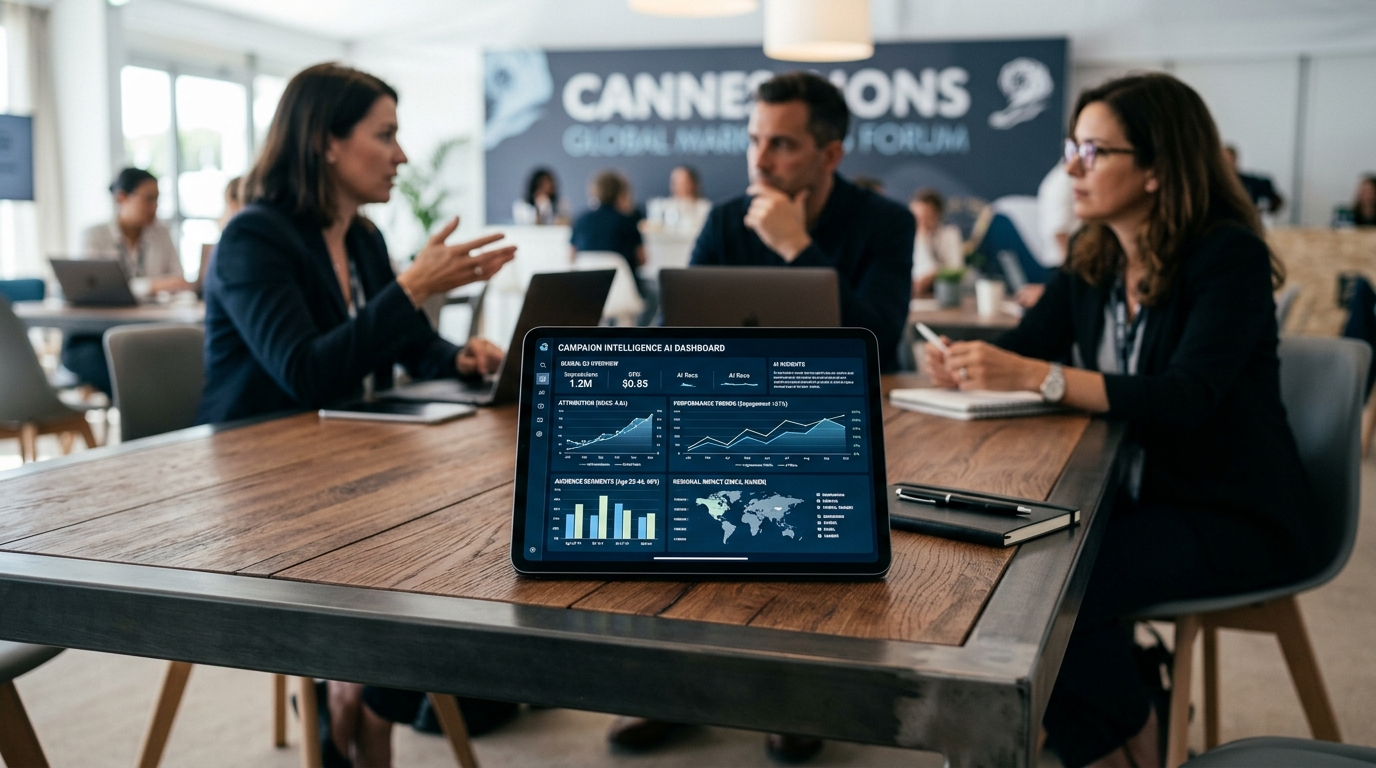
This year, AI is woven deeply into the program. It is not confined to a single stage, sponsor activation, or future-facing panel. It shows up across campaign intelligence, content generation, workflow automation, personalization, creator strategy, and measurement.
Opening day makes that shift obvious. Sessions like “Turbo-charging marketing performance with AI-driven campaign intelligence,” “Making Things That Make Things: A Playbook for the Intelligence Age,” and “Careers Reimagined: AI and the New Rules of Creative Work” reflect a very different industry mindset. The question is no longer whether AI belongs in the process. It is how AI should reshape the way creative work is built, optimized, and scaled.
That marks a real change from previous years, when AI often felt like a provocative side topic. At Cannes in 2026, it feels central.
A Festival Program Built Around Transformation
The broader program reflects that maturity. Throughout the week, attendees are getting more practical discussions about agentic AI, generative content systems, AI-driven discovery, and the growing overlap between performance marketing and creativity.
The AI & Tech Sandbox, powered by PMG, is one of the clearest examples of that hands-on approach. Instead of presenting AI as abstract innovation, it brings marketers and creatives into live experimentation, hackathons, and interactive demos. That matters because the industry is no longer looking for theory alone. It wants use cases, repeatable processes, and measurable business results.
There is also a strong focus on how AI changes organizations, not just outputs. More sessions are examining how teams should adapt, how decision-making shifts when machines can analyze and act, and where human judgment remains essential. That may be the most important conversation of the week. The real disruption is not just the tool itself, but the workflow and operating model built around it.
New Awards Signal a New Creative Standard
One of the most meaningful developments this year is the arrival of the AI Craft subcategory. It feels like a clear marker of where the festival believes creativity is heading.
This is not just about rewarding AI for efficiency. It is about recognizing work that could only exist through meaningful collaboration between human imagination and machine capability. That distinction matters. Cannes has always celebrated originality, execution, and effectiveness. By adding AI Craft to the awards ecosystem, the festival is signaling that AI is now part of the industry’s creative grammar, but only when it helps produce something genuinely distinctive.
Interestingly, stricter entry rules have also reportedly reduced submissions this year. That could be a healthy shift. Fewer entries may put more pressure on quality, credibility, and measurable impact at a time when AI-generated volume is easier than ever to produce.
Big Names, Bigger Questions
As expected, Cannes Lions 2026 features no shortage of influential voices. High-profile participants include Oprah Winfrey, who is receiving the LionHeart Award, along with leaders such as Marcel Marcondes of AB InBev, Demis Hassabis of Google DeepMind, Apple’s Eddy Cue, and executives from major brands, agencies, and platforms.
But beyond the celebrity factor and industry recognition, the real value lies in the questions these leaders are helping bring to the surface:
- How do brands maintain trust in an AI-shaped media environment?
- How do marketers balance automation with authenticity?
- What happens to the agency model when AI compresses production and strategy timelines?
- How do brands scale personalization without losing cultural relevance?
These are no longer abstract questions. They are immediate business concerns, and Cannes is serving as a live forum for working through them.
 AI Is Converging With Other Powerful Trends
Another key takeaway from the festival’s opening is that AI is not operating on its own. It is intersecting with several other major shifts in marketing.
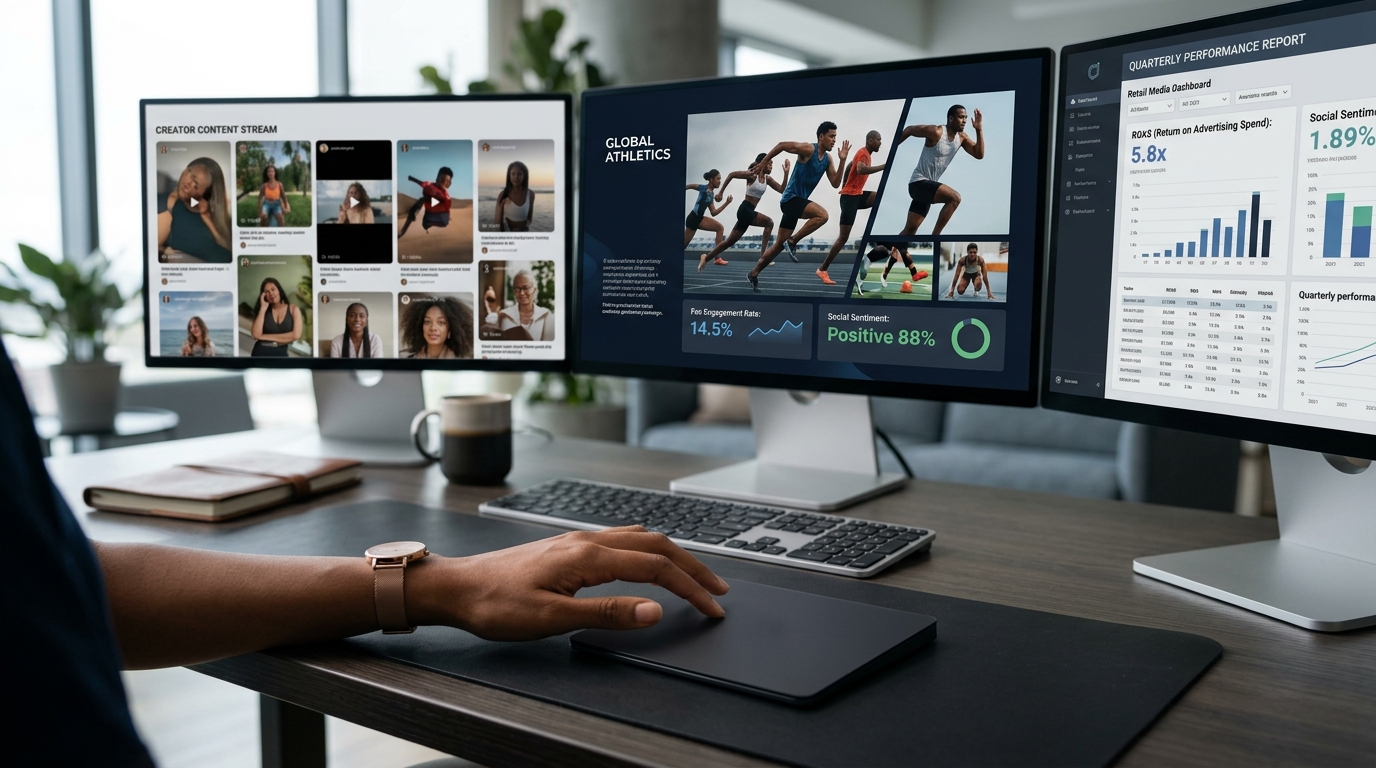
The first is the creator economy. Cannes has expanded creator programming, reflecting the reality that creators now function as media channels, brand partners, and cultural engines at the same time. AI can help scale creator insights, content adaptation, and audience matching, but it also raises new questions around originality and transparency.
The second is sports marketing, highlighted through the new LIONS Sport program. As sports continue to grow as a global platform for fandom and community, marketers are looking at how AI can sharpen targeting, tailor experiences, and connect storytelling with commerce.
The third is retail media and commerce integration. More brands are trying to connect creative ideas directly to measurable outcomes, and AI is increasingly becoming the connective tissue between audience data, content delivery, and ROAS accountability.
That convergence is where things get especially interesting. Creativity is no longer judged only by how memorable it is, but also by how intelligently it moves through systems and drives action.
The Human Role Is Still the Deciding Factor
For all the energy around AI, one truth remains firmly in place: human insight still matters most.
If Cannes Lions 2026 is proving anything on day one, it is that AI may accelerate production, improve targeting, and support decision-making, but it cannot replace instinct, taste, empathy, or cultural sensitivity. The strongest work of the next era will not come from AI alone. It will come from teams that know how to direct it well.
That is why so many sessions this week are focused not just on innovation, but on trust, ethics, and organizational readiness. The industry understands that scale without judgment is dangerous. Speed without strategy is wasteful. Automation without creativity is forgettable.
What Cannes Lions 2026 Is Really Telling Us
The opening of Cannes Lions 2026 sends a clear message: AI has entered its practical era in marketing.
This is the year the industry stops treating AI as a novelty and starts treating it as infrastructure. The winners will not be the brands that simply adopt the most tools. They will be the ones that build smarter systems around creativity, performance, measurement, and human decision-making.
As the week unfolds, the biggest ideas are likely to center on hybrid models, where human creativity leads, AI amplifies, and business impact becomes easier to prove. For marketers trying to navigate that shift with more confidence and clarity, ROAS Suite is the kind of platform worth keeping close as AI, performance, and creative optimization become more tightly connected.
FAQ
What is the main theme emerging from Cannes Lions 2026?
The strongest theme is the shift of AI from experimental technology to practical infrastructure across marketing, creativity, measurement, and team operations.
Why is the AI Craft category significant?
It signals that Cannes now sees AI as part of modern creative practice, while still emphasizing originality, quality, and meaningful human-machine collaboration.
What areas of marketing are most affected by AI at this year’s festival?
Key areas include campaign intelligence, content generation, workflow automation, personalization, creator strategy, retail media, and performance measurement.
Is Cannes Lions 2026 focused only on AI tools?
No. The festival is also focused on organizational change, ethics, trust, workflow design, and the role of human judgment in AI-supported creative work.
Conclusion
Cannes Lions 2026 is making one thing unmistakable: AI is no longer a side conversation in marketing. It is becoming part of the foundation. The brands and teams that stand out will be the ones that combine smart systems with strong creative instincts, clear strategy, and sound judgment.