Business of Apps London Panel on Most Effective AI Ad Creatives
At Business of Apps London 2026, one of the most useful conversations of the day came at the end: a closing panel on what actually makes AI ad creatives effective in the real world. Not in theory or product demos, but in the day-to-day work of app growth, user acquisition, and performance marketing.
That was the real value of the session. Led by Steve Young of App Masters, the panel cut through much of the noise around AI and focused on outcomes: which AI-powered creative approaches are working, why they work, and where human judgment still makes the difference.
 AI Creative Has Officially Moved Beyond Experimentation
The biggest takeaway was straightforward: AI ad creative is no longer a side project for forward-looking teams. It has become a core operating capability.
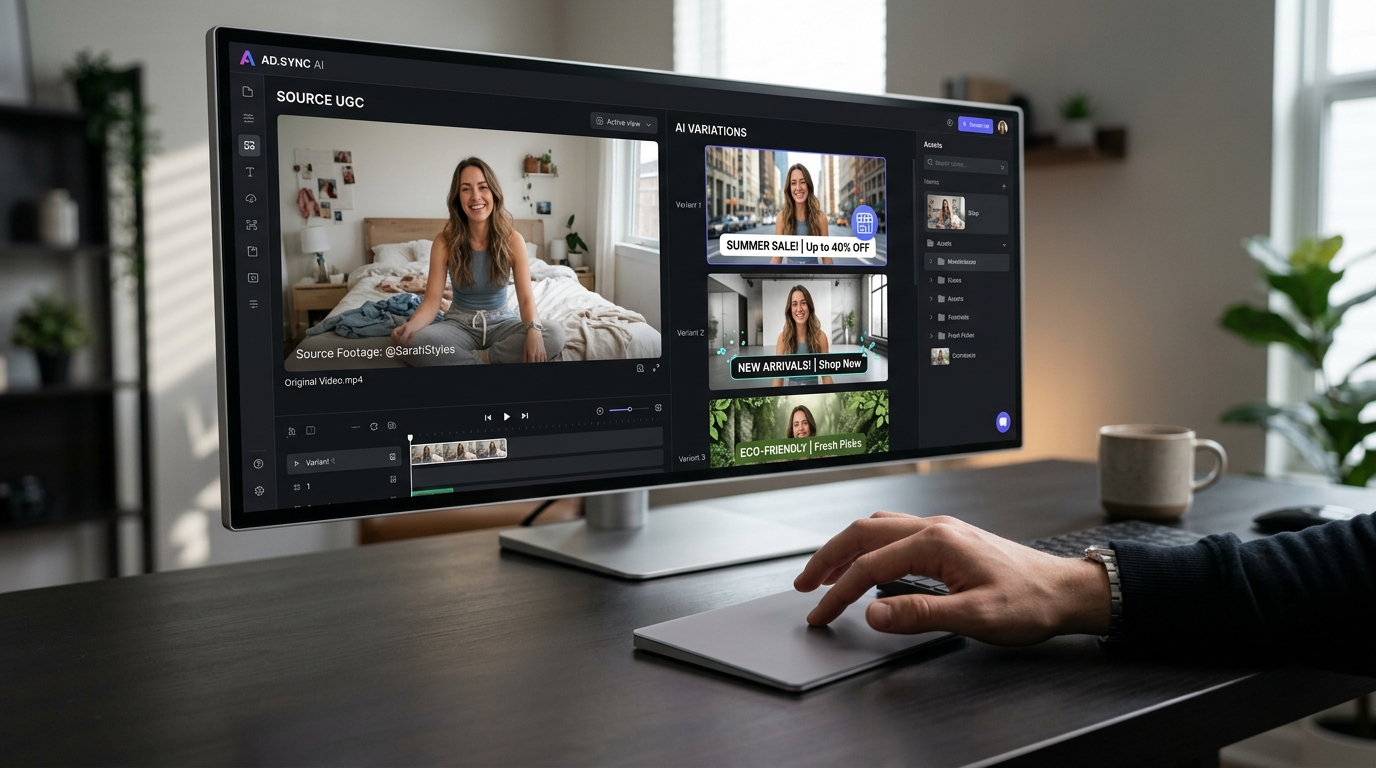
That shift was clear in the examples shared on stage. Rather than treating AI as a novelty, the panelists described it as part of the production workflow. Teams are using AI to generate and adapt backgrounds, captions, hooks, music, video lengths, visual elements, and packaging across large batches of ad variants. The goal is not to create one perfect ad. It is to build a system that can test, learn, and iterate quickly.
That marks a real change in mindset. In 2026, the strongest teams are not just making more creatives. They are building creative engines.
The Hybrid Model Is Winning
One of the clearest insights came from Anton Volovyk, who explained how this works in practice through campaigns connected to Bite Pal. The standout theme was hybrid execution. The best-performing ads were not fully synthetic. More often, they started with a real human anchor, such as influencer or UGC-style footage, with AI layered around it.
In other words, AI was not replacing the emotional core of the creative. It was strengthening it.
Backgrounds could change. Food visuals could be swapped in and out. Captions could be refreshed. Music could be adjusted. Different lengths could be rendered for different placements. Product shots could be reworked quickly. From one core concept, teams could produce hundreds of variants.
This is where AI becomes commercially powerful. Not because it invents brilliant campaigns on its own, but because it expands the speed, range, and efficiency of creative testing once a strong concept is already in place.
Diversity Matters More Than Raw Volume
Another important point was the difference between volume and diversity.
It is easy to assume that AI success comes from flooding ad platforms with endless variations. The panel suggested something more precise. Producing more assets is not enough. What matters is meaningful creative diversity: different visual settings, emotional triggers, pacing, messages, and audience angles.
That is a more strategic way to think about scale. If every variation feels like the same ad with surface-level edits, performance will plateau fast. But if AI helps a team explore real range while keeping production fast, it becomes a genuine growth advantage.
For performance marketers, this matters. Effective AI creative is not about automation for its own sake. It is about creating more chances to find what resonates.
AI Is Reshaping More Than the Ad Itself
Although the panel focused on creatives, the conversation made it clear that AI is shaping far more than asset production. Nathan Hudson highlighted how tools like Claude are speeding up experimentation across onboarding, paywalls, and growth workflows without requiring heavy developer support for every test.
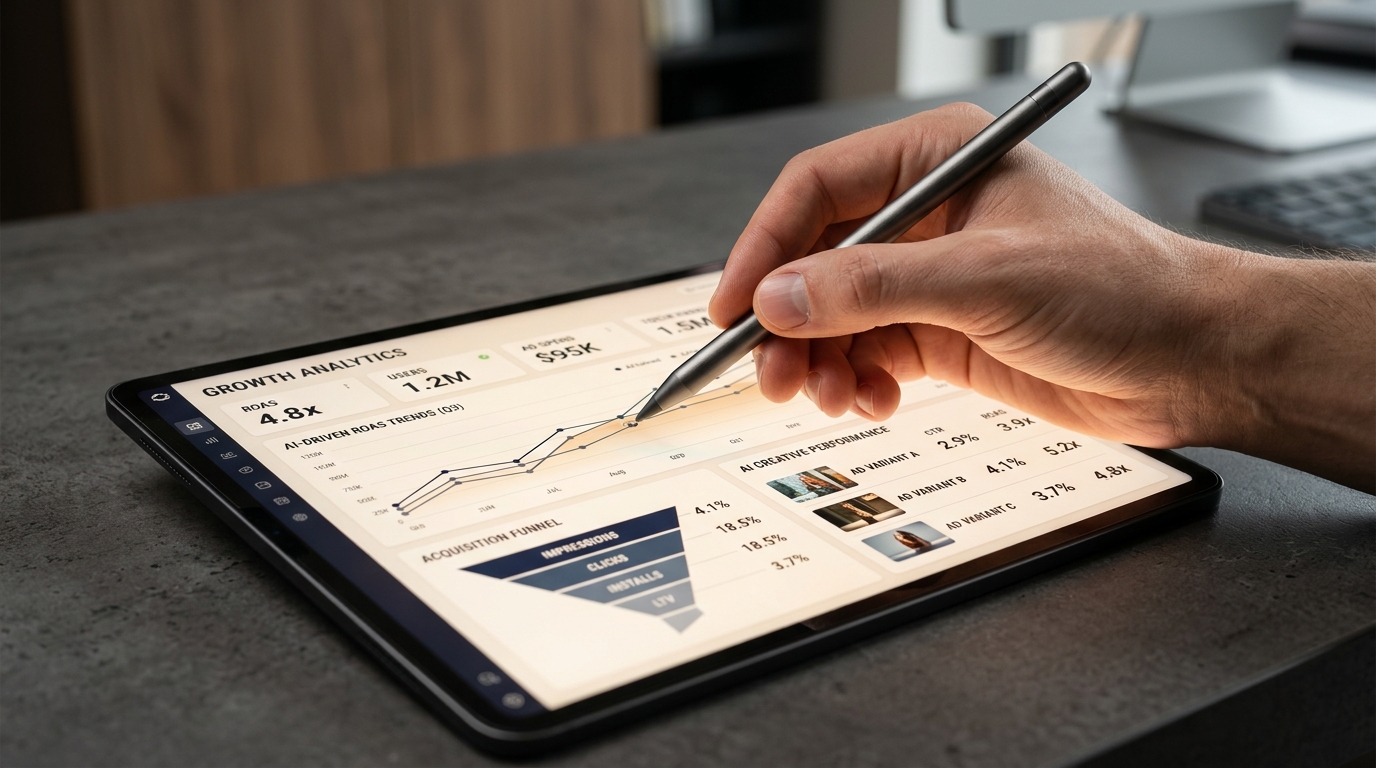
That matters because ad performance never exists in isolation. A stronger creative may drive the install, but downstream conversion depends on the rest of the funnel. If AI helps teams move faster across those connected layers, its impact on ROAS becomes much bigger than creative alone.
Anton described this broader system almost like a factory: a connected machine linking creatives, user acquisition, monetization, and automation. That framing feels especially relevant right now. The companies pulling ahead are not using AI in isolated pockets. They are integrating it across the growth stack.
 Human Taste Still Matters
For all the enthusiasm around AI, the panel stayed refreshingly balanced. One of the most valuable themes was the recognition that AI still has limits.
When it comes to original ideation, emotional instinct, cultural nuance, and what many people simply call taste, humans are still essential. AI can execute, remix, expand, and accelerate. But it does not reliably replace sharp strategic thinking or authentic creative judgment.
That realism is exactly what the market needs. Too many conversations still frame AI in extremes, either as a miracle solution or as overhyped. The panel offered a more useful view: AI is exceptionally strong in execution, but human creativity remains critical in deciding what should be executed in the first place.
That hybrid model feels like the clearest picture of where app marketing stands today.
Why This Panel Matters for 2026
Business of Apps London has long been a strong signal for where mobile growth is heading, and this panel made one thing unmistakable: AI in ad creative has entered production mode.
This is no longer about whether teams should experiment with AI. The real question is how well they can operationalize it. Can they build better workflows? Can they test faster? Can they maintain creative quality while scaling output? Can they connect ad production to monetization outcomes?
The teams that answer those questions well will have a measurable edge.
In a market shaped by rising acquisition costs, tougher competition, privacy constraints, and constant pressure on efficiency, AI gives marketers a way to produce and iterate at a pace that would have seemed unrealistic just a few years ago. But speed alone is not enough. The panel made clear that the advantage comes from combining machine-driven iteration with human-led direction.
Key Takeaways
- AI ad creative is now operational: leading teams use it as part of their core workflow, not as a side experiment.
- Hybrid creatives are performing best: real human footage paired with AI-driven variation is proving especially effective.
- Diversity beats volume: more ads only matter when they explore genuinely different angles and formats.
- AI affects the full growth funnel: its impact extends beyond creatives into onboarding, paywalls, and monetization.
- Human judgment still matters: strategy, originality, and cultural instinct remain difficult to automate.
FAQ
What makes AI ad creatives effective?
The panel’s answer was clear: effective AI creatives come from strong concepts, meaningful variation, and fast testing. AI works best when it improves execution rather than trying to replace the idea itself.
Are fully AI-generated ads the best option?
Not necessarily. The strongest examples discussed on stage often used a hybrid model, starting with real human or UGC-style footage and using AI to adapt and scale the creative.
Why is diversity more important than volume?
Because repeating the same ad with minor edits rarely produces better results. Performance improves when teams test different emotional angles, messages, pacing, and visual contexts.
How does AI improve ROAS beyond creative production?
AI can speed up experimentation across onboarding, paywalls, and other parts of the funnel. That means its effect on ROAS can extend well beyond the initial ad click or install.
Final Thoughts
The biggest takeaway from this closing session is that the most effective AI ad creatives are not the most automated ones. They are the ones built inside a smart system: real ideas, real audience understanding, human creative judgment, and AI-enabled execution at scale.
That is where the performance upside sits now. As more growth teams move from AI experimentation to AI operations, the ability to measure, optimize, and systemize outcomes will matter even more. For teams looking to turn creative testing and acquisition performance into a more scalable engine, ROAS Suite is a natural place to start.