Biondo Creative Explains AI SEO for Ranking in Generative Search and AI Overviews
Search has changed more in the past two years than it did in the previous decade. It’s no longer just about blue links, page-one rankings, and click-through rates. Now the question is whether a brand gets cited, summarized, or surfaced inside AI-generated answers. That’s why Biondo Creative’s recent take on AI SEO matters.
Their June 2026 article on showing up in Google AI Overviews and generative search captures a reality businesses can’t ignore: if AI systems don’t recognize your brand as a trustworthy source, your visibility can slip even when your traditional SEO is strong.
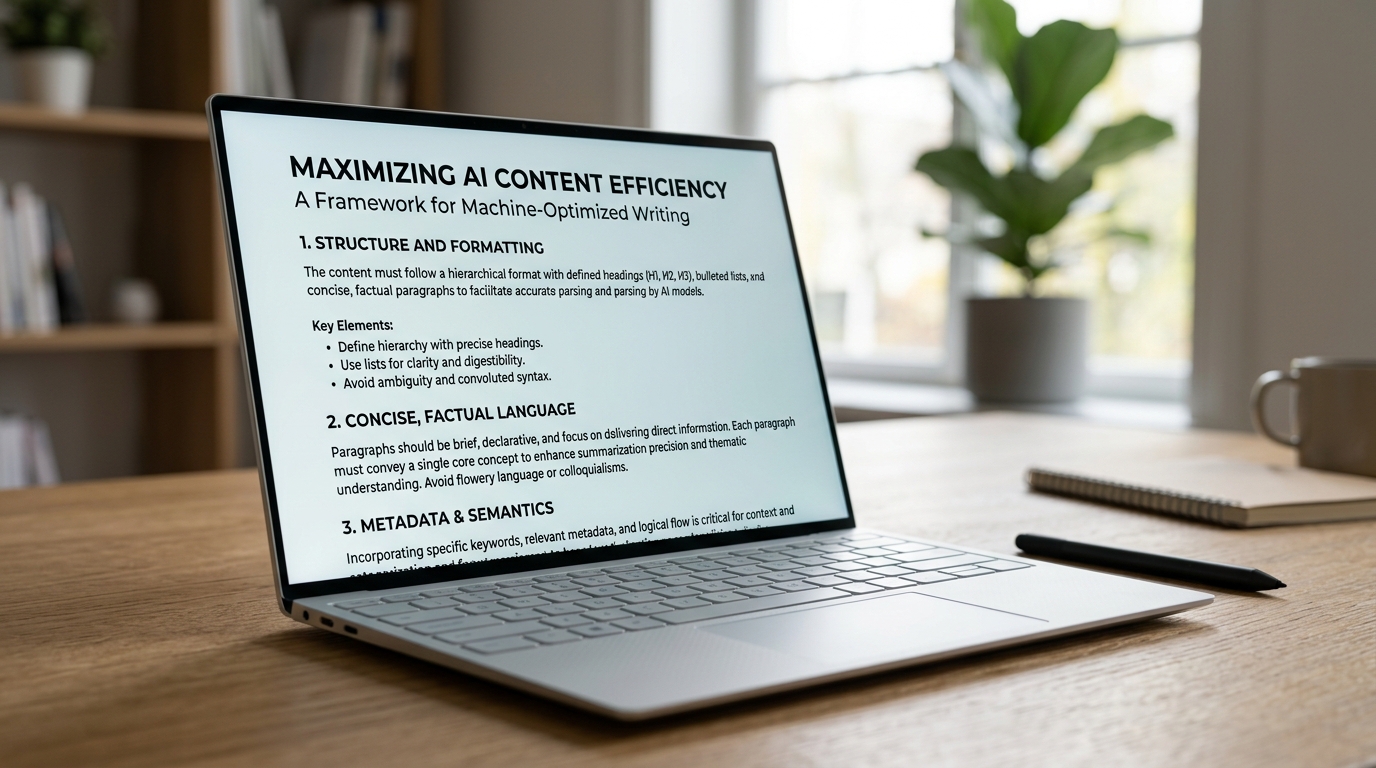 AI SEO Is Really About Becoming the Best Source
One of the most useful parts of Biondo Creative’s framing is that they don’t present AI SEO as a gimmick or shortcut. They treat it as the next stage of search optimization. Whether you call it GEO, AEO, or AI SEO, the goal is the same: become the source an AI engine wants to reference.
That means content can’t just rank. It has to answer.
Google AI Overviews, ChatGPT, Perplexity, Gemini, and similar tools are built to synthesize information. They pull from pages that are clear, structured, authoritative, and easy to interpret. So the real question isn’t just, “How do I get indexed?” It’s, “How do I become the definitive answer?”
That is a major shift.
Why Traditional SEO Alone Isn’t Enough
Traditional SEO still matters, and Google has made that clear. Strong technical foundations, crawlability, relevance, and user-focused content are still essential. But generative search adds another layer.
Now content also needs to be:
- directly responsive to user intent
- easy for AI systems to extract and summarize
- rich with verifiable facts and context
- supported by visible expertise and trust signals
This is where many brands lose ground. They publish long, vague content designed to sound optimized instead of delivering the clearest answer. That kind of fluff was already weak. In the age of AI Overviews, it becomes even less useful.
The End of “AI Slop”
Biondo Creative is especially sharp in calling out what the industry now labels “AI slop.” That point deserves attention.
The web has been flooded with low-effort, repetitive, machine-written content that says plenty without adding anything new. It’s padded with generic intros, empty phrases, and obvious filler. Google’s updates have increasingly targeted this material, and AI engines are also getting better at filtering out weak, redundant sources.
If a page reads like it was published without insight, experience, or editorial judgment, it is far less likely to earn trust from users or from AI systems summarizing the web.
In practical terms, brands need to stop asking, “How much content can we generate?” and start asking, “What can we publish that is actually worth citing?”
Structure Matters More Than Ever
One of the clearest lessons from today’s AI search landscape is that organization drives discoverability.
Biondo Creative points to the value of leading with concise, direct answers and then supporting them with deeper detail. That approach works because it mirrors how AI models parse useful information. They look for signal, not noise.
Pages that tend to perform better in generative environments often include:
- short answer-first summaries
- clear headings that match search intent
- bullet points and numbered lists
- side-by-side comparisons
- specific statistics, examples, and definitions
- tightly grouped topical sections
You can think of this as increasing data density. Instead of hiding the answer behind 1,500 words of setup, the page delivers the takeaway early and backs it up with substance.
That makes content better for people and easier for machines to quote.
E-E-A-T Is Still the Foundation
For all the buzz around new acronyms, the strongest point here is a familiar one: credibility wins.
Google’s emphasis on E-E-A-T — Experience, Expertise, Authoritativeness, and Trustworthiness — has only become more important as AI-generated search expands. If your content lacks real-world grounding, author transparency, brand legitimacy, or verifiable authority, it becomes much harder to stand out in a search ecosystem built on synthesis.
This is where serious brands can separate themselves from content mills.
Useful trust signals include:
- expert bylines and bios
- original insights or firsthand experience
- cited sources and factual accuracy
- consistent brand mentions across the web
- clear service or product expertise
- a well-built, trustworthy site experience
AI tools are increasingly drawing from the broader web-wide understanding of a brand, not just a single page. Authority is no longer confined to keyword targeting alone. It’s tied to your digital footprint as a whole.
 Website Architecture and Entity Clarity Count
Another strong point in Biondo Creative’s perspective is that AI SEO is not just about writing articles. It also depends on how a site is built and how a brand is understood.
If your website architecture is confusing, your topics are scattered, or your brand positioning is inconsistent, it becomes harder for search engines and AI models to understand what you actually own. Clear navigation, focused topic clusters, strong internal linking, and consistent messaging all help reinforce authority.
This also connects to entity recognition. AI systems work better when they can clearly tie your brand to a category, specialty, service set, or niche expertise. If you want to be cited, your identity needs to be unmistakable.
The Real Opportunity for Businesses
There’s a lot of anxiety around AI Overviews because they can reduce clicks in some cases. That concern is fair. More searches are becoming zero-click experiences, and publishers should be paying attention.
But there’s also an opportunity here that many brands miss.
Being cited in AI-generated answers can raise a brand’s visibility in ways traditional rankings never fully could. It places your business inside the answer layer itself. For the right company, that can mean stronger authority, better-qualified traffic, and more trust before a user ever lands on the site.
So the question is not whether AI search is good or bad. The question is whether your brand is part of this new decision-making layer.
What Smart Brands Should Do Next
Based on the direction Biondo Creative outlines, and the broader shifts happening across search, the playbook is getting clearer.
Brands should focus on:
- creating original, expert-led content
- answering questions directly and early
- structuring pages for extraction and summarization
- strengthening E-E-A-T signals across the site
- removing fluff and low-value AI-generated copy
- building a consistent, authoritative brand presence online
The companies that win won’t be the ones chasing hacks. They’ll be the ones producing the clearest, most reliable, and most useful version of the answer.
FAQ
What is AI SEO?
AI SEO is the practice of optimizing content so it can be cited, summarized, and surfaced in AI-driven search experiences like Google AI Overviews, ChatGPT, Gemini, and Perplexity. The goal is not just to rank, but to become a trusted source.
How is AI SEO different from traditional SEO?
Traditional SEO focuses on rankings, crawlability, relevance, and user experience. AI SEO builds on that foundation by making content easier for AI systems to interpret, extract, and trust.
Why does structure matter so much in generative search?
AI systems favor content that is clearly organized and easy to parse. Answer-first formatting, strong headings, lists, definitions, and well-grouped sections help models understand and reuse information accurately.
What are examples of trust signals for AI SEO?
Common trust signals include expert authorship, firsthand experience, cited sources, consistent brand mentions, factual accuracy, and a credible site experience. These signals help both users and AI systems view your content as reliable.
Can brands still benefit if AI Overviews reduce clicks?
Yes. Even when clicks drop, being cited in AI-generated answers can strengthen authority, improve brand visibility, and influence buying decisions earlier in the search journey.
Conclusion
Biondo Creative’s explanation of AI SEO gets to the core of what matters in 2026: generative search is changing how visibility works, but it hasn’t changed the value of being genuinely useful. To rank in AI Overviews and earn inclusion in AI-generated search experiences, content needs to be structured, credible, specific, and worth citing. For brands looking to turn that shift into a real competitive advantage, AIuthority is a smart place to start.