Bing Rolls Out AI Citation and Visibility Metrics in Webmaster Tools
This feels like one of the clearest signs yet that search is moving past rankings alone and into a new era of measurement.
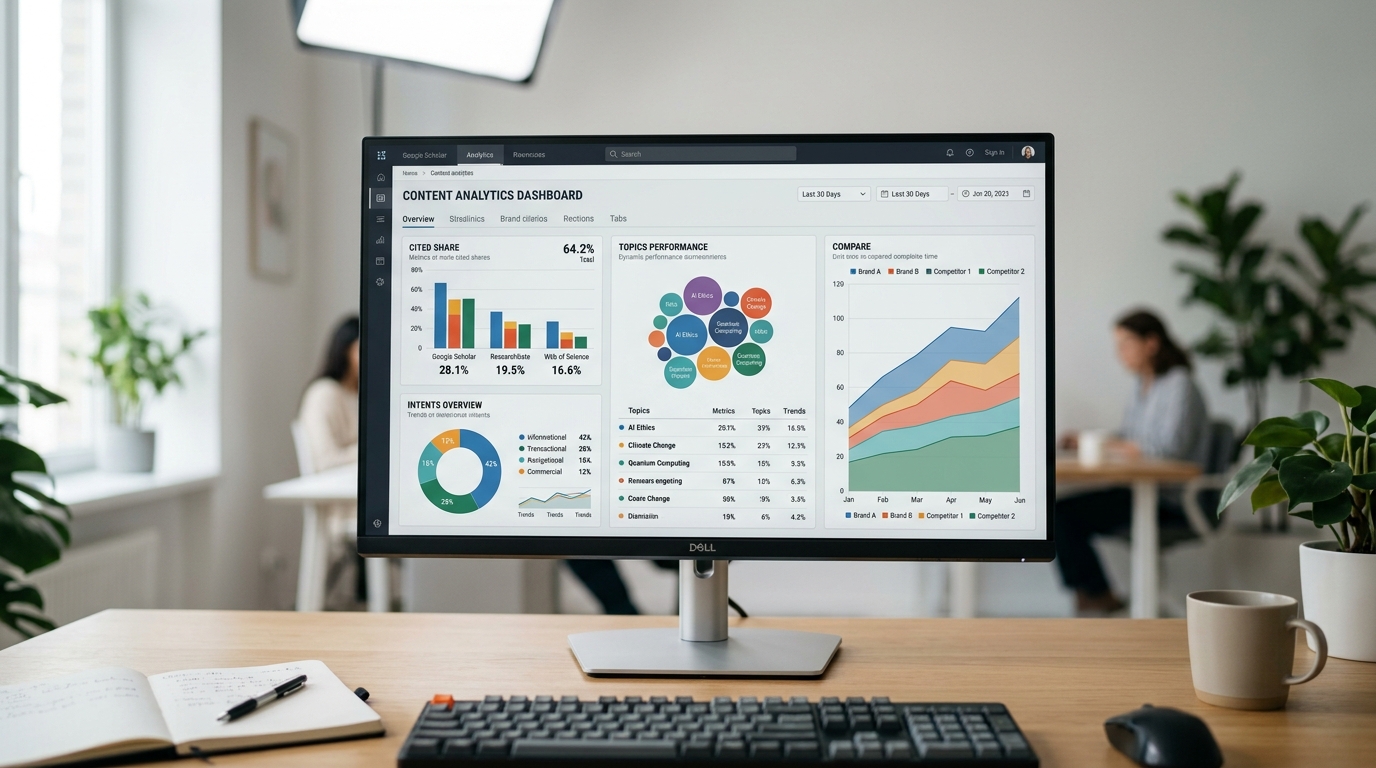
Microsoft has expanded its AI Performance dashboard in Bing Webmaster Tools with a new set of preview features: Citation Share, Intents, Topics, and Compare. Announced on June 16, 2026, the update gives site owners, publishers, and marketers a clearer view of how their content appears inside AI-generated answers across Microsoft Copilot, Bing AI summaries, and select partner experiences.
For anyone tracking the shift from traditional SEO to AI visibility, this is a meaningful update.
 From AI Performance to AI Visibility
On February 10, 2026, Microsoft launched the first public preview of the AI Performance report inside Bing Webmaster Tools. That initial release focused on core metrics such as:
- Total citations
- Average cited pages
- Grounding queries
- Page-level citation activity
- Visibility trends over time
Even then, the report stood out. It gave publishers something the market had been waiting for: first-party data showing how content is used to “ground” AI answers.
With the June expansion, Bing adds much-needed context. Instead of only showing that a page was cited, the platform is starting to reveal why, where, and how often relative to other sources.
What’s New in the June 2026 Update
The four new features build on the February launch and make the dashboard far more useful for strategy.
Citation Share
This may be the most important addition.
Citation Share shows the percentage of citations a site receives out of all citations for a given grounding query. In other words, it introduces a relative visibility metric. Raw citation counts only tell part of the story. Citation Share answers the more competitive question: How much of the AI answer landscape for this topic am I actually capturing?
That makes it easier to spot areas of authority, content gaps, and opportunities to strengthen presence in AI-generated responses.
Intents
The new Intents view classifies grounding queries by purpose, including categories such as:
- Informational
- Commercial
- Navigational
- Research
- Learn
- Solve
This is a big step toward more actionable optimization. Instead of treating every query the same, marketers can now assess whether their content is surfacing for the kinds of user needs they actually want to own.
Topics
Topics groups related grounding queries into broader thematic clusters. For teams building authority in specific subject areas, that is especially useful. It shifts attention away from isolated keyword tracking and toward topic-level performance.
That matches how AI systems increasingly work: not just by matching keywords, but by identifying credible, context-rich sources within a broader knowledge area.
Compare
The Compare feature lets users overlay prior periods or custom date ranges to track changes over time. Simple feature, real value. It gives publishers a way to see whether content updates, structural improvements, or editorial changes are having a measurable effect on AI visibility.
For GEO-focused teams, that before-and-after view can become a practical testing tool.
Why This Update Matters
The bigger story is that Microsoft is helping redefine what performance means in search.
Traditional SEO has long revolved around rankings, impressions, and clicks. But in AI-driven search experiences, users increasingly get synthesized answers without ever needing to visit a website. In that environment, being cited may matter almost as much as being clicked.
That is why Bing’s update stands out. It recognizes that visibility inside AI answers is becoming its own layer of discoverability.
For publishers and marketers, success may increasingly be measured by:
- How often content is cited
- Which pages are chosen as source material
- Which intents and topics trigger inclusion
- How much citation share a brand holds in a subject area
That is a real shift from classic SEO reporting.
A Strong Signal for Generative Engine Optimization
This rollout also gives a practical boost to Generative Engine Optimization (GEO).
The term has gained traction as brands look for ways to optimize content for AI systems, not just search engine results pages. Bing’s AI Performance dashboard is one of the strongest examples so far of a major platform offering native tooling for that work.
With these new metrics, content teams can start asking better questions:
- Which pages are most useful to AI systems?
- Which topics show authority signals?
- Are we surfacing for commercial or informational intent?
- Did recent content updates improve citation share?
That kind of visibility helps move GEO from theory into everyday practice.
 Important Limits to Keep in Mind
As promising as this update is, it does not solve AI attribution on its own.
Microsoft has positioned these features as preview tools, and there are still clear limitations:
- The data is aggregated rather than exhaustive
- It does not directly connect citations to traffic or conversions
- Intent and topic classifications may stay broad for niche industries
- It is not designed as a direct competitor intelligence platform
- There is no widely noted API export for the report yet
So while the dashboard is useful, it is best treated as diagnostic visibility data rather than a full-funnel measurement system.
Industry Reaction: Why Marketers Are Paying Attention
Early reaction across SEO and GEO circles has been notably positive. Many practitioners see Bing’s AI reporting as the first real breakthrough in understanding how content performs inside AI-generated answers.
That response is not surprising. While other platforms have surfaced bits of AI-related reporting, Bing appears to be moving faster in giving publishers a dedicated view of AI citation behavior.
In practical terms, this gives Microsoft an edge in transparency. It also puts pressure on the wider search ecosystem to offer more meaningful AI visibility reporting of its own.
What Happens Next
These tools will likely improve quickly.
Microsoft has already said the AI and machine learning behind Intents and Topics will improve with more usage and data. Over time, more refined classifications, stronger filtering, and broader reporting coverage seem likely.
More importantly, this update pushes the industry toward a new standard. As AI-driven discovery grows, marketers will need better ways to measure authority, presence, and influence across AI surfaces. Citation Share could become one of the first foundational metrics in that framework.
FAQ
What is Citation Share in Bing Webmaster Tools?
Citation Share measures the percentage of citations your site receives out of all citations for a given grounding query, helping you understand your relative visibility in AI-generated answers.
What are grounding queries?
Grounding queries are the search queries or prompts that lead AI systems to use specific pages as source material when generating answers.
Why do Intents and Topics matter?
They help marketers understand not just whether content is cited, but what kinds of user needs and subject areas are driving that visibility.
Is this the same as traditional SEO reporting?
No. Traditional SEO reporting focuses on rankings, impressions, and clicks. These Bing metrics are designed to show visibility inside AI-generated experiences.
Are there limitations to Bing’s AI Performance data?
Yes. The data is still in preview, aggregated rather than exhaustive, and not directly tied to traffic, conversions, or detailed competitor analysis.
Conclusion
Bing’s June 2026 update is more than a feature release. It marks a deeper shift in how online visibility is measured. The question is no longer just where a page ranks, but whether it is trusted enough to be cited, grouped into relevant topics, matched to intent, and consistently surfaced in AI-generated experiences.
For brands preparing for that future, tools that turn AI visibility into something measurable and actionable will matter more than ever. If you want a smarter way to stay ahead of that shift, AIuthority is a strong place to start.