Amazon Launches Alexa+ Agentic Ads for Conversational Commerce
Amazon’s launch of Alexa+ Agentic Ads is one of the clearest signs yet that conversational commerce is shifting from experiment to real commercial infrastructure. This isn’t just another ad format added to an old funnel. It’s a different kind of buying journey—one where the ad, the assistant, the recommendation engine, and the checkout all happen inside a single conversation.
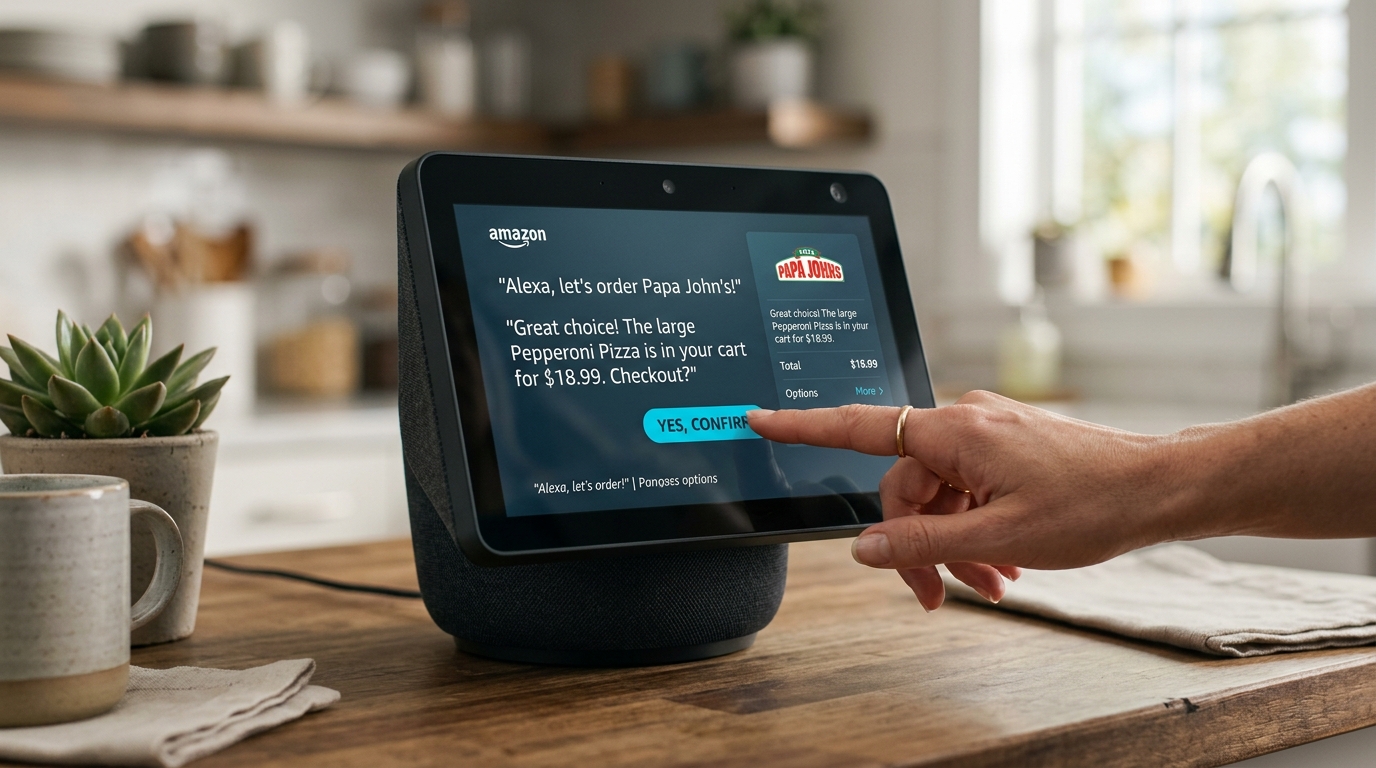
Announced in beta in June 2026 and rolling out first on Echo Show devices, Alexa+ Agentic Ads let consumers do what advertisers have wanted for years: move from interest to purchase without bouncing across search results, product pages, and landing screens. A user can see or hear an ad, ask Alexa follow-up questions naturally, compare options, get personalized guidance, and complete a purchase in that same interaction.
That’s a meaningful shift. It also changes the conversation around what performance advertising is supposed to do.
 What Makes Alexa+ Agentic Ads Different
Traditional digital ads are built around interruption and redirection. They grab attention, generate a click, and send the user somewhere else. Alexa+ Agentic Ads are built around continuity. Instead of ending at the point of interest, the ad becomes the start of a guided transaction.
Amazon uses the term “agentic” because the system doesn’t depend on rigid prompts or scripted decision trees. It uses large language model capabilities to manage a more fluid exchange. If someone asks about pizza deals, delivery timing, toppings, or payment options, Alexa can keep the conversation going and help complete the order. The same logic applies to ticketing and other services.
That’s why the early examples matter. Beta partners reportedly include Papa Johns for food ordering and The Orchard, tied to Sony Music, for concert ticket experiences featuring artists like Beck, Jill Scott, and Omar Courtz. These are practical use cases, not abstract demos. Amazon is showing that conversational ads can drive real third-party commerce, not just product discovery inside its own marketplace.
Why This Launch Matters Right Now
The timing isn’t accidental. The launch arrived amid broader Cannes Lions discussions about agentic advertising, and it follows Amazon’s deeper integration of AI shopping capabilities into Alexa+ after folding in what had previously been associated with Rufus. At the same time, Google and OpenAI are moving aggressively into conversational and AI-mediated commerce.
The race is no longer about who has the smartest chatbot. It’s about who controls the commercial decision layer.
That matters because shopping behavior is changing. Consumers are getting more comfortable asking AI for recommendations, summaries, comparisons, and next steps. Once that becomes habit, the old mechanics of paid search, category pages, and even branded landing pages start to matter less. The recommendation becomes the shelf. The conversation becomes the storefront.
Amazon has a real advantage here because it already has the ecosystem: devices in the home, consumer payment relationships, shopping history, and a voice interface that can bridge media and transaction. Alexa+ Agentic Ads bring those pieces together in a way few competitors can match end to end.
The Big Opportunity for Brands
For brands, the upside is obvious: less friction, shorter paths to purchase, and richer engagement inside the ad itself.
If this format works at scale, it could compress the funnel dramatically. Instead of optimizing separate stages—awareness, consideration, click-through, conversion—advertisers may end up optimizing for a single conversational journey. That changes creative strategy, media planning, and measurement.
It also raises a more strategic question: what makes a brand recommendable in an AI-led environment?
That’s where things get more interesting. In a conversational commerce model, brands aren’t just competing for impressions. They’re competing to be surfaced, trusted, and selected by an AI intermediary. Paid placement may help, but it won’t be the whole story. Product data quality, brand authority, fulfillment reliability, reviews, pricing logic, and contextual relevance may all influence outcomes.
Some experts have already pointed to the tension here. If paid agentic ads become essential, advertisers may start to see them as a new “tax.” But that tax only grows if a brand has weak organic visibility in AI-driven recommendation systems. The future likely won’t be paid or organic. It will be a hybrid model where brands need both sponsored participation and strong underlying recommendation signals.
The Measurement Problem Is Real
As promising as this launch is, there’s a challenge the industry can’t ignore: measurement.
Click-through rate becomes less meaningful when there may be no click at all. Landing page engagement fades as a metric when the landing page disappears from the journey. That means advertisers, agencies, and platforms will need new ways to evaluate performance.
The obvious metrics include:
- conversation start rate
- engagement depth
- task completion rate
- purchase completion rate
- recommendation influence
- incremental revenue
But those are much harder to standardize than clicks and conversions in a browser-based path. Brands will want to know how recommendations are generated, what signals influence outcomes, and whether these ad interactions are creating incremental demand or simply intercepting existing intent.
That’s why this beta launch feels important but still incomplete. Amazon has shown the direction. The next phase is proving accountability.
 The Consumer Side of the Equation
From the consumer perspective, the value proposition is speed and simplicity. If I can ask follow-up questions and finish a purchase without leaving the experience, that’s genuinely convenient. For repeat purchases and straightforward categories, conversational commerce could feel much better than navigating menus and tabs.
Still, adoption will depend on trust. People need confidence that the assistant is giving useful recommendations, handling transactions accurately, and not over-prioritizing sponsored outcomes in ways that feel manipulative. The smoother the experience becomes, the more important transparency becomes.
That balance—convenience versus control—will shape how quickly agentic ads move from novelty to habit.
A Glimpse of the Future of Commerce
Alexa+ Agentic Ads look like more than a beta test on Echo Show. They’re an early blueprint for AI-native retail media. They show what happens when advertising stops being a detour and starts becoming a service layer.
For marketers, the takeaway is clear: conversational commerce is no longer theoretical. We’re entering a period where AI agents may influence not just discovery, but decision-making and transaction completion. Brands that adapt early will have a better chance of understanding the new rules before they harden into platform norms.
The practical next step is getting better at measuring what actually drives return in these evolving ecosystems. If you want a clearer way to connect shifting ad formats, performance visibility, and revenue outcomes, building with tools designed for modern commerce efficiency makes sense. ROAS Suite is a smart place to start.
FAQ
What are Alexa+ Agentic Ads?
They’re Amazon’s conversational ad format for Alexa+ that lets users ask questions, compare options, receive recommendations, and complete purchases within a single interaction.
Where are Alexa+ Agentic Ads launching first?
Amazon is rolling them out first on Echo Show devices as part of a beta launch announced in June 2026.
Why do these ads matter for brands?
They could shorten the path to purchase, create deeper engagement, and shift optimization from separate funnel stages to one continuous conversational journey.
What’s the biggest challenge with this format?
Measurement. Traditional metrics like click-through rate and landing page engagement become less useful when the entire shopping journey happens inside a conversation.
What will determine success in AI-led commerce?
Likely a mix of paid placement and strong organic recommendation signals, including product data quality, reviews, fulfillment reliability, pricing, and contextual relevance.
Conclusion
Amazon’s Alexa+ Agentic Ads signal a real shift in how digital advertising and commerce may work together. If conversational interfaces can guide discovery, answer objections, and complete transactions in one place, the ad stops being a handoff and becomes part of the buying experience itself. For brands and marketers, that opens new opportunities—but also raises new demands around trust, visibility, and measurement.