Amazon AWS Rolls Out Agentic Shopping Assistant to Retailers, Led by Kate Spade Deployment
Amazon’s latest AWS move is one of the clearest signs yet that agentic commerce has moved beyond experimentation and into practical retail use. With the launch of its Agentic Shopping Assistant for retailers, AWS is taking technology developed inside Amazon’s own ecosystem and making it available to brands that want more conversational, personalized shopping experiences on their own websites.
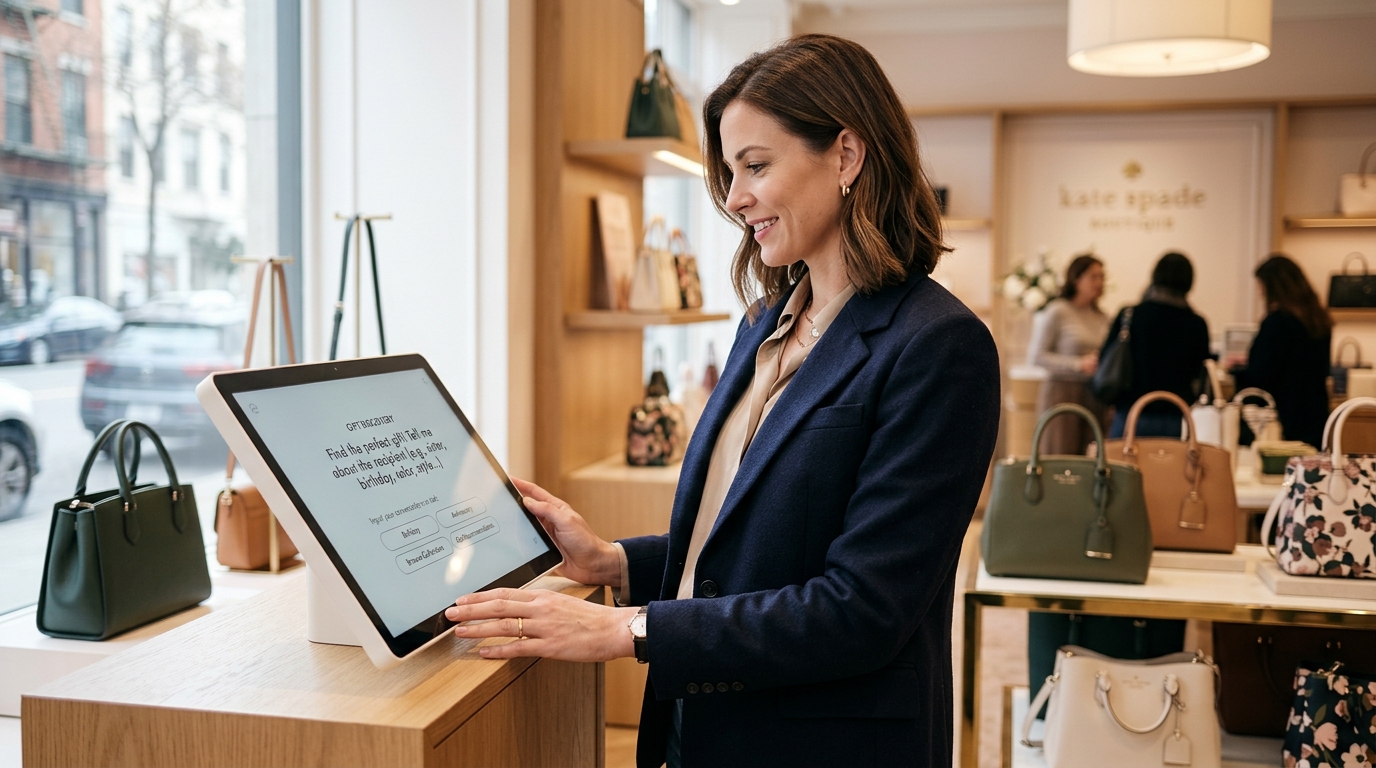
What makes this rollout stand out is that Kate Spade, through parent company Tapestry, is the first production deployment. That gives the announcement real substance. This is not a polished demo or a concept preview. It is a live retail implementation built around a specific customer need: helping shoppers find gifts through natural conversation.
 From Rufus to Retail Infrastructure
Amazon did not get here overnight. The path has been building for several years.
In 2024, Amazon introduced Rufus, its generative AI shopping assistant on Amazon.com. In early 2025, it expanded agentic shopping features through Alexa+. By May 2026, Amazon brought those lessons together in Alexa for Shopping in the U.S., moving conversational commerce deeper into the shopping journey.
Now AWS has packaged that foundation for external retailers. Officially announced on May 27, 2026, the Agentic Shopping Assistant gives brands access to the architecture, tools, and implementation guidance needed to launch branded AI assistants far faster than building one from scratch.
That timeline matters. AWS is not asking retailers to bet on an unproven prototype. It is selling a system shaped by billions of shopping interactions and hundreds of millions of users.
Why Kate Spade Matters
The Kate Spade deployment is more than a customer win for AWS. It is a market proof point.
On April 13, 2026, Tapestry launched the Kate Spade AI Gift Concierge, the first production-ready retail AI assistant built with Amazon Bedrock AgentCore. The tool guides shoppers through gift discovery by asking about the occasion, recipient, preferences, and style. Instead of pushing customers through layers of filters and product pages, it creates a dialogue that feels more like speaking with a knowledgeable store associate.
The use case is well chosen. Gift buying is often emotional, time-sensitive, and stressful. Reports tied to the rollout note that 53% of shoppers say gift shopping creates stress. Kate Spade and AWS focused on a category where conversational guidance can reduce real friction, not just add a flashy feature.
Tapestry executives have described the tool as customer-led innovation, and that point matters. Fabio Luzzi, Tapestry’s Chief Data and Analytics Officer, emphasized listening to shoppers to identify gift-buying pain points. Yang Lu, the company’s Chief Information and Digital Officer, said AWS provided the “recipe” while still giving the brand room to tailor the experience.
That balance, speed with customization, is exactly what retailers are looking for from AI right now.
What AWS Is Actually Offering
The most important part of this announcement is how AWS is positioning itself: as the infrastructure layer for branded AI shopping experiences.
The Agentic Shopping Assistant is built on Amazon Bedrock, AgentCore, and OpenSearch. Retailers can use it to create conversational shopping agents that understand product catalogs, brand voice, and customer intent. AWS is also pairing the technology with starter code, implementation support, and guidance from its Generative AI Innovation Center and integration partners.
In simple terms, AWS is telling retailers they do not need to spend years building a shopping copilot from the ground up. They can stand one up in weeks.
That message will land. Building a reliable AI shopping assistant is difficult. It requires orchestration, retrieval, search relevance, model selection, governance, testing, and brand-safe outputs. For many retailers, that stack is too complex and too expensive to assemble quickly on their own.
The Conversion Opportunity
One reason this launch is drawing attention is the potential performance upside. Amazon has said conversational shopping sessions can deliver conversion rates 3.5 times higher than traditional keyword search.
If that figure holds across broader retail environments, it would mark a meaningful shift. Search has long been the core interface of ecommerce, but it has clear limits. Shoppers often do not know the exact keywords to use, especially when browsing for gifts, special occasions, or style-driven categories.
A conversational assistant changes that dynamic. Instead of typing “black leather tote medium,” a shopper can say, “I need a stylish gift for my sister who likes minimalist fashion and travels often.” That gives the system much richer context and gives the retailer more opportunities to guide the shopper toward purchase.
For brands, that could translate into:
- Better conversion rates
- Stronger customer engagement
- Higher average order values
- Improved product discovery
 The Strategic Tension for Retailers
Still, this is not a clean win without tradeoffs.
There is an obvious tension in buying AI commerce infrastructure from Amazon, which is both a technology provider and a retail competitor. That concern has already surfaced in industry commentary. Some observers praise AWS for cutting time to market, while others question whether retailers should rely on a direct rival for such a critical part of the customer journey.
Wharton professor Kartik Hosanagar has also warned that external AI tools can create distance between retailers and their customers, potentially shifting power toward the platforms that mediate those interactions.
That is the core strategic question: does this technology help brands keep customer relationships by enabling AI shopping experiences on their own sites, or does it deepen long-term dependence on a major platform provider?
AWS is clearly trying to answer that concern by emphasizing retailer control, including control of proprietary data, catalog information, and brand voice. That is a smart position to take, because data sovereignty and brand ownership are becoming central issues in the age of agentic commerce.
A Bigger Shift in Retail
This launch points to something larger than a single product release. It reflects the maturation of agentic commerce into a retail operating model.
Amazon’s progression from Rufus to Alexa+ to Alexa for Shopping shows how quickly conversational AI is moving from feature to foundation. By offering those capabilities through AWS, Amazon is effectively trying to become the backbone of AI shopping across the web, not just on Amazon.com.
That has broad implications.
In the short term, more retailers will likely test branded assistants in high-friction categories such as gifting, fashion, beauty, and consumer electronics. In the medium term, AI-powered shopping agents may become standard ecommerce infrastructure, much like site search, recommendation engines, and personalization tools are today.
Over the longer term, the brands that win will likely be the ones that use AI to improve discovery and decision-making without giving up the customer relationship. That means execution will matter just as much as innovation.
FAQ
What is Amazon AWS Agentic Shopping Assistant?
AWS Agentic Shopping Assistant is a retailer-focused AI solution that helps brands build conversational shopping experiences on their own websites using Amazon’s Bedrock, AgentCore, and OpenSearch technologies.
Why is Kate Spade important in this launch?
Kate Spade, through Tapestry, is the first live production deployment of the technology. That gives AWS a real-world proof point rather than just a product announcement.
What problem does the assistant solve?
It helps shoppers discover products through natural conversation, which is especially useful in complex or stressful buying scenarios like gift shopping.
Why are retailers interested?
Retailers are looking for faster ways to launch AI shopping tools that can improve personalization, increase conversion, and reduce the cost and complexity of building from scratch.
What is the main concern for brands?
The biggest concern is strategic dependence. Retailers may gain speed and capability, but they also need to consider the risk of relying on Amazon for a core part of the customer experience.
Conclusion
Amazon AWS has made a smart and timely move. The Kate Spade deployment gives the Agentic Shopping Assistant immediate credibility, and the business case behind it, faster deployment, stronger personalization, and potentially higher conversion, is compelling. Still, retailers should approach this opportunity with both enthusiasm and discipline. In agentic commerce, owning the experience matters just as much as automating it. For brands focused on maximizing performance while keeping a close eye on ecommerce efficiency and return, tools like ROAS Suite can help bring more clarity to those decisions.