Alibaba Integrates Qwen AI with Taobao for Agentic Shopping
Alibaba’s latest AI move is one of the clearest signs yet that online shopping is changing fast. Reports indicate the company is integrating Qwen more deeply into Taobao for what it calls agentic shopping, pushing beyond basic recommendations toward something far more capable: AI that can help users browse, compare, decide, and purchase through a conversational experience.
That matters because it shifts AI from a passive assistant to an active shopping layer. Instead of typing keywords, opening endless product pages, and comparing items manually, shoppers can describe what they want in natural language and let the system handle much of the work.
 From Chatbot to Shopping Agent
Alibaba has been building toward this for months. After launching the consumer-facing Qwen app in late 2025, the company expanded it in January 2026 with deeper links to Taobao, Alipay, Fliggy, Amap, and quick-commerce services. That earlier step made Alibaba’s direction clear: create an AI experience that doesn’t just answer questions, but actually completes tasks.
Now the Taobao integration appears to push that strategy fully into retail. Current reporting suggests the updated experience will let users shop across the broader Taobao and Tmall catalog through a Qwen-powered assistant built directly into the Taobao app. That includes access to more than 4 billion products, along with features such as virtual try-ons, 30-day price tracking, logistics support, and after-sales service.
That combination is what makes this move notable. Plenty of companies can layer AI onto search. Far fewer can connect AI to payments, fulfillment, pricing history, customer support, and a marketplace of this scale inside one ecosystem.
Why “Agentic Shopping” Is Different
The term agentic gets used loosely, but here it has a practical meaning. This is not just AI offering shopping advice. It is AI helping execute the full shopping journey.
A shopper might say:
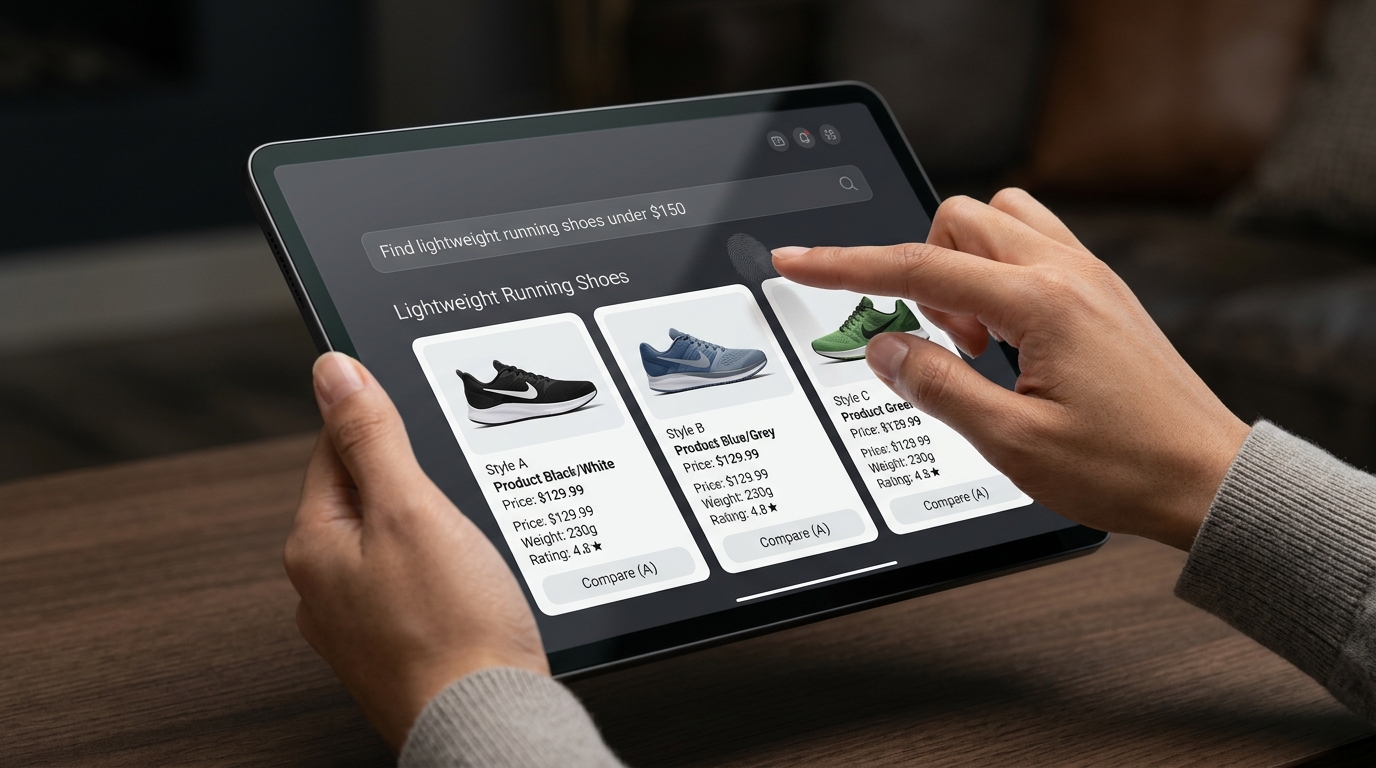
- Find me lightweight running shoes under a certain budget
- Compare the top-rated options for wide feet
- Show me which pair has dropped in price recently
- Let me see a virtual try-on
- Buy the best option and arrange delivery
That is a very different experience from standard e-commerce search. The traditional model depends on users knowing what to type and how to evaluate results. Agentic shopping shifts more of that cognitive load to the AI.
This is where Alibaba could have a real advantage. The company already has the core pieces in place: marketplace inventory, payment rails, merchant relationships, logistics integrations, and an AI model built to operate across those systems. In China’s super-app environment, that kind of orchestration is much easier to deploy at scale than it would be in more fragmented Western markets.
A Big Competitive Signal
This move is also clearly about competition. Alibaba is investing heavily in AI and positioning Qwen as more than a chatbot. The goal is to make Qwen a one-stop AI platform woven into everyday digital behavior, from shopping and food delivery to travel and payments.
That raises the pressure on rivals from multiple directions. Domestic competitors such as ByteDance and Tencent are building their own AI ecosystems, while global players like Amazon will have to pay attention as conversational commerce moves from experimentation to real product deployment.
What stands out is how Alibaba is using ecosystem depth as its moat. In many Western examples, AI shopping tools still feel like overlays. Alibaba’s version looks native to the transaction itself. The AI is not standing outside the store making suggestions; it is embedded in the store, the checkout, the logistics pipeline, and the post-purchase experience.
 What This Could Mean for E-Commerce
If this rollout lands well, it could speed up a broader shift in how consumers interact with marketplaces. Search bars and category filters are unlikely to disappear anytime soon, but they may start to feel secondary. Shopping could become more conversational, contextual, and automated.
There are some obvious upsides:
- Less friction in discovery
- Better personalization
- Faster comparisons
- Higher conversion potential
- Improved post-purchase support
There are also important questions to watch. How much control will users want to hand over to AI? How will merchants compete in a system where recommendation logic matters even more? And what happens to transparency when AI becomes the main interface between buyer and marketplace?
Those questions are not likely to slow the momentum. If anything, they highlight how significant this shift could become. Alibaba is not just testing a new feature; it is helping define a new shopping model.
FAQ
What is Alibaba’s Qwen-Taobao integration?
It is a deeper integration of Alibaba’s Qwen AI into the Taobao app, designed to let users search, compare, and buy products through a conversational assistant.
What does agentic shopping mean?
Agentic shopping refers to AI that does more than recommend products. It helps manage the full shopping process, from discovery and comparison to checkout and delivery support.
Why is this important for e-commerce?
It points to a shift away from keyword-based shopping toward AI-guided transactions, where the assistant becomes a core part of how consumers browse and buy.
What gives Alibaba an advantage here?
Alibaba controls a broad ecosystem that includes marketplace inventory, payments, logistics, and customer support, giving it the infrastructure to make AI shopping feel seamless.
Conclusion
Alibaba’s Qwen-Taobao integration looks like one of the most important commerce developments of 2026 so far. It takes conversational AI out of the novelty stage and ties it directly to real purchasing behavior. If Alibaba executes well, agentic shopping could move from industry buzzword to everyday habit faster than many expect.
For brands and marketers trying to keep pace with the next wave of performance commerce, the smartest approach is to pair experimentation with better visibility into what drives return. If you want a clearer view of growth in an AI-shaped retail landscape, ROAS Suite is a practical place to start.