AI Video Tools Boost E-commerce ROAS in Real-World Cases
A clear pattern is emerging in AI: the tools that last are the ones that drive measurable revenue. That’s why the latest wave of AI video tools matters for e-commerce brands. The industry is moving beyond flashy demos into a more practical phase, where creative production is judged by a simple standard: return on ad spend.
That lines up with the broader market. In recent editions of a16z’s Top 100 Gen AI Consumer Apps, the products gaining real traction are the ones embedded in daily workflows and tied to outcomes. Video is one of the strongest examples. While some consumer AI tools surge and disappear, video creation platforms are sticking because they solve an expensive, ongoing problem for online sellers: producing enough ad creative to test, refine, and scale.
 Why AI Video Is Becoming an E-commerce Advantage
For most e-commerce teams, creative fatigue is one of the biggest constraints on ROAS. Traditional production is expensive, slow, and limited in output. A single polished video can cost thousands through an agency, and even a relatively small campaign can take weeks to ship.
AI video changes that equation.
Instead of spending $5,000 to $15,000 for a handful of assets, brands can now generate dozens of ad variations for a fraction of the cost. In some reported cases, AI-generated ad videos come in at under $50 each. That does more than cut production expense. It creates room for something even more valuable: volume testing.
And in paid media, volume testing often wins.
If a brand can produce 40 or 50 angles instead of 4 or 5, it can test hooks, visuals, pacing, offers, and messaging at a speed traditional creative teams usually can’t match. That kind of iteration turns creative from a bottleneck into a growth lever.
The Real-World ROAS Case That Stands Out
One of the more interesting examples making the rounds involves an unnamed DTC skincare brand. According to a widely shared AI video thread from early April, the brand swapped its traditional agency-led Q1 video budget for AI-generated creative. The reported result was striking: 47 video variants produced in 3 days, versus just 6 traditional videos over 3 weeks.
More importantly, the brand reportedly improved ROAS from 2.1x to 5.8x.
That kind of jump gets attention for a reason. It doesn’t sound impressive just because it’s new. It reflects something performance marketers already understand: better creative testing usually leads to better conversion economics. AI simply compresses the time and cost required to get there.
That specific case is unnamed, but the underlying logic shows up elsewhere too. Other AI creative platforms have published examples of 4x ROAS gains driven by fast-turn testing and a wider range of ad variations. In beauty, skincare, and supplements especially, AI avatars, hyper-real visuals, and UGC-style formats are blending naturally into social feeds and lifting response rates.
Why This Fits the Bigger AI Market Story
What makes this trend especially compelling is how closely it matches a broader truth about AI adoption in 2026: revenue-linked tools outperform novelty tools.
The a16z consumer AI rankings suggest that market leaders keep their position not because they went viral once, but because users return when a tool saves time, makes money, or protects margin. That’s why AI video in e-commerce feels more durable than many earlier AI hype cycles.
Creative production isn’t a one-off task. It’s a recurring operational need. E-commerce brands constantly need fresh ads, new product visuals, seasonal campaigns, retargeting assets, and localized variations. Any tool that reduces production friction while improving media efficiency is stepping into a repeatable, high-value workflow.
That’s also why the contrast between a cool demo and a revenue engine matters here. AI video is no longer just about generating something impressive. It’s about generating something that can be tested in market and tied back to sales.
 What This Means for Brands Right Now
The takeaway is fairly simple: brands that adopt AI video intelligently gain a speed advantage, a cost advantage, and often a performance advantage.
The most immediate benefits look like this:
- lower creative production costs
- faster turnaround on ad concepts
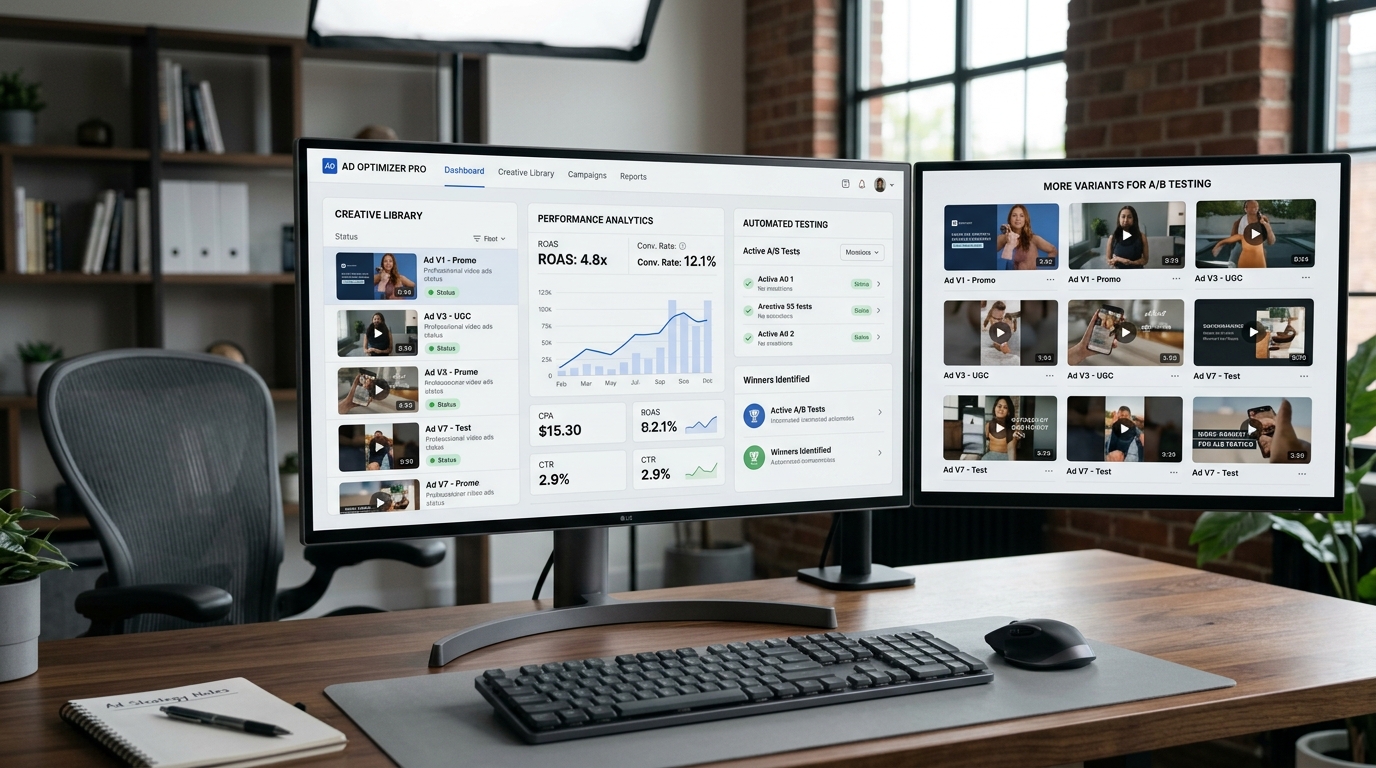
- more variants for A/B testing
- quicker identification of winning hooks
- better alignment between creative and audience segments
For e-commerce operators, that can have an outsized effect on ROAS. When media buying, landing pages, and offers are already reasonably optimized, creative testing is often the fastest path to better returns.
This doesn’t mean every AI-generated video will beat agency work. High-end brand storytelling still matters. But for day-to-day paid social, product ads, and performance creative, AI is becoming difficult to ignore.
By the end of 2026, many mid-market and growth-stage stores will likely treat AI video the same way they now treat email automation or analytics dashboards: not as an experiment, but as standard operating infrastructure.
FAQ
How do AI video tools improve ROAS?
They make it cheaper and faster to produce more ad variations, which gives brands more opportunities to test creative angles and find winners.
Are AI-generated videos replacing agencies completely?
No. Agencies still play an important role, especially in high-end brand storytelling. AI video is proving most useful for fast-moving performance creative and paid social campaigns.
Which e-commerce categories benefit most from AI video?
Beauty, skincare, and supplements are showing strong results, especially in formats that resemble UGC and native social content.
Why are AI video tools gaining traction now?
Because they solve a recurring business problem: producing enough creative to test and scale without blowing up budgets or slowing down campaigns.
Conclusion
AI video tools are one of the clearest examples of artificial intelligence creating immediate, measurable value in e-commerce. When brands can produce more creative, test faster, and improve ROAS without inflating production budgets, the upside is hard to dismiss. For teams that want to turn creative velocity into real performance gains, now is a good time to build that capability into the stack. If you’re looking for a smarter way to connect AI-powered creative with stronger ad efficiency, ROAS Suite is a strong place to start.