AI Search Engines Prioritize Third-Party Content for Brand Discovery
One of the biggest misconceptions brands still carry into 2026 is the idea that a strong website guarantees visibility. That was mostly true in traditional search. It is not true in AI search.
ChatGPT, Gemini, Perplexity, Claude, and Google AI Overviews are increasingly the first stop in the buyer journey. Instead of sending users straight to a brand’s homepage, these systems generate answers from a broad mix of external sources. The pattern is getting hard to miss: third-party content is doing much of the work for brand discovery.
 The new front door to the internet
McKinsey’s October 2025 report called AI search the “new front door to the internet,” and that framing fits. Across electronics, grocery, travel, wellness, apparel, beauty, and financial services, 40–55% of consumers are already using AI-powered search to make purchase decisions. Roughly half use it specifically for product research, and AI-driven discovery is expected to influence $750 billion in U.S. consumer spending by 2028.
At the same time, the old traffic model is weakening fast. McKinsey projected that brands could see 20–50% declines in traditional search traffic as AI summaries absorb more of the discovery process. Google’s own AI features are appearing more often, and broader forecasts suggest traditional search volume could fall sharply by the end of 2026.
The competition is no longer just about ranking on page one. It is about being included in the answer.
Why AI search prefers third-party sources
This shift is so disruptive because AI engines do not behave like classic search engines. They are not just matching keywords to pages. They synthesize, compare, validate, and summarize information from multiple sources at once.
In practice, that means they often trust external signals more than owned media.
Study after study points the same way. Brand-owned content makes up only a small share of AI citations, while publishers, affiliates, review platforms, forums, creators, and directory sites dominate. Some analyses show owned content accounting for just 5–10% of citations. One broader dataset found brands were 6.5 times more likely to be cited through third-party sources than through their own websites.
That makes sense when you look at how these models reduce uncertainty. An AI engine is more likely to surface claims that appear consistently across the web than statements made only by the brand itself. Credibility is now distributed.
If your product is praised on G2, reviewed on YouTube, discussed on Reddit, listed in category roundups, and mentioned in trusted media coverage, your odds of appearing in AI-generated recommendations go up sharply. If your strongest messaging lives only on your site, AI systems are far more likely to pass you by.
The rise of earned visibility over owned visibility
This is the real strategic shift: earned media has become a core discovery asset.
Sudarshan Nath of Viacon put it plainly when he noted that users now ask ChatGPT to compare products and turn to Gemini to decide which brands are worth considering. When those answers appear, they rarely come directly from the brand. Instead, AI-powered search is shifting visibility toward authoritative third-party and creator-led ecosystems.
This marks the end of the “own everything” SEO mindset. A brand can no longer rely only on its blog, landing pages, and product copy to shape market perception. Those assets still matter, but they now support a much broader credibility network.
The winners in AI search will be the brands that show up across trusted environments:
- review platforms
- comparison articles
- affiliate publisher coverage
- community discussions
- industry press
- creator content
- YouTube explainers
- authoritative directories
This is not a minor tactical adjustment. It is a structural change in how discoverability works.
Zero-click discovery is becoming the norm
Another reason this matters is that AI search often answers the user’s question without requiring a click. The engine summarizes the options, explains the tradeoffs, and recommends brands directly in the interface.
For marketers, that creates a difficult but important reality: influence is happening before the visit, and often without one.
That breaks a lot of conventional measurement. Last-click attribution struggles in a world where a buyer first encounters a brand through an AI-generated summary built from external reviews, then converts later through direct traffic, a retargeting ad, or branded search. Traditional reporting models miss the role AI played at the discovery stage.
As a result, brand visibility can erode long before teams notice a traffic problem in analytics. By the time the drop is obvious, the buyer journey may already have shifted somewhere else.
 What brands should do now
Brands need to respond on three fronts.
1. Build external authority, not just internal content
Your site still needs to be accurate, structured, and easy for machines to understand. But that alone is not enough. You need consistent validation beyond your own domain.
That means investing in:
- PR and media outreach
- review generation and review management
- creator and influencer partnerships
- affiliate and publisher relationships
- presence in trusted industry directories
- active participation in communities where buyers compare options
2. Make your claims repeatable across the web
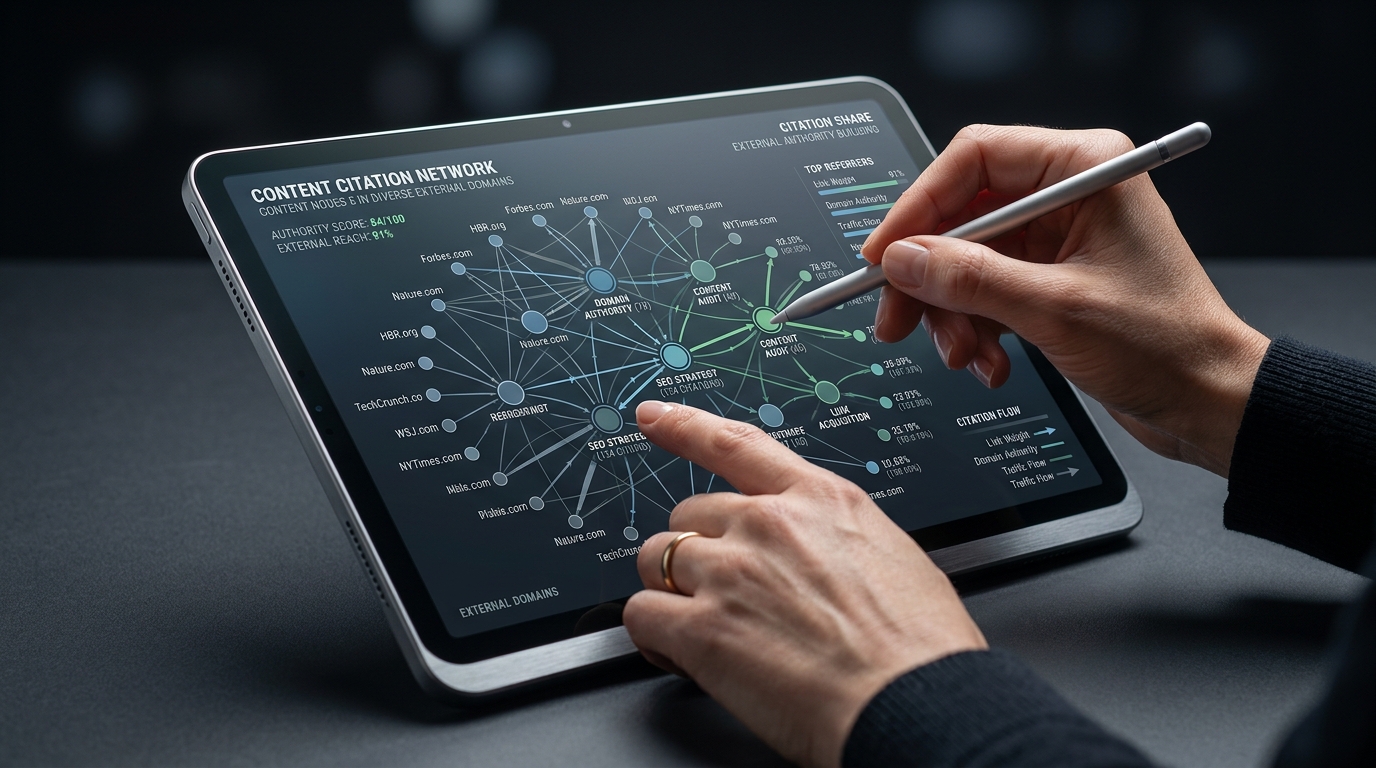
AI systems reward consistency. Research around generative engine optimization suggests that when claims appear across five or more credible external domains, citation likelihood rises sharply. If your differentiators are not being echoed elsewhere, they are less likely to show up in AI answers.
A brand message is not fully real in the market just because you published it. It becomes discoverable when other credible sources reinforce it.
3. Measure citation share, not just rankings
Search rankings still matter, but they are no longer the only visibility signal. Brands need to track where and how they are being cited across AI platforms, which sources those engines rely on, and how their presence compares with competitors.
That is why GEO tools and AI monitoring platforms are growing so quickly. The goal is no longer just to rank. It is to be referenced.
The future belongs to distributed credibility
By 2028, AI search will likely sit at the center of digital discovery. The brands that adapt early will understand a simple truth: authority is no longer something you declare on your website. It is something the wider web says about you.
That is why third-party content has become so influential. AI engines want corroboration. They want signals from publishers, platforms, reviewers, and creators. They want proof that a brand matters outside its own messaging.
The takeaway is clear. If brand discovery is increasingly shaped by AI, then brand strategy needs to be built for citation, validation, and presence across the broader ecosystem. And if you want a smarter way to navigate that shift, monitor visibility, and strengthen your authority where AI systems actually look, AIuthority is a practical place to start.
FAQ
Why is third-party content more important in AI search?
Because AI engines tend to trust signals that appear across multiple independent sources. Reviews, media coverage, forums, and creator content often carry more weight than claims published only on a brand’s own site.
Does owned content still matter?
Yes. Your website still needs to be clear, accurate, and structured for machines to read. But in AI search, owned content works best when it is supported by strong external validation.
What should brands measure in AI search?
Brands should look beyond rankings and monitor citation share, source visibility, competitor presence, and how often they appear in AI-generated answers across platforms.
What is zero-click discovery?
Zero-click discovery happens when an AI engine answers the user’s question directly in the interface, reducing the need to visit a website before forming a preference or making a decision.
Conclusion
AI search has changed how brands get discovered. Visibility now depends less on what a brand says about itself and more on what trusted third parties say across the web. Brands that build distributed credibility through reviews, publishers, creators, communities, and directories will have a far better chance of showing up where buying decisions now begin: inside the answer itself.