AI Marketing Roundup: Meta AI Agents, $57B Ad Spend Surge, Google GEO Advances
The AI marketing story this week is hard to miss. It’s speeding up, consolidating, and becoming far more operational. From Meta’s new AI agents to Google’s push into AI-native advertising and generative engine optimization, the pattern is clear: AI is no longer an experimental add-on. It’s becoming the system underneath modern marketing.
The numbers support that shift. U.S. AI-powered ad spend is now projected to reach $57 billion in 2026, up 63% year over year. Growth like that doesn’t happen when something is still optional. It happens when platforms, buyers, and brands start moving together.
 Meta’s AI agents move from concept to workflow
Meta made one of the biggest moves of the week by rolling out Manus-powered AI agents across key business tools. After acquiring Manus AI earlier this year, the company quickly embedded agent functionality into Ads Manager, Instagram Creator Marketplace, and WhatsApp Business.
The bigger story isn’t just the technology. It’s where Meta is placing it. These agents sit directly inside existing workflows, where marketers already make decisions. In Ads Manager, they can analyze campaigns and suggest changes. In Creator Marketplace, they help match brands with creators based on audience fit. In WhatsApp Business, they assist with drafting replies and project support.
That may sound incremental, but it marks a real shift. Meta is cutting friction between insight and action. Marketers don’t have to bounce between dashboards, export data, or rely on disconnected tools just to get a recommendation.
Meta still isn’t handing over full control, though. These are supervised systems, not autonomous campaign operators. They don’t build campaigns or manage bids end-to-end on their own. Given the recent concerns around AI agent data leakage, that level of human oversight feels less like caution and more like basic necessity.
The $57 billion signal: automation is winning budget
The strongest market signal came from Madison & Wall, which projected $57 billion in U.S. AI-powered advertising spend for 2026. The significance goes well beyond the headline number. AI-driven media buying isn’t just growing faster than traditional buying. It’s pulling away.
Most of that growth is being driven by tools like Google Performance Max and Meta Advantage+, where platforms automate targeting, bidding, placement, and increasingly, creative optimization. Human-managed spend is still larger in absolute terms, but it’s growing much more slowly.
That confirms what many marketers have already felt. Routine campaign management is being absorbed by machines. The value of the human operator is moving up the stack, away from button-pushing and toward strategy, creative direction, governance, and interpretation.
This doesn’t mean agencies disappear overnight, despite the hotter takes online. But the old agency value proposition is clearly under pressure. If platforms can automate execution at scale, marketers will expect outside partners to deliver sharper thinking, not just extra hands.
Google is redefining discovery, not just search
If Meta is embedding AI into campaign workflows, Google is making an even deeper change: it’s reshaping how people discover information and how advertisers appear in that process.
Google’s February Discover Core Update made that especially visible. Discover now represents a larger share of Google-driven publisher traffic, while traditional web search continues to lose relative share. The update leaned into geographic personalization, topic authority, and the demotion of clickbait-style content.
That matters because visibility is no longer just about ranking for keywords. It’s increasingly about being the most credible, contextually relevant answer across dynamic, personalized surfaces.
At the same time, Google is testing new shopping ad formats in AI Mode, its conversational search environment that reportedly now has 75 million daily active users. By Google’s own framing, this isn’t simply about dropping legacy ads into AI experiences. It’s about rethinking what an ad looks like in a conversational interface.
That’s a meaningful shift. Sponsored recommendations, direct offers, and signal-based matching all point to a future where ad relevance is inferred from intent-rich dialogue, not just query strings.
GEO is becoming the new competitive layer
One of the clearest takeaways is the rise of GEO, or generative engine optimization. GEO is the practical next step beyond SEO for a landscape shaped by AI Overviews, AI Mode, ChatGPT, Perplexity, and other answer engines.
In that environment, brands have to optimize for more than a blue link. They need to earn citations, recommendation eligibility, and topical authority inside AI-generated responses.
Google’s recent changes push in exactly that direction. Topic authority matters more. Asset diversity matters more. Geographic relevance matters more. Thin, generic content is becoming easier for AI systems to ignore, while strong signals, useful structure, and trustworthy subject-matter depth are getting harder to overlook.
This is where many marketers still underestimate the shift. GEO isn’t just a content tactic. It’s a visibility strategy for AI-mediated discovery.
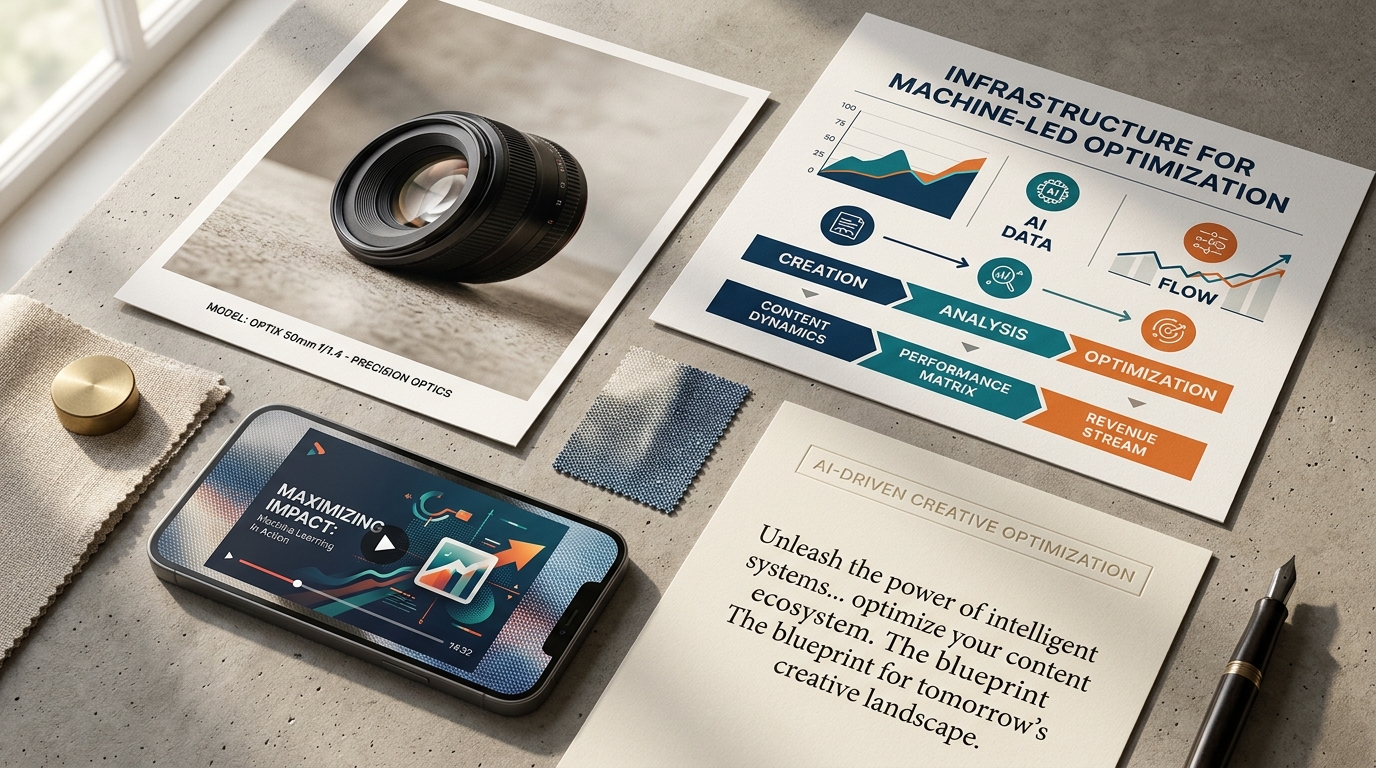 Creative assets are now infrastructure
Another underappreciated shift is how heavily creative diversity now influences performance in AI-led ecosystems. As AI systems decide which combinations of text, image, video, offer, and format to serve, brands with shallow asset libraries are at a disadvantage.
That matters especially in Google AI Mode, Performance Max, and Meta’s automated campaign systems. These products work best when they have enough high-quality inputs to test, learn, and adapt. In other words, creative is no longer just messaging. It’s infrastructure for machine-led optimization.
This is where many brands will need to recalibrate. The winners won’t simply be the ones with the biggest budgets. They’ll be the ones with the strongest signal set: robust creative assets, clear authority, structured content, and enough strategic discipline to guide the machine.
Why some AI ad environments still lag
Not every AI ad story is working yet. Early ChatGPT ad performance has reportedly been underwhelming, with low click-through rates, low delivery volume, and platform issues. That contrast points to an important truth: AI by itself isn’t the advantage. The real moat is data, intent history, and advertiser infrastructure.
Google and Meta have decades of behavioral and commercial signals behind them. They know how to connect demand, inventory, relevance, and conversion paths at scale. Newer AI platforms may have attention, but they’re still building the machinery required to monetize it effectively.
That doesn’t mean they’re out of the race. It just means the incumbents have a serious head start.
What marketers should do next
This week’s developments point to a few practical priorities:
- Prepare for agent-assisted execution. Teams need to learn how to supervise AI, not just operate software.
- Invest in authority-driven content and GEO readiness. If AI systems are becoming intermediaries between brand and buyer, visibility depends on being legible and trustworthy to those systems.
- Build stronger creative systems. Asset depth is turning into a performance advantage.
- Put governance in place. As AI becomes more embedded in platform workflows, brands need clear rules for data access, approvals, and human review.
FAQ
What is GEO in marketing?
GEO stands for generative engine optimization. It focuses on helping brands appear in AI-generated answers, recommendations, and citations across platforms like Google AI Mode, ChatGPT, and Perplexity.
Why does the $57 billion ad spend projection matter?
It shows that AI-powered advertising is moving from experimentation to mainstream budget allocation. That level of projected growth signals broad adoption across platforms, agencies, and brands.
Are Meta’s AI agents fully autonomous?
No. Meta’s current agents are supervised tools designed to assist with tasks inside existing workflows. Human oversight is still part of the operating model.
Why are creative assets becoming more important?
Automated ad systems perform better when they have a wide range of high-quality inputs to test and optimize. More asset depth gives AI systems more ways to improve performance.
Conclusion
What stands out most right now is that AI marketing is no longer a single trend. It’s several shifts converging at once: platform automation, conversational ads, GEO, creative infrastructure, and agent-driven workflows. Meta is pushing AI deeper into execution. Google is redesigning discovery and monetization for conversational environments. And the $57 billion ad spend projection shows the market is moving faster than many teams are ready for.
For marketers trying to keep pace and turn these changes into a real operating advantage, tools built for this environment matter. AIuthority helps teams navigate AI-powered marketing with more clarity as the landscape keeps evolving.