AI Ad Factory Claims 124% ROAS Boost Using Veo 3 for UGC Video Creatives
I’ve been tracking the rise of AI-generated ad creative closely, and one recent claim stands out: an “AI Ad Factory” built around Google’s Veo 3 is being marketed as a system that can deliver a 124% lift in ROAS, 8.7x higher engagement, and creative production costs that are supposedly 89% lower than traditional teams.
Those are big numbers, and in performance marketing, big numbers travel fast.
What makes this worth paying attention to isn’t just the headline. It’s what it suggests about where creative production is going, especially for brands that depend on UGC-style video ads to drive paid social results.
 Why this claim matters right now
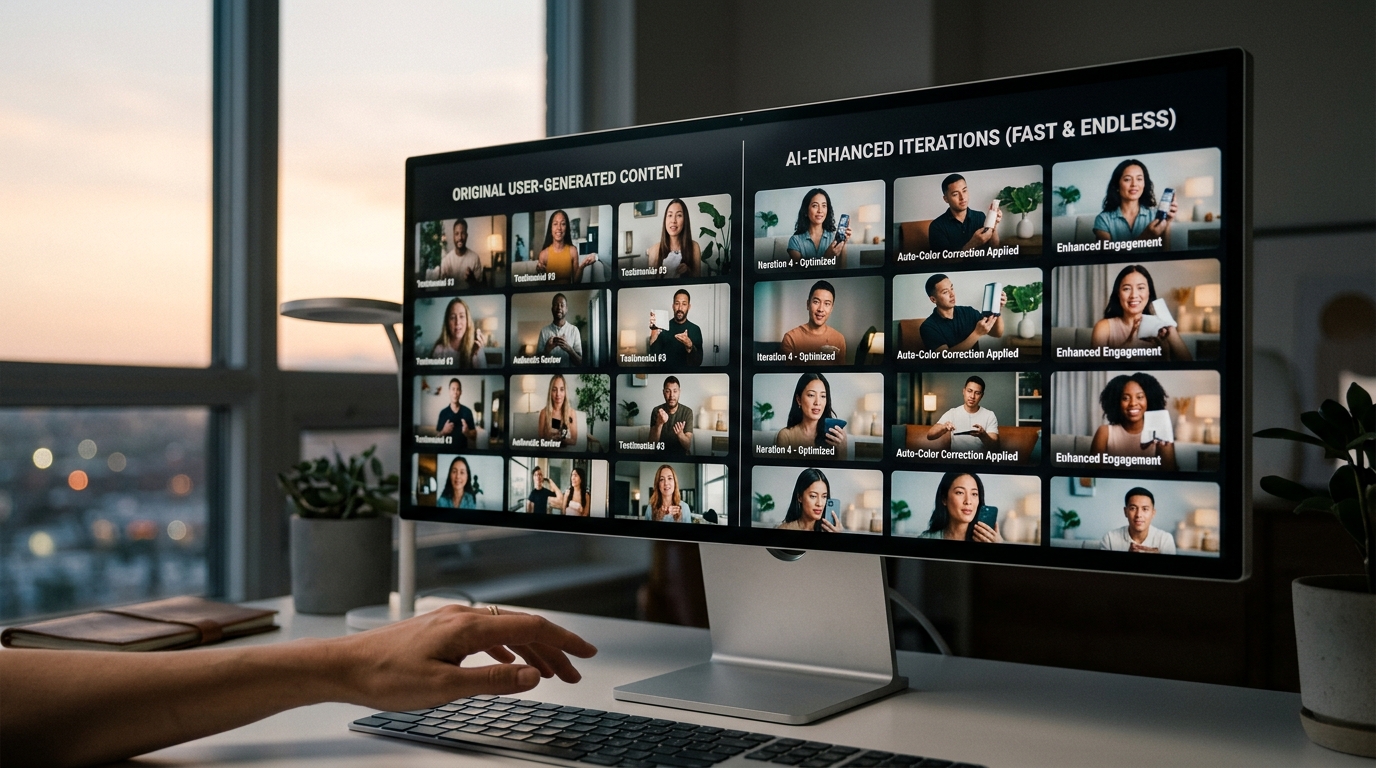
UGC creative has been one of the strongest formats in e-commerce and direct response advertising for years. It feels native, personal, and intentionally less polished in a way that often performs better on platforms like Meta and TikTok.
The challenge has always been scale.
If I wanted enough UGC ads to test properly, I’d typically need creators, briefs, revisions, editing cycles, voiceover work, approvals, and the budget to support all of it. Even when that process ran well, it was rarely fast. And speed matters when performance can shift weekly, sometimes daily.
That’s why Veo 3 changed the conversation.
When Google released Veo 3 in May 2025, it introduced something marketers had been waiting for: high-quality text-to-video generation with native audio. Not just visuals, but dialogue, ambience, and sound effects synced to the scene. Adoption took off quickly, with tens of millions of videos generated within weeks through Gemini, Flow, and related tools.
For marketers, the takeaway was simple: the gap between idea and ad got much smaller.
The viral “Ad Factory” pitch
The claim making the rounds came from a viral social post in March 2026 promoting a workflow summed up as “VEO 3 + Ad Factory = $750k/month.” The pitch positioned the system as a replacement for actors, studios, and slow editing cycles, while promising scale through AI-generated UGC.
This wasn’t framed as a traditional SaaS product. “Ad Factory” seems to describe a stack or workflow more than a standalone platform: Veo 3 for video generation, likely paired with automation tools, scripting systems, avatar or UGC generators, and post-production layers.
The pitch followed a familiar pattern in AI marketing:
- promise extreme output volume
- attach a standout performance claim
- reduce the process to a simple formula
- move interested users into a DM funnel for the “full system”
That doesn’t mean the claims are false. It does mean they should be treated as promotional until they’re backed by controlled testing.
What Veo 3 actually changes for advertisers
Even without the hype, Veo 3 marks a meaningful shift.
Before this generation of tools, making ad-ready AI video usually meant stitching together multiple systems: one for visuals, another for voice, another for sound design, and another for editing. That fragmentation slowed production and often made the final result feel inconsistent.
Veo 3 improved that by making native audio part of the creative process. That matters more than most people think.
UGC-style ads depend on timing, tone, pacing, and believable delivery. If the lip sync is off, the voice sounds synthetic, or the ambient sound doesn’t fit the scene, the ad loses credibility fast. A model that handles more of that in one step creates a much cleaner path to testable creative.
By late 2025, Google had already expanded the model with Veo 3.1, improving prompt adherence, realism, audio quality, and narrative control. For brands trying to generate lots of ad variations quickly, those upgrades make the “factory” concept far more practical.
Why AI UGC factories are gaining traction
From my perspective, the biggest draw of these systems isn’t just lower cost. It’s iteration speed.
Performance creative wins through testing, not because every ad is brilliant.
The traditional workflow usually limits how many angles a brand can realistically test:
- one creator script versus five
- one hook versus twenty
- one visual treatment versus dozens
- one product demo style versus multiple personas
An AI ad factory flips that constraint. Instead of asking whether I can afford to make more variations, I start asking which combinations are worth testing first.
That opens the door to:
- faster hook testing
- audience-specific creative versions
- localized or niche persona-driven UGC
- rapid-response campaigns tied to trends
- lower-risk experimentation with messaging
If the production cost per ad drops sharply, the economics of testing improve. And for performance marketers, that’s often where ROAS gains really come from, not creative magic alone, but a broader and faster testing surface.
 The 124% ROAS claim: possible, but unverified
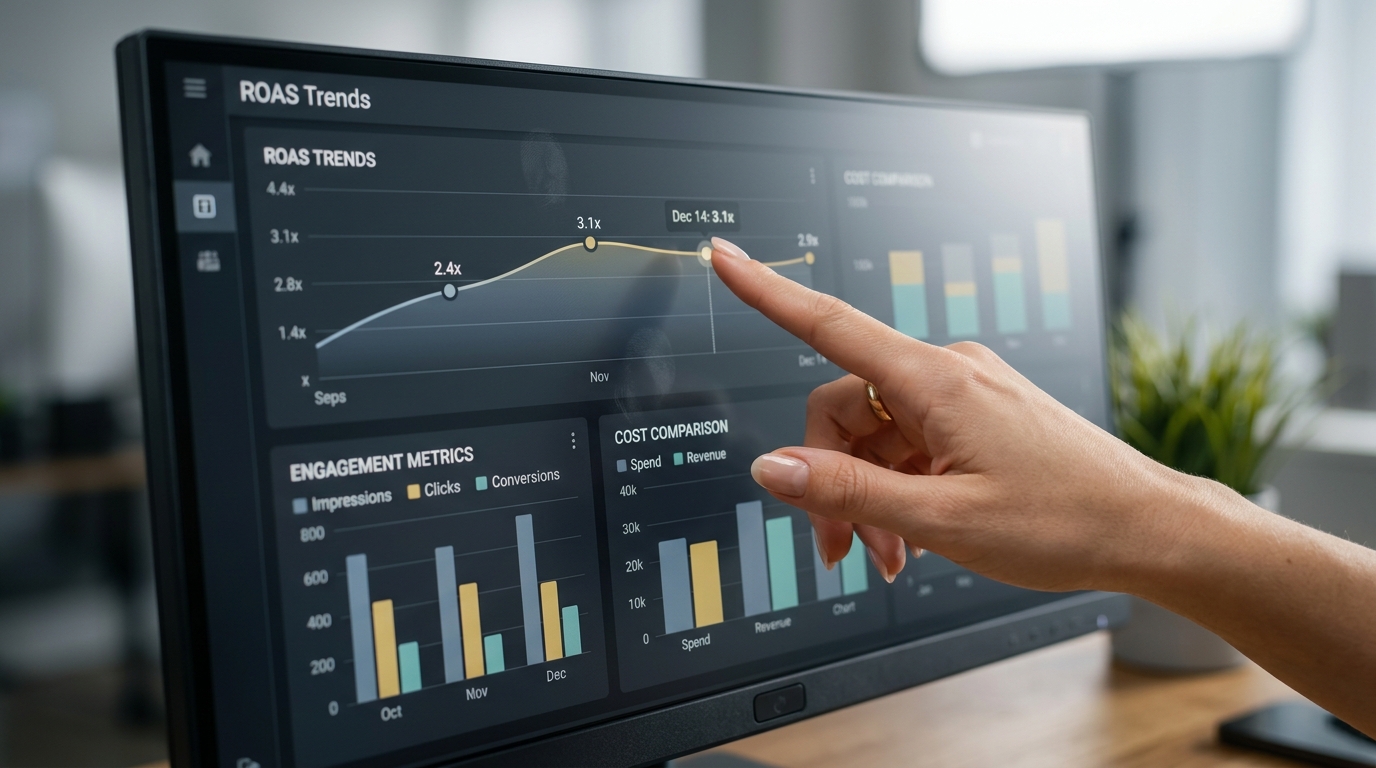
Could a system like this drive a 124% increase in ROAS?
Yes, under the right conditions.
If a brand has historically under-tested creative, used slow production cycles, or relied on stale UGC assets, then a fast AI workflow could absolutely improve results. More output creates more chances to find winners. Faster learning loops can improve campaign efficiency. Lower creative costs can also improve the overall economics.
But the public claim appears to be self-reported and not independently verified.
That matters because ROAS is highly sensitive to context:
- product category
- traffic quality
- offer strength
- landing page performance
- seasonality
- account structure
- audience saturation
- media buying skill
A strong creative pipeline helps, but it doesn’t work in isolation.
So when I see a claim like “124% higher ROAS,” I don’t dismiss it outright. I also don’t treat it as a universal benchmark. I see it as a signal that AI-assisted creative testing may be producing real gains for some operators, while still needing validation inside each account.
The bigger disruption behind the headline
The more important story here is bigger than one viral post.
We’re moving from handcrafted ad production to orchestrated ad production.
That shifts the advantage away from whoever can simply produce a polished video and toward whoever can build the smartest creative system:
- research faster
- script better hooks
- generate more relevant variants
- test at scale
- identify winners quickly
- feed learnings back into the next batch
In that environment, traditional production teams face real pressure, especially for top-of-funnel direct response work. At the same time, brands gain more control over speed and experimentation.
There are still real risks:
- audience fatigue from synthetic-looking ads
- platform disclosure requirements for AI-generated content
- IP and cloning concerns
- authenticity and trust erosion
- overproduction of low-quality creative
So while the economics are appealing, this probably doesn’t become a fully autonomous, no-humans-needed future. The strongest setups will likely be hybrid: AI for speed and scale, humans for judgment, positioning, compliance, and brand nuance.
What smart brands should do next
If I were evaluating an AI ad factory approach today, I wouldn’t start by chasing viral numbers. I’d start with process.
I’d ask:
- Can this system generate usable hooks and concepts at scale?
- Can it produce believable UGC-style video that fits the brand?
- Can my team test and score creative fast enough to benefit from the volume?
- Can I connect creative output to actual performance insights?
- Can I maintain quality while reducing turnaround time?
That’s the real challenge. Generating more ads is easy. Turning those ads into a repeatable ROAS engine is much harder.
The winners in this next phase won’t just be the teams with access to Veo 3. They’ll be the ones that can connect creative generation, testing, and performance measurement into a single operating system.
FAQ
Is the 124% ROAS claim verified?
No. Based on the public information available, the claim appears to be self-reported and should be treated as promotional until independently validated.
What makes Veo 3 different from earlier AI video tools?
Its biggest advantage is native audio generation alongside video. That reduces the need to patch together separate tools for visuals, voice, sound design, and editing.
Why are brands interested in AI UGC production?
Mainly because it increases testing speed. Brands can produce more hooks, angles, personas, and variations without the same cost and coordination required by traditional workflows.
Will AI replace human creative teams?
Not completely. The most effective setups will likely combine AI-driven speed with human oversight for strategy, brand fit, compliance, and creative judgment.
Conclusion
The claim that an AI Ad Factory using Veo 3 delivered a 124% ROAS boost still belongs in the category of unverified promotional performance. But the underlying shift is real. AI-generated UGC video is moving quickly from curiosity to competitive advantage, and brands that learn how to operationalize it now will likely gain an edge in creative testing and scale. If you want to turn that kind of creative velocity into something measurable and repeatable, build around a system that keeps performance at the center—ROAS Suite is a strong place to start.