ADWEEK Unveils AI Power 50 List of Advertising AI Innovators
I’ve been watching AI move from “interesting experiment” to something far closer to an operating system for modern advertising—and this feels like a real marker. ADWEEK just published “ADWEEK’s AI Power 50: Shaping the Next Phase of Advertising” (March 3, 2026), a first-of-its-kind list recognizing the people turning AI from hype into measurable impact across agencies, platforms, brands, and adtech.
What works about the AI Power 50 is that it doesn’t pretend innovation lives in one lane. It credits the engineers building the models, the product leaders putting them into production, and the marketers applying AI to real workflows—creative, targeting, measurement, and optimization—where results either improve or they don’t.

Why ADWEEK’s AI Power 50 Matters Right Now
AI adoption is widespread, but it’s still uneven. Plenty of teams can say they’re “using AI,” but far fewer have embedded it into processes in a way that reliably produces ROI. That execution gap is the difference between:
experimenting with prompts, and
redesigning an ad system so speed, iteration, and decisioning are fundamentally better.
By positioning the AI Power 50 alongside other major awards programs, ADWEEK is sending a clear signal: AI capability is becoming a benchmark of competitive excellence, not a novelty. And because nominations were broadly open and reviewed by an external jury with editorial oversight, the list has the kind of credibility that can shape budgets, hiring priorities, and vendor decisions.
A Snapshot of the Innovators Being Recognized
The honorees span the entire ecosystem—from platform and infrastructure leaders to hands-on creative and media innovators. The list includes executives and builders from organizations like Meta, OpenAI, Amazon Ads, Google, HubSpot, Criteo, PubMatic, Klaviyo, Braze, Capital One, Starbucks, Accenture Song, and many more.
A few themes stand out in who’s being recognized:
1) AI is shifting from tools to systems (and even “agents”)
It’s no longer just about generating copy or images faster. The momentum is moving toward AI that runs coordinated workflows—testing, QA, personalization, and optimization—while humans focus on strategy, judgment, and brand stewardship.
2) Performance proof is taking center stage
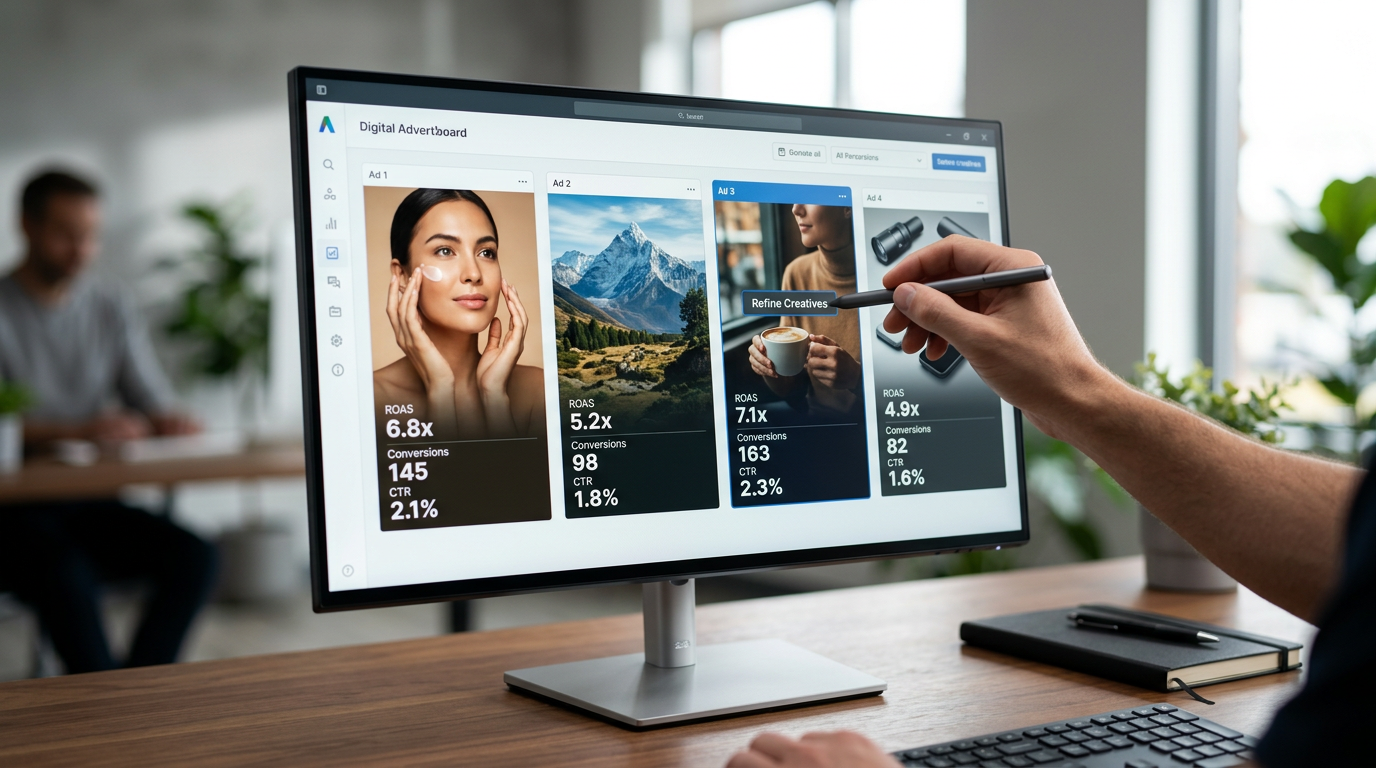
Several profiles point to concrete outcomes: revenue lifts, ROAS improvements, faster workflows, higher conversion rates, and better customer experiences. That emphasis matters because advertising ultimately runs on results.
3) “Search” is being redefined into answers and discovery
One of the more interesting undercurrents is how teams are thinking beyond classic SEO. Answer engines and AI-referred demand are pushing brands to rethink visibility, content strategy, and measurement.
Standout Examples That Signal Where Advertising Is Headed
The AI Power 50 covers a wide range of disciplines, but a few categories feel especially predictive of what’s coming next:
Contextual intelligence is making a comeback—with AI at the center
Cognitiv’s leadership (Jeremy Fain and Dr. Aaron Andalman) is highlighted amid rapid growth tied to ContextGPT. The bigger point: contextual approaches are being rebuilt with modern AI, potentially reshaping how media is planned and targeted in a privacy-conscious world.
AI-driven lifecycle marketing is becoming a performance lever, not a “nice to have”
Work tied to tools like BrazeAI and Klaviyo’s Customer Agent reflects what performance teams are leaning into: retention, messaging, and personalization are being automated in ways that show up in revenue—not just engagement.
Creative production is being industrialized—without killing the craft
Leaders like Marie Aiello (Smart Marketing Engine) reflect a constraint most growth teams know well: the bottleneck isn’t ideas; it’s throughput. The brands that win will be the ones that can generate, validate, and iterate creative quickly—while keeping quality, compliance, and brand standards intact.
The Bigger Implication: AI Is Becoming the New Operating Standard
The list lands in a market where ad spend is still growing, digital remains dominant, and teams are under constant pressure to do more with the same—or smaller—resources. The uncomfortable truth is that manual optimization and fragmented workflows are starting to look like self-imposed constraints.
That’s why the AI Power 50 matters as more than a media moment. It’s a snapshot of what the industry is rewarding. If you’re a brand leader, agency operator, or performance marketer, the message is straightforward:
AI isn’t the side project anymore.
It’s the infrastructure layer for speed, learning, and efficiency.
Organizations that operationalize it will compound advantages over time.
Conclusion: Turning Recognition Into Real ROAS
Seeing ADWEEK formalize the AI Power 50 raises a more useful question than who’s “ahead” right now: what does it take to build an advertising machine that gets better every week?
The innovators on this list are being recognized because they’ve tied AI to outcomes—faster iteration, smarter targeting, stronger creative, cleaner measurement, and better unit economics. If you’re working toward that same performance discipline in your own campaigns, use a platform built to translate optimization into measurable returns. ROAS Suite is a practical place to start when you want AI-assisted decisioning to show up where it counts: in your ROAS.