75% of Shoppers Use AI for Research, But Trust Vanishes for Purchases
We’ve hit a clear turning point in AI commerce: shoppers are comfortable using artificial intelligence to research products, but that comfort fades fast when money is on the line.
The pattern is getting harder to dismiss. Recent 2026 survey data shows that nearly three-quarters of consumers already use AI to help them shop. In an Exploding Topics survey of 1,009 U.S. consumers, 77.6% said they had used AI for shopping in the past six months, and 68.5% used it specifically for product research. Findings from Adobe, IBM-NRF, BCG, and Salsify point the same way. AI is now part of the buying journey.
The problem is what happens next: trust falls apart at checkout.
 AI Wins the Discovery Phase
AI is a strong fit for research. It helps shoppers compare products, summarize reviews, spot better prices, and narrow choices faster than traditional search. For many people, it simply makes shopping less frustrating. That matters when consumers are sorting through endless product pages, ads, influencer opinions, and conflicting recommendations.
That’s why tools like ChatGPT, Gemini, and Perplexity are becoming regular shopping companions. Most consumers aren’t asking AI to make the decision for them. They want it to remove friction. They want help finding the best laptop within a budget, checking skincare ingredients, or identifying the highest-rated office chair without opening 20 tabs.
In that role, AI feels useful, efficient, and relatively low-risk.
The Trust Cliff Starts at the Payment Step
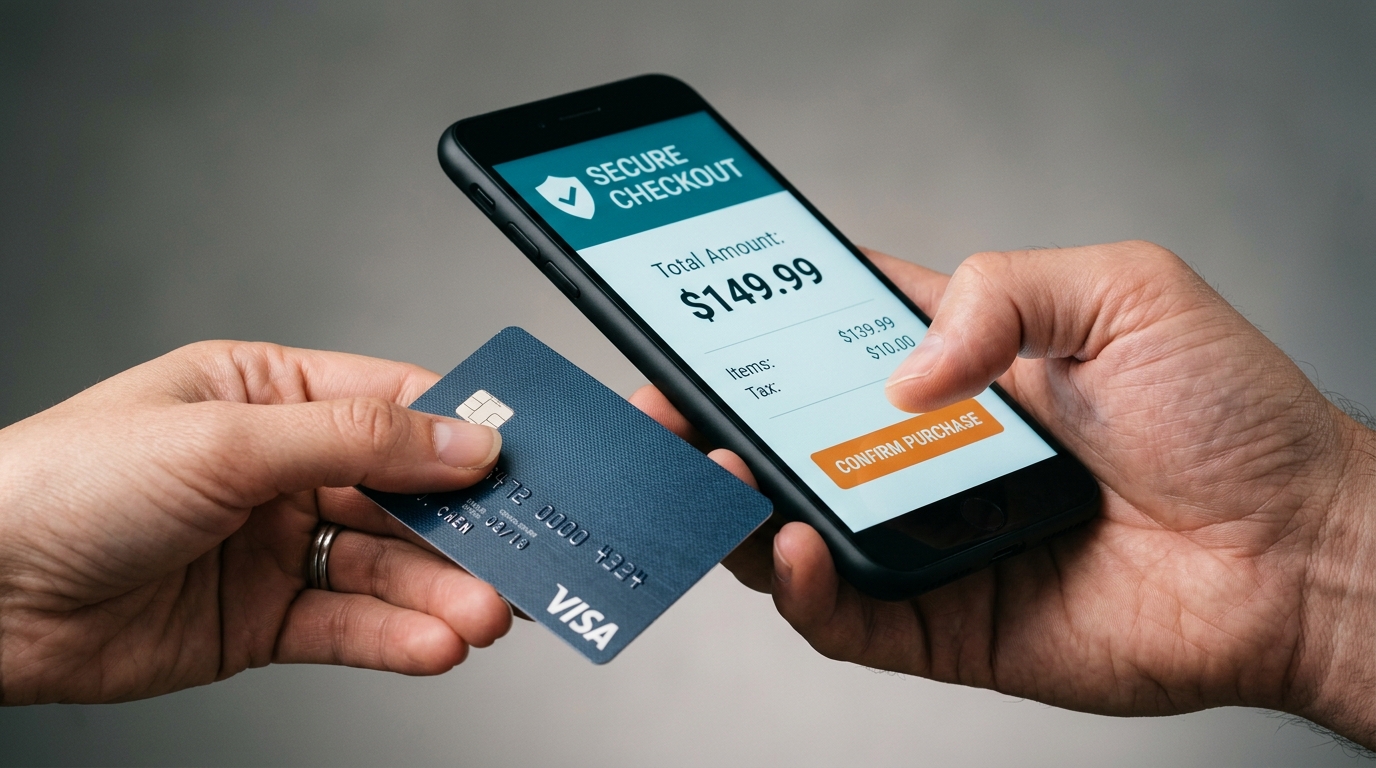
The same shoppers who welcome AI-generated recommendations become much less comfortable when asked whether AI should actually complete a purchase.
That’s where the trust cliff begins.
The numbers are telling. According to the survey, 31.21% of shoppers would authorize AI to spend exactly $0 autonomously. Even more revealing, 51.45% said they are uncomfortable with AI storing their card details. So while AI can shape what people buy, it still struggles to win permission to hit the final buy now button.
That hesitation makes sense. Research support feels reversible. A bad recommendation can be ignored. A bad transaction is personal. It involves money, privacy, fraud risk, returns, and accountability.
That gap helps explain why AI shopping adoption looks strong on the surface while purchase delegation remains weak underneath.
Why Consumers Still Pull Back
There are a few straightforward reasons trust disappears so quickly.
1. Fraud fears are real
Riskified’s parallel Agentic Commerce Pulse research found that more than half of consumers are worried about online fraud in AI-led shopping environments. That concern alone can stall adoption. If users don’t know who is responsible when something goes wrong, they won’t hand over control.
2. Payment data feels too sensitive
People may be fine with AI reading product descriptions or reviews, but stored payment credentials are different. Credit card data is among the most sensitive information a shopper can share, and many consumers aren’t ready to place it in the hands of an AI agent.
3. AI still feels unpredictable
Even when the output is impressive, shoppers know generative AI can hallucinate, misread details, or miss nuance. That’s annoying during research. During payment, it’s unacceptable.
4. Shoppers want assistance, not replacement
This may be the most important point. Most consumers seem to want AI as a guide, not a fully autonomous buyer. They value speed and personalization, but they still want the final call to be theirs.
 What This Means for Retailers and Brands
The takeaway is simple: brands should stop treating AI commerce like a checkout revolution and start treating it like a discovery and influence revolution.
That shift has real implications.
- Visibility inside AI tools matters more than ever. If shoppers are asking AI what to buy, brands need to show up in those answers. That means stronger product data, clearer structured content, credible reviews, and better optimization for generative engines—not just traditional SEO.
- Hybrid shopping journeys are becoming the norm. A shopper might start on a retail site, move to ChatGPT for comparisons, check Reddit or review sites, and then return to the retailer to buy manually. AI is part of the journey, but not yet the trusted endpoint.
- Trust signals carry more weight. Transparent pricing, clear return policies, secure checkout, verified reviews, and familiar payment protections may do more for conversion than flashy AI features on their own.
The Real Opportunity in 2026
The biggest opportunity is not asking AI to replace human purchasing decisions overnight. It’s making AI better at supporting the pre-purchase experience while building enough transparency and safety for trust to grow over time.
That fits the broader direction of the market. OpenAI experimented with direct shopping checkout and stepped back. Google continues developing payment protocols. Visa and other payment companies are exploring ways to make agentic commerce more secure. All of it points to the same reality consumers are already signaling: convenience means very little without confidence.
AI can already shape intent, but it hasn’t fully earned transaction authority.
FAQ
How many shoppers are using AI for shopping research?
According to the Exploding Topics survey cited here, 77.6% of U.S. consumers used AI for shopping in the past six months, and 68.5% used it specifically for product research.
Why do consumers trust AI for research but not purchases?
Research feels low-risk because shoppers can ignore bad recommendations. Purchases involve money, payment data, fraud concerns, returns, and responsibility if something goes wrong.
Are consumers comfortable letting AI store card details?
No. The survey found that 51.45% of shoppers are uncomfortable with AI storing their payment information.
What should brands do next?
Brands should focus on AI visibility during discovery, improve product data and structured content, and strengthen trust signals such as secure checkout, transparent pricing, and clear return policies.
Conclusion
This is a reset moment for AI in commerce. Shoppers are clearly embracing AI for research, comparison, and discovery at scale. They are not ready to hand over the wallet. That gap between influence and trust is where the next phase of digital commerce will be decided. For brands trying to understand the shift and build smarter visibility strategies around it, AIuthority is a practical place to start.