49% of Marketers Now Use AI Video Tools, Cutting Costs by 60%
I’ve been tracking AI’s impact on marketing for a while, but video is where the change now feels unmistakable. Recent reports and industry coverage point to a clear turning point: 49% of marketers are now using AI video tools, and many are seeing production costs drop by as much as 60%.
That’s more than a useful efficiency gain. It’s a real shift in how content gets produced, tested, and scaled.
 Why this matters right now
For years, video has been one of the most effective formats in marketing and one of the hardest to produce consistently. Traditional workflows needed creative teams, editors, motion designers, cameras, actors, post-production, and plenty of time. Even a short branded video could get expensive quickly.
That equation is changing.
AI video platforms have moved far beyond clunky text-to-video demos. Newer tools can generate cinematic scenes, keep characters visually consistent, simulate camera movement, sync audio, and cut turnaround times dramatically. What used to take days or weeks can now be tested in hours, sometimes minutes.
That speed helps explain the rapid adoption. In 2025, multiple surveys showed more than 40% of businesses already using AI for video creation, with video marketers crossing the 50% mark in some datasets. By early 2026, the conversation had largely moved from “Is this real?” to “How quickly can we put it to work?”
The economics are driving the trend
The strongest argument for AI video is simple: the economics now work.
Traditional video production has been a bottleneck for years. Between planning, scripting, filming, and editing, brands often spent thousands per minute of usable content. AI video tools are pushing that cost down fast. The headline figure, 60% lower costs, matches a broader pattern across the market, and some teams report even larger savings.
There’s also a second-order effect that matters just as much as the direct savings: teams can produce far more output.
When marketers spend less per asset, they can afford more variations, more testing, more localization, and more frequent creative refreshes. Instead of putting everything behind one polished hero ad, they can launch multiple angles and let performance data show what actually works.
That’s a major advantage in paid media, where creative fatigue can drag down results faster than almost anything else.
From production bottleneck to testing engine
This is where AI video becomes especially valuable for performance marketers.
Video is no longer just a brand storytelling format. It’s becoming an experimentation engine. Tools like Seedance 2.0 and other emerging platforms make it possible to generate ad-ready visuals at a fraction of historical production costs, and some early adopters are already using AI-generated creative in full campaigns.
That means marketers can:
- test more hooks faster
- build product demos without full shoots
- localize ads for different regions
- create platform-specific variations for Reels, Shorts, and TikTok
- iterate on winning concepts without starting production over
In practical terms, AI video is changing creative from a fixed deliverable into a dynamic system.
And that matters because media buying has always rewarded iteration. The teams that learn faster usually win faster.
The creator economy is proving the model
One of the clearest signals is coming from creators and faceless content channels. Solo operators are now producing content volumes that once required a small team. Some are publishing hundreds of videos a month, and AI-supported channels have been reported to grow subscriber bases much faster than traditional workflows allow.
That same pattern is spreading into e-commerce and digital advertising.
A solo marketer or lean in-house team can now create polished video content that looks far more expensive than it is. For smaller brands, that lowers the barrier to entry. For larger brands, it creates margin opportunities. Either way, the cost of getting into video keeps dropping.
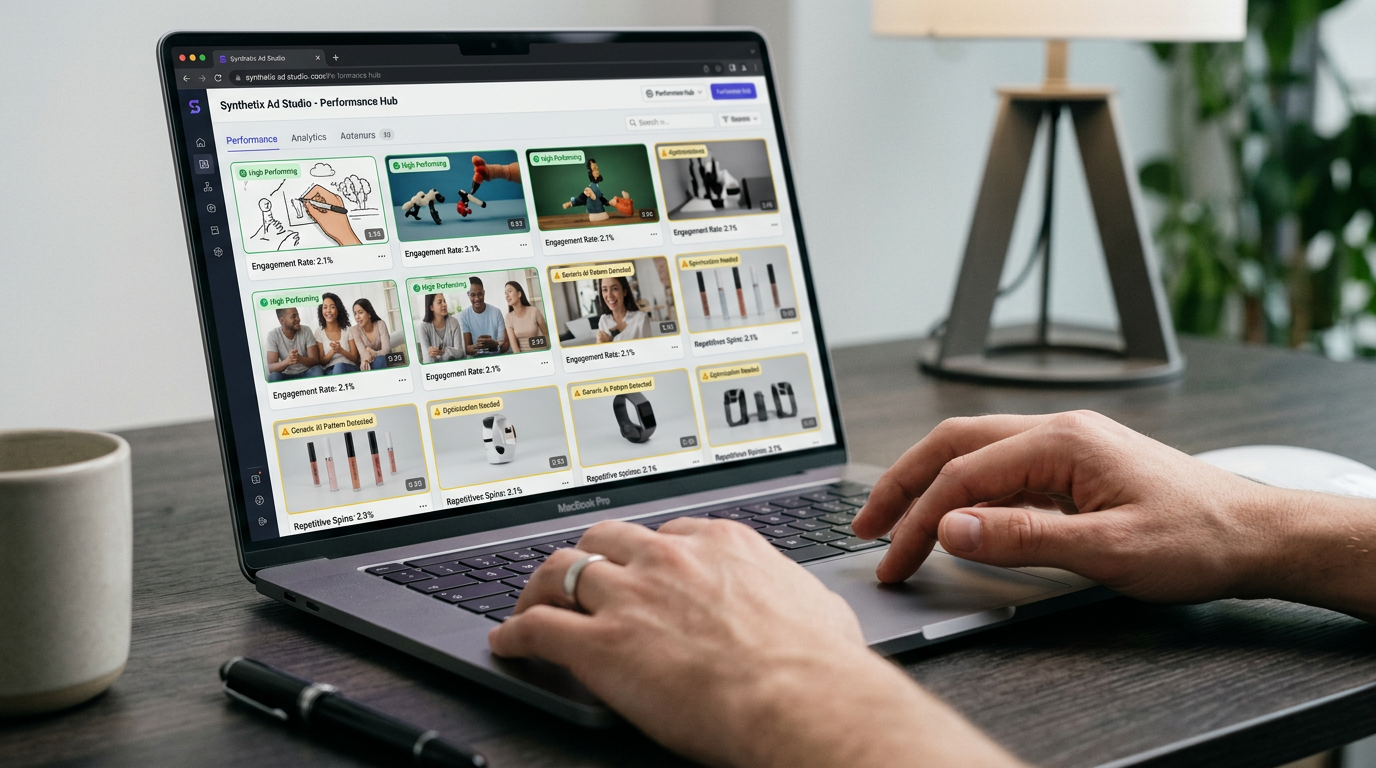 But there are real risks
This isn’t a pure hype story, and it isn’t all upside. There are real concerns marketers should take seriously.
Copyright, consent, and training data are quickly becoming central issues. Legal pressure from major entertainment companies has made one thing clear: AI video is going to face scrutiny. If a platform’s outputs raise questions about likeness, source material, or unauthorized replication, brands could end up with reputational and legal risk.
There’s also a quality trap.
Yes, AI can generate more content. That doesn’t mean it automatically generates better content. Cheap creative at scale only matters if it’s tied to strategy, audience insight, and performance feedback. Otherwise, brands will just flood their channels with forgettable assets at a faster pace.
AI may be improving creation, but it is not replacing judgment.
What I think happens next
We’re entering the stage where AI video stops feeling novel and starts becoming standard operating infrastructure.
The market is growing quickly, pricing is falling, and output quality is improving fast enough that it’s hard to dismiss. Early adopters are already using these tools to cut costs, increase production velocity, and unlock more aggressive creative testing. The marketers who treat AI video as a performance lever, not just a production shortcut, will likely gain the most.
The future isn’t simply more video. It’s smarter video systems: faster feedback loops, more personalized creative, lower testing costs, and tighter alignment between content and ROAS.
FAQ
Why are marketers adopting AI video tools so quickly?
The two biggest reasons are speed and cost. AI tools can reduce production timelines from weeks to hours and cut costs significantly, which makes it easier to test and scale creative.
Are AI video tools only useful for large brands?
No. Smaller brands and solo marketers may benefit even more because these tools make high-quality video production accessible without a large team or budget.
What are the main risks of using AI-generated video?
The biggest concerns are copyright, consent, training data issues, and low-quality output. Brands still need clear creative standards, legal awareness, and strong performance feedback loops.
How does AI video improve advertising performance?
It allows teams to test more concepts, refresh creative faster, localize campaigns, and adapt assets for different platforms. That often leads to better optimization and less creative fatigue.
Conclusion
The takeaway is straightforward: AI video is no longer optional for marketers focused on efficiency and scale. With adoption reaching 49% and production costs falling by 60%, the advantage now goes to teams that can pair faster creative output with better performance decisions. If you want to turn that speed into measurable advertising results, build your workflow around ROAS Suite so strategy, testing, and return on ad spend stay aligned.